

Blog
The RISC-V Revolution: How Open-Source Chip Architecture is Democratizing IoT Hardware in India

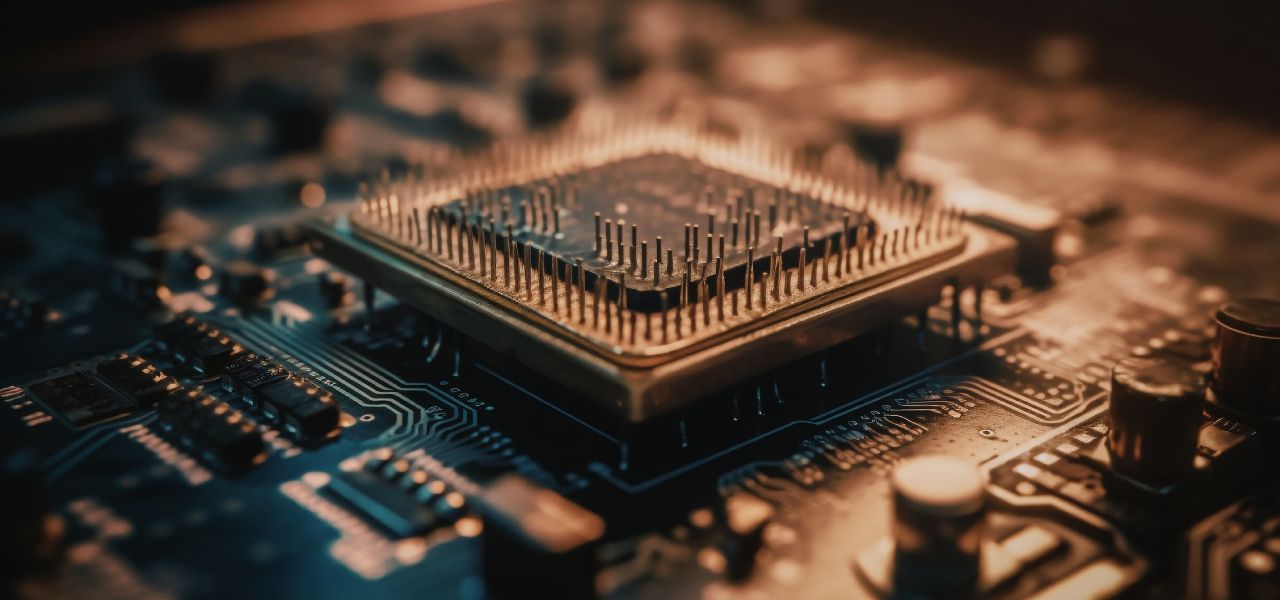
For decades, the semiconductor industry has operated on a simple, restrictive premise: if you wanted to build a custom chip, you needed a billion-dollar budget and a license from a handful of foreign architects. The Instruction Set Architecture (ISA), the fundamental language of a processor, was a locked door.
That door has been blown off its hinges by RISC-V.
For senior executives in India’s electronics and IoT space, this is not just a technical footnote. It is a fundamental shift in the balance of power. It represents the single greatest opportunity to move from being assemblers of foreign technology to creators of indigenous intellectual property.
At Cionlabs, we have been watching this revolution unfold in real-time. The year 2026 is shaping up to be the moment the Indian RISC-V ecosystem moves from promise to production.
What is RISC-V and Why Should a Business Leader Care?
RISC-V is an open-standard ISA, meaning it is free for anyone to use, modify, and build upon without paying royalties to a single company like Arm or Intel.
For a business leader, the implications are threefold:
- Freedom from Vendor Lock-in: You are no longer chained to the roadmap of a foreign supplier. If you own the RISC-V IP, you control your product’s destiny.
- Radical Cost Reduction: By eliminating licensing fees and leveraging open-source cores, the barrier to creating custom silicon (SoCs) drops dramatically.
- True Customization (Domain-Specific Architecture): You can design a chip that is perfect for your specific application, be it a low-power sensor or an AI camera—rather than forcing your product to fit a generic, off-the-shelf chip.
The Indian Express: DIR-V and the Sovereign Silicon Drive
The Indian government and research institutions have placed a massive bet on RISC-V. The Digital India RISC-V (DIR-V) initiative is the cornerstone of this strategy, aiming to make India a global producer of open-source hardware.
The vision, articulated by leaders like IIT Madras Director Prof. V. Kamakoti, is clear: by leveraging RISC-V, Indian startups can develop efficient, domain-specific System-on-Chips (SoCs) for AI, IoT, and high-performance computing, fueling the “Make in India” and “Digital India” missions.
This isn’t just academic theory. The ecosystem is maturing rapidly. At the recent VLSI Design Conference 2026 in Pune, C-DAC showcased live demonstrations of their indigenous VEGA processors powering real IoT applications, alongside the ARIES development boards. The building blocks for “Made in India” chips are here.
The Tipping Point: VIHAAN-I and the Aheesa Breakthrough
Theory became reality in February 2026. Indian fabless startup Aheesa Digital Innovations announced the tape-out of VIHAAN-I, the country’s first RISC-V-based broadband access SoC fully designed and developed in India.
This is a landmark event for the Indian electronics ecosystem. The VIHAAN-I chip, built around C-DAC’s Vega processor core, targets the millions of optical fiber terminals (the “white box” in your home or office) that currently rely on imported silicon.
Aheesa’s founder, Sridharan Mani, explicitly cited national security as a core motivation. “If the chip core is designed in India, the foundation for network security is secure,” he stated, emphasizing that true control requires understanding every component’s technical details.
For executives, the Aheesa model is a blueprint. They plan to take their Indian-designed platform global, offering white-label solutions to OEMs and ODMs worldwide. It proves that Indian IP can compete on the world stage.
Building the Ecosystem: From Verification to Volume
A chip is only as good as the tools used to build it. Fortunately, India’s deep-tech startup ecosystem is rising to meet the challenge.
Chennai-based Vyoma Systems, incubated at IIT Madras, is solving one of the biggest headaches in chip design: pre-silicon verification. Their platform, UpTickPro, uses AI-assisted, Python-based workflows to ensure that RISC-V chips are secure and functional before they are fabricated. This drastically reduces time-to-market and risk for design houses.
Furthermore, the IESA Vision Summit 2026 showcased the scaling up of the entire value chain. Strategic partnerships, like the technology transfer agreement between Akeana and Aritrak, are bringing high-performance RISC-V IP to India under a model that empowers local ownership and development. This is complemented by collaborations in advanced packaging and testing (Kaynes Semicon, HCL), building a complete “design-to-manufacturing” bridge within India.
The Analyst View: A New Landscape for IoT Chips
Industry analysts confirm that 2026 is a turning point. According to Satyajit Sinha, Principal Analyst at IoT Analytics, RISC-V and chiplet-based designs are giving OEMs the flexibility to refresh product portfolios and reduce lock-in.
Furthermore, the market is demanding security-by-design with hardware roots of trust, a feature native to modern RISC-V implementations, as a baseline expectation. In a world of geopolitical supply chain concerns, localizing design and production is no longer just a “nice-to-have”; it is a strategic imperative for supply resilience.
What This Means for Your Next Product
For companies looking to launch white-label smart devices, robotics, or AIoT solutions, the RISC-V revolution offers a new path forward.
At Cionlabs, our expertise lies in bridging the gap between silicon capability and market-ready products. While we continue to leverage the proven performance of Beken chipsets for a wide range of applications, we are actively watching the RISC-V space. The emergence of powerful, secure, and Indian cores like VEGA and SHAKTI presents an exciting opportunity.
Imagine building a product where the core processor is not only customized for your exact power and performance needs but is also inherently sovereign, secure, and free from global supply chain whims. That is the promise of the RISC-V revolution.
Conclusion: From Consumers to Creators
India’s semiconductor story is being rewritten. We are moving from a nation of chip consumers to a nation of chip creators. The RISC-V architecture is the vehicle for this transformation, democratizing access to the most fundamental layer of technology.
The tape-out of VIHAAN-I is not an isolated event; it is the starting gun. As the ecosystem of cores, tools, and manufacturing matures, the companies that embrace this shift early will be the ones defining the next generation of IoT hardware.
At Cionlabs, we are ready to partner with you to navigate this new landscape. Whether you need a design based on proven, market-ready silicon or a forward-looking roadmap that leverages indigenous RISC-V IP, we have the expertise to turn your vision into a secure, scalable, and sovereign product.
The future of Indian hardware is open. Let’s build it together.