

Blog
UAVs and Drones 2025: The IoT-Enabled Eyes Transforming Indian Agriculture, Security, and Logistics

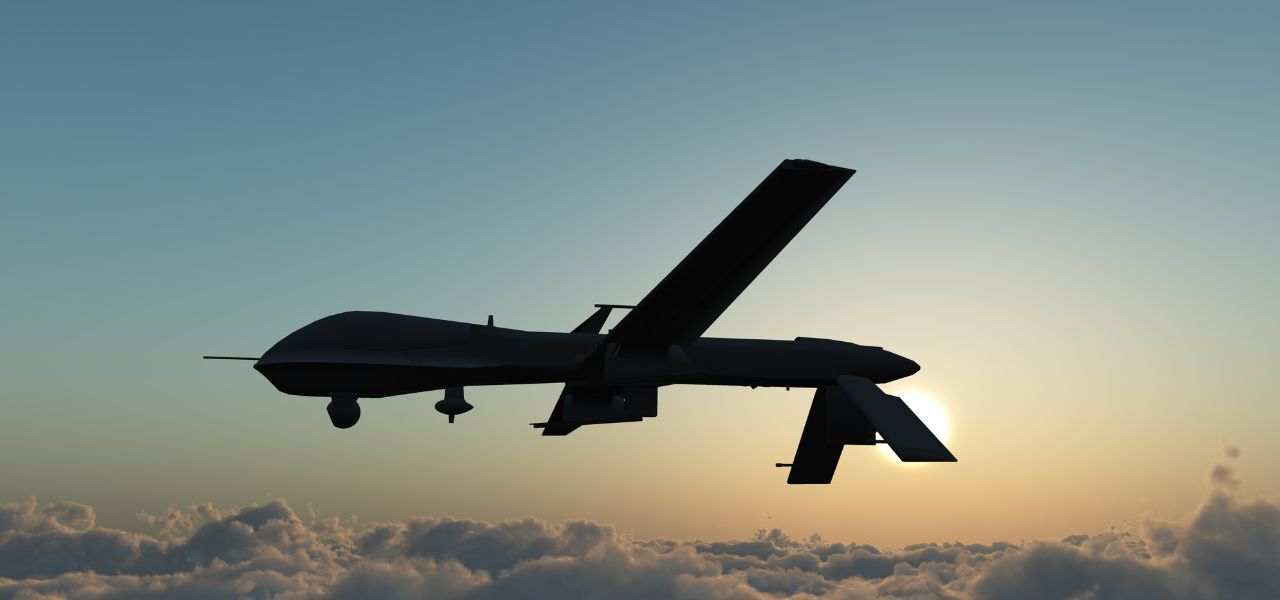
For senior executives, the unmanned aerial vehicle (UAV) sector now represents something far more significant than a collection of flying machines. It represents a new layer of data infrastructure; one that is transforming how India grows its food, protects its citizens, and moves its goods. The convergence of drones with the Internet of Things (IoT) and edge intelligence is creating a paradigm shift, and the opportunities for white-label innovation and strategic product design have never been more compelling.
The Market Trajectory: From Growth to Critical Mass
Let us ground this discussion in data. The Indian drone market, encompassing commercial and non-commercial applications, is projected to grow from USD 1.2 billion in 2023 to USD 4.87 billion by 2030, at a compound annual growth rate (CAGR) of 22.15%. This is not speculative growth; it is demand-driven expansion fueled by genuine operational needs across three core verticals: agriculture, security, and logistics.
For business leaders, the question is no longer “if” drones will impact your industry, but “how” you will integrate this technology into your operations or product roadmap.
Agriculture: Precision at Scale
Indian agriculture is undergoing its most significant technological shift since the Green Revolution. Facing labor shortages, water scarcity, and the need to increase productivity on small landholdings, the sector is turning to drones as a solution. The Indian Agricultural Drones and IoT Market is already valued at USD 2.5 billion, driven by the rapid adoption of precision agriculture techniques.
What does this look like on the ground? In Telangana, the state government has launched a pilot project for drone-based spraying and monitoring of cotton and chilli crops. These drones, capable of covering six to ten acres per hour with 95% spraying accuracy, are not just automation tools; they are data-gathering platforms.
The integration of IoT sensors with drone operations is creating a closed-loop system. Drones equipped with multispectral cameras assess crop health and soil conditions in real time, generating data that feeds into analytics platforms. This allows farmers to move from reactive, blanket applications of inputs to targeted, need-based interventions. The result is a potential 15% increase in crop yields, reduced pesticide use, and optimized water consumption.
For enterprises looking at this space, the opportunity lies not just in the drone itself, but in the ecosystem surrounding it. The demand for IoT sensors, data analytics platforms, and decision-support software is rising sharply. The government has allocated over ₹1,200 crore (approximately $145 million) for subsidies on agricultural drones and IoT devices, creating a massive addressable market for companies that can deliver integrated, compliant, and user-friendly solutions.
Security and Public Safety: The Aerial First Responder
In the realm of public safety and security, drones have evolved from surveillance tools to active participants in emergency response and law enforcement.
The numbers tell a compelling story. India’s average emergency response time currently hovers near twenty minutes. In a medical emergency or a law-and-order situation, those minutes are critical. This is why we are seeing a strategic push toward integrating drones into the national emergency response infrastructure.
In a landmark development, ideaForge, India’s leading UAV manufacturer, has partnered with C-DAC to integrate its FLYGHT drone platform with the national Emergency Response Support System (ERSS-Dial 112). This integration, announced in December 2025, enables automated aerial dispatch of drones as rapid first responders, arriving ahead of ground teams to provide real-time situational awareness. The model is Drone-as-a-Service (DaaS), allowing agencies to access capability without the burden of ownership or specialized manpower; a crucial consideration for state governments and enterprises looking to scale efficiently.
On the urban front, Pune Police have deployed indigenously manufactured drones from Sagar Defence Engineering that can take off and land from moving surveillance vans. These UAVs, equipped with thermal imaging and real-time video streaming, are compressing response timelines and acting as “aerial cops”. Meanwhile, innovation continues at the grassroots level. In Surat, engineers have developed an AI-powered “speaking drone” that can be controlled via a mobile phone call and make public announcements for crowd and traffic management; a first for India.
For technology partners and system integrators, the security domain offers significant white-label opportunities. From designing ruggedized hardware for mobile surveillance units to developing the secure communication protocols that link drones to command centers, the need for specialized, India-specific solutions is immense.
Logistics: Building the Third Dimension of Delivery
The logistics sector is perhaps the most visible frontier of drone transformation. With e-commerce penetration deepening and consumer expectations for rapid delivery rising, the third dimension, airspace, is being opened for commerce.
In June 2025, a significant partnership was announced between US-based Arrive AI and India’s Skye Air Mobility. Skye Air is already conducting about 6,000 deliveries per day in Gurugram and Bengaluru, offering 7-minute drone delivery to customers. The partnership aims to deploy 500 “Arrive Points”—secure, app-accessible delivery hubs—across Skye Air’s service areas, serving a New Delhi population exceeding 33 million.
What is significant here is the focus on infrastructure and security. Arrive Points are not just smart mailboxes; they are mini cross-docks that establish a “trusted custody layer” for autonomous logistics. Each drone delivery via Skye Air reduces carbon emissions by 520 grams compared to traditional methods, translating to over 2.6 metric tons of CO2 saved monthly. This positions drone logistics not only as a matter of speed but also of sustainability, a key consideration for ESG-focused enterprises.
The “last-mile” problem, long the bane of logistics companies, is being solved through autonomous air networks. For businesses looking to enter this space, the requirement is clear: secure, reliable, and scalable hardware that can interface seamlessly with both the drones and the digital infrastructure managing the delivery ecosystem.
The Technology Imperative: AI, Autonomy, and Indigenous Design
Underpinning all these applications is a fundamental technological shift toward greater autonomy and intelligence.
The days of manually piloted drones are numbered. The future belongs to autonomous systems that can navigate complex environments without human intervention. Consider the work being done by Indian startups like VECROS, which is developing drones capable of operating in GPS-denied environments using spatial AI. Their flagship platform, ATHERA, features an 8-camera perception suite and proprietary operating system, enabling inspections in tunnels, factories, and dense infrastructure zones where traditional drones fail.
Similarly, the Indian Army is backing IIT Ropar’s Centre of Drones and Autonomous Systems to develop next-generation surveillance drones with autonomous landing capabilities and real-time geo-location features. The driving motivation: ensuring that sensitive surveillance data remains within national borders and that India’s defence forces are not dependent on foreign hardware.
This emphasis on data sovereignty and indigenous design is a recurring theme. As drones become data-gathering platforms, the question of where that data is processed and who has access to it becomes paramount. The push for Aatmanirbhar Bharat in the drone sector is not just about manufacturing; it is about owning the intellectual property and ensuring the security of the data ecosystem.
The Cionlabs Opportunity: Building the Brains Behind the Wings
At Cionlabs, we see these trends and recognize a fundamental need: the requirement for reliable, secure, and India-ready embedded systems that power these drones and their supporting infrastructure.
Whether it is the flight controller that keeps an agricultural spray drone stable in crosswinds, the edge processor that runs AI inference for a surveillance drone, or the IoT gateway that connects a network of delivery drones to the cloud, the quality of the electronics determines the success of the system.
Our deep partnership with chip manufacturer Beken positions us uniquely to address these needs. Beken’s expertise in wireless connectivity and low-power processing aligns perfectly with the demands of drone technology, long flight times, reliable communication, and robust security. By designing with Beken chipsets, we ensure that the products we develop for our clients benefit from:
- Hardware-level security: Crucial for defence and surveillance applications where data breaches are unacceptable.
- Optimized power consumption: Extending flight times and operational efficiency.
- Reliable connectivity: Ensuring that drones remain in contact with ground control, even in challenging environments.
Conclusion: A Decade of Aerial Intelligence
As we move through 2025 and beyond, drones will become as ubiquitous as smartphones in our daily infrastructure. They will monitor our crops, secure our borders, deliver our packages, and respond to our emergencies. For senior executives, this represents a generational opportunity to build, brand, and scale solutions that address these massive, growing markets.
Whether you are an enterprise looking to deploy drone solutions or a brand seeking to enter the smart device market with white-label UAV products, the time to act is now. The technology is mature, the regulatory framework is evolving to support growth, and the market demand is undeniable.
At Cionlabs, we are ready to be your design and engineering partner in this journey. By combining our expertise in IoT and edge intelligence with the proven performance of Beken chipsets, we can help you build the drones and connected systems that will define India’s next decade of innovation.
The sky is no longer the limit. It is the new frontier. Let’s build it together.