

Blog
Predictive Maintenance for Indian Railways: The $5 Billion IoT Retrofit Opportunity

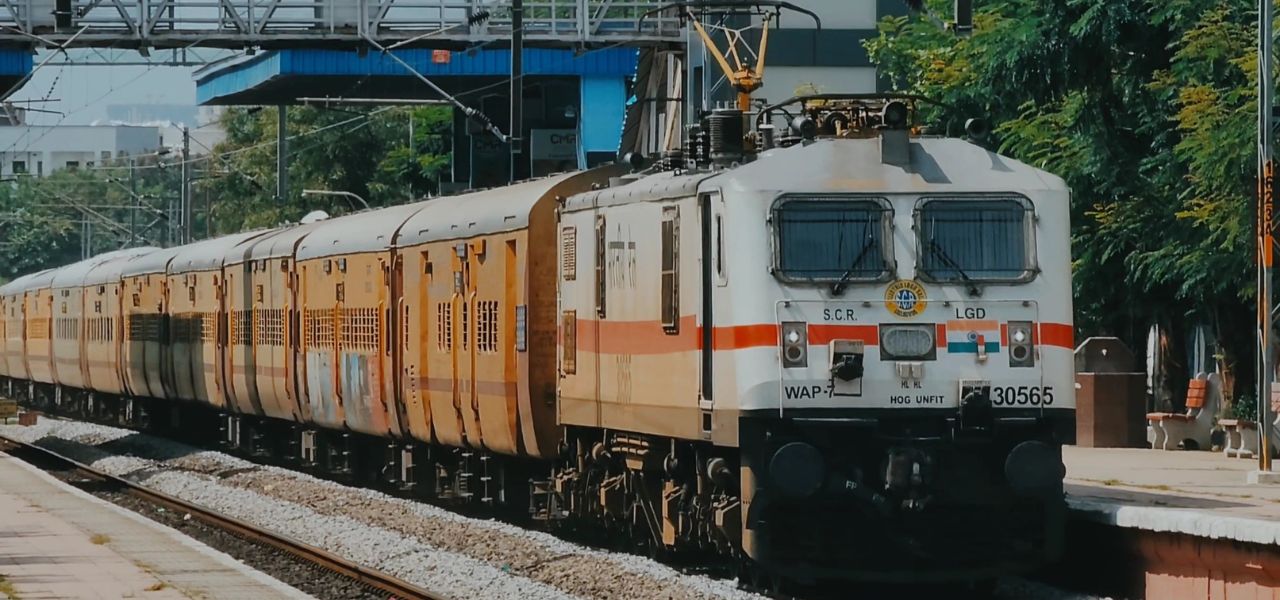
Indian Railways is not just a transportation network; it is the lifeline of the nation. With a track length of 135,207 kilometers serving 8,000+ new coaches manufactured annually, it stands as the world’s fourth-largest railway system. Yet, for senior executives and stakeholders in the infrastructure and technology space, this vast network represents something even more compelling: a $5 billion retrofit opportunity lying at the intersection of IoT, edge intelligence, and predictive analytics.
As the government pushes toward 100% electrification by 2030 and a net-zero carbon target, the modernization of Indian Railways has moved from a gradual upgrade to an urgent imperative. The question is no longer whether to digitize, but how fast, and who will lead the transformation.
The Scale of the Challenge
To understand the opportunity, one must first grasp the magnitude of the asset base. Indian Railways operates:
Currently, maintenance follows a largely reactive or time-based model. Assets are inspected on fixed schedules or after failures occur. This approach results in:
- Unplanned downtime disrupting one of the world’s busiest networks (13,198 passenger trains and 11,724 freight trains daily)
- Manual inspection costs consuming budgets that could be deployed elsewhere
- Safety risks that a nation growing at 8% GDP can ill afford
The Ministry of Railways has recognized this. For 2024-2025 alone, over ₹2.8 trillion (approximately $33 billion USD) has been budgeted for infrastructure, safety, and digitalization. A significant portion of this is earmarked for the technologies that enable predictive maintenance.
What is Predictive Maintenance in the Railway Context?
Predictive maintenance leverages IoT sensors, AI, and edge computing to move from “fix-when-broken” to “predict-before-fail.” Instead of manually inspecting 15,000 locomotives on a rigid schedule, sensors continuously monitor:
- Axle bearing temperatures (the leading cause of running gear failures)
- Wheel profile wear patterns
- Track geometry and structural integrity
- Vibration signatures in propulsion systems
- Pantograph and overhead equipment health
When a bearing begins to show early signs of overheating, the system alerts maintenance crews before a failure occurs. When a wheel profile deviates from optimal, it is corrected before it degrades ride quality or damages track infrastructure.
The $5 Billion Math
Why do we estimate this as a $5 billion opportunity? Let us break it down:
1. Rolling Stock Retrofit (The Largest Slice)
Every year, Indian Railways manufactures 8,000 new coaches and rehabilitates another 2,000 older ones. Each of these 10,000 units annually requires sensor suites, telemetry units, and edge processing nodes. At an average retrofit cost of $5,000-$8,000 per coach (sensors, gateways, installation), the annual rolling stock opportunity alone approaches $500-$800 million annually. Over a decade, this exceeds $5 billion just for the coaches.
2. Wayside and Track Infrastructure
Beyond the trains themselves, the tracks require monitoring. With over 69,000 kilometers of route length, deploying fiber optic sensing, acoustic bearing detectors, and track integrity monitoring systems represents a multi-billion-dollar infrastructure play.
3. The AI and Analytics Layer
Hardware is only half the equation. The data generated must be processed, analyzed, and converted into actionable insights. This requires:
- Edge computing nodes (like Beken-powered gateways) on each train
- Cloud or on-premise analytics platforms
- Digital twin simulations for asset lifecycle management
The software and services layer typically accounts for 30-40% of total project value over the lifecycle.
Global Precedents, Indian Reality
Globally, leading railways have already proven the ROI. Japan’s Shinkansen uses IoT for predictive maintenance, reducing downtime and avoiding delays. Deutsche Bahn employs sensors for real-time condition monitoring, improving punctuality and reducing accident risks.
But India presents unique challenges—and therefore unique opportunities for those who can solve them:
- Extreme climate variability: From the heat of Rajasthan to the cold of Kashmir, sensors must operate across a -10°C to 55°C range
- Dust and vibration: The physical layer requirements are extreme—connectors must meet IP67 standards and withstand constant shock
- Legacy integration: New IoT systems must coexist with older rolling stock using RS-232/RS-485 serial protocols
- Scale of data: Thousands of trains generating terabytes of data daily require robust edge processing to avoid cloud bandwidth saturation
The Technology Stack: Where Cionlabs and Beken Excel
This is not theoretical. The building blocks for railway IoT are mature and deployable today.
At the silicon level, Beken’s chipsets provide the ideal foundation for railway telemetry:
- Low power consumption enabling battery-backed operation for wayside sensors
- Integrated processing for edge-based anomaly detection (reducing data transmission costs)
- Hardware security ensuring that track and train data cannot be tampered with
- Robust connectivity supporting Wi-Fi, Bluetooth, and proprietary protocols for mesh networks
At the system level, Cionlabs brings:
- Indian-context engineering: We design for voltage fluctuations, temperature extremes, and the physical demands of the Indian rail environment
- White-label manufacturing: Scalable production of sensor nodes, gateways, and edge computers
- Integration expertise: Bridging legacy serial interfaces with modern IP-based telemetry
The Ecosystem Moving Fast
The market is already responding. Swedish firm Railway Metrics and Dynamics has begun trials with Indian Railways, equipping test coaches with PMU sensors for real-time monitoring of axle bearings, wheel profiles, and ride comfort. Their trials, initiated in mid-2025, are evaluating how AI-based systems perform in Indian conditions.
The Delhi Metro Rail Corporation has already demonstrated what is possible. During its Phase IV expansion, digital tools and IoT integration reduced project costs and resource hours while delivering the alignment design in under three months.
What This Means for Your Business
For executives evaluating entry into this space, several conclusions emerge:
1. The window is now. With ₹2.8 trillion allocated for the current fiscal year and clear targets for 2030, the procurement cycles are active. Trials are underway. Vendors are being selected.
2. Partnerships matter. This is not a “build-it-alone” market. Success requires deep collaboration with chip providers (like Beken), system integrators, and ultimately, the railway operating units themselves.
3. Compliance is non-negotiable. Railway systems must meet stringent standards for EMI/EMC protection, ingress protection, and cybersecurity. Designing for compliance from day one, rather than retrofitting, separates the serious players from the hobbyists.
4. India wants Indian solutions. The “Make in India” imperative extends to railway modernization. While global technology is welcome, local design, manufacturing, and IP ownership are strongly preferred.
Conclusion: The $5 Billion Question
The opportunity before us is clear. Indian Railways is undertaking one of the world’s largest transportation modernizations. Predictive maintenance, powered by IoT and AI, sits at the heart of this transformation.
For Cionlabs, this represents the culmination of our mission: to build Indian-designed, globally-competitive IoT solutions that solve real-world challenges. With Beken’s silicon as our foundation and our team’s deep domain expertise, we are ready to partner with stakeholders across the railway ecosystem—from coach manufacturers to system integrators to the railways themselves.
The trains are running. The sensors are ready. The data is waiting.
Let’s build the future of Indian Railways together.