

Blog
Predictive Maintenance for the MSME Budget: How Affordable Edge AI Cuts Downtime Without Big Tech Costs

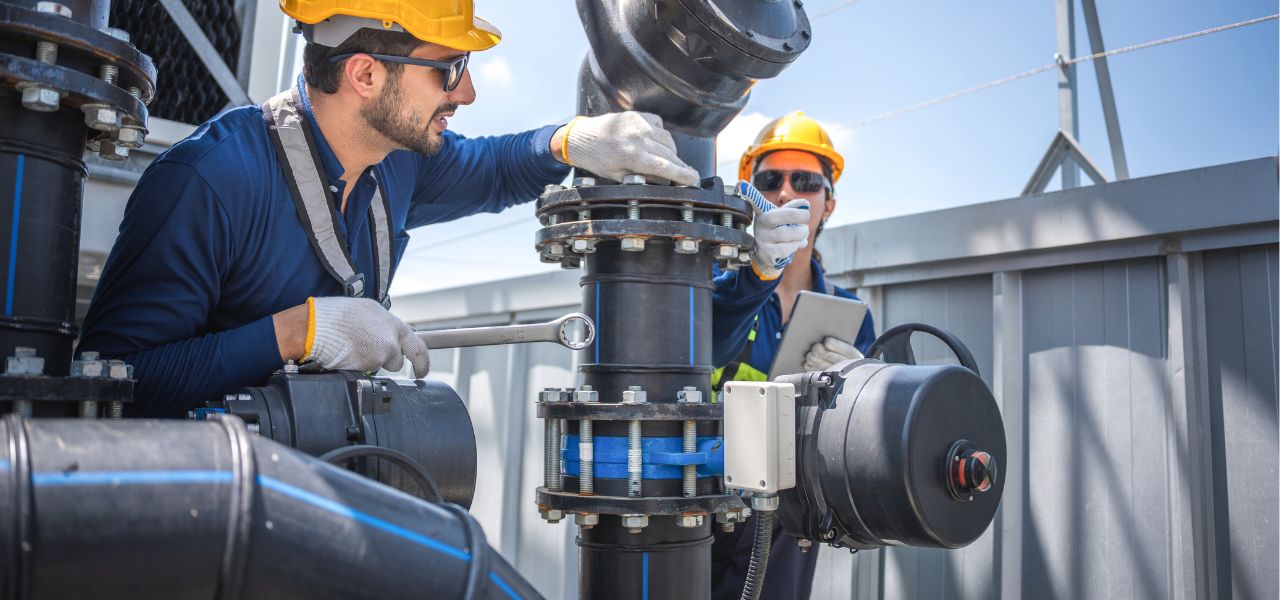
For the average Indian MSME manufacturer, the term “predictive maintenance” has long conjured images of expensive SCADA systems, foreign consultants, and technology that belongs in the boardrooms of UltraTech or Tata Steel, not on their modest factory floor. This perception is not just outdated; it is an expensive misconception that is costing small and medium manufacturers crores in preventable losses each year.
The truth is that 2026 has ushered in a new reality for Indian manufacturing. Edge AI-based predictive maintenance has finally become affordable, accessible, and eminently practical for the MSME budget. With compact, white-label AIoT nodes powered by next-generation, low-power chipsets like Beken’s Wi-Fi 6 and Bluetooth 5.2 combo solutions, Indian manufacturers can now achieve what was once reserved for industrial conglomerates: the ability to see into the future of their machines and prevent failure before it happens.
Here is the business case that belongs on every MSME owner’s desk.
The Cost of “Running to Failure”
The traditional Indian manufacturing mindset has been pragmatic: “Run the machine until it breaks, then fix it.” This reactive approach carries three hidden costs that slowly bleed profitability.
First, there is the catastrophe cost. A single unplanned motor failure in a critical production line can halt your entire operation. For an MSME running a single shift, even 24 hours of downtime can mean missed delivery deadlines, penalty clauses, and a damaged customer relationship that takes months to repair.
Second, there is the maintenance waste of scheduled servicing. The preventative alternative means servicing machines on a fixed calendar schedule, often replacing perfectly good parts “just in case.” This is not reliability; it is ritual. You pay for parts with remaining life and labor hours that could have been deployed elsewhere.
Third, there is the opportunity cost of fragmented attention. When your production manager is constantly firefighting breakdowns, they cannot focus on quality improvement, new product development, or customer acquisition.
Predictive maintenance eliminates all three wastes simultaneously.
The Numbers That Matter for MSMEs
Recent data from Indian manufacturing deployments reveals a compelling financial picture. Companies implementing AI-driven predictive maintenance across injection molding, fabrication, and packaging units have achieved unplanned downtime reductions of 30 to 40 per cent, with annual savings averaging between ₹50 lakh and ₹75 lakh per facility.
For smaller units with more modest production volumes, the returns are scaled proportionately. A typical MSME with 5 to 8 critical machines can see payback periods of 3 to 6 months on their predictive maintenance investment.
Consider the math. An unplanned breakdown on a ₹20 lakh injection molding machine typically costs not just the emergency repair of ₹1-2 lakhs, but the lost production value of 2-3 shifts. At a conservative production margin, this single failure can erase ₹3-5 lakhs of profit. A predictive system that prevents just one such failure per year has effectively paid for itself.
How Affordable Edge AI Works
The technology driving this accessibility is the compact, purpose-built AIoT node. Unlike legacy systems that required expensive wiring, complex servers, and dedicated IT teams, modern predictive maintenance uses plug-and-play wireless sensors that attach directly to motors, pumps, and compressors.
These sensors continuously monitor key parameters of machine health, including vibration signatures, temperature profiles, current draw, and acoustic emissions. The data is processed at the edge, meaning right on the device itself, using efficient AI models that detect the subtle patterns preceding failure. Only actionable alerts are transmitted via reliable, low-power wireless connectivity.
This is where the choice of chipset becomes critical for MSME viability.
The Beken Advantage: Connectivity That Fits the Budget
The heart of an affordable predictive maintenance node is its wireless connectivity. Generic Wi-Fi modules, designed for consumer electronics, simply do not survive the electrical noise, heat, and vibration of an Indian factory floor.
Beken’s advanced combo chips, such as the BK7256, are engineered specifically for demanding industrial IoT applications. They integrate Wi-Fi 6 and Bluetooth 5.2 in a single, highly integrated system on a chip, offering three critical advantages for MSME deployment.
First is industrial-grade robustness. These chips operate across a wide voltage range, maintain connectivity in electrically noisy environments, and survive temperature extremes that would disable consumer-grade modules.
Second is ultra-low power consumption. With active mode currents as low as 63 milliamps and deep sleep modes drawing just 15 microamps, battery-powered sensors can operate for years without maintenance, eliminating the need for expensive industrial power cabling.
Third is built-in security. Hardware-accelerated encryption, secure boot, and tamper-resistant storage protect your manufacturing data from industrial espionage without requiring additional security components.
The White-Label Advantage for Indian OEMs
For Indian system integrators and automation solution providers, this technology presents a powerful business opportunity. Instead of reselling expensive foreign systems with recurring license fees, you can offer your own branded predictive maintenance solution built on Cionlabs’ customizable hardware platforms.
White-label AIoT nodes designed with Beken chipsets and Cionlabs‘ engineering expertise allow you to deliver a solution that is cost-effective, India-hardened, and fully under your brand control. Your customers get the reliability of a purpose-built industrial system at a price point that works for their MSME margins, and you build recurring revenue through hardware sales, installation services, and optional cloud analytics subscriptions.
A Phased Implementation for MSME Budgets
The most successful predictive maintenance deployments in the Indian MSME sector follow a disciplined, phased approach that respects cash flow constraints.
Phase one is the pilot. Start with one critical machine, the one whose failure would cause the greatest production disruption. Monitor vibration, temperature, and current on this asset for 90 days. During this pilot period, which typically costs between ₹80,000 and ₹1.2 lakhs, including sensors and a gateway, you will establish baseline patterns and train the AI model.
Phase two is validation. Within the first three to six months, the system will likely detect its first anomaly, providing days or weeks of advance warning before an actual failure occurs. The cost avoidance from preventing that single breakdown typically covers the entire pilot investment.
Phase three is expansion. With proven ROI in hand, you can scale to your next 5 to 10 critical assets. The incremental cost per machine drops significantly because the cloud platform and analytics engine are already in place.
Real Results from Indian Floors
A fabrication unit in Delhi NCR, with 15 injection molding machines, implemented a predictive maintenance pilot on its five most critical presses. Within four months, the system detected abnormal vibration patterns on a primary drive motor, providing 11 days of advance warning. The maintenance team scheduled a bearing replacement during a planned weekend shutdown, avoiding what would have been a 48-hour unplanned outage costing an estimated ₹8 lakhs in lost production and expedited repairs.
A packaging manufacturer in Maharashtra, operating with thin margins on high-volume contracts, used affordable AIoT nodes to monitor their three form-fill-seal machines. The system identified a developing temperature inconsistency in a sealing bar, allowing calibration before it produced a batch of 10,000 defective packages. The quality failure avoided was worth more than the entire predictive system.
Why Now Is the Time
Three converging trends make 2026 the ideal moment for Indian MSMEs to adopt predictive maintenance.
First, the hardware has matured. Low-power, high-performance chipsets like Beken’s BK7256 are now available at price points that make compact AIoT nodes commercially viable for small-scale deployment.
Second, the expertise is local. Indian engineering talent has built and deployed these solutions across diverse manufacturing environments, learning the specific challenges of our power quality, climate, and operational patterns. You no longer need foreign consultants to interpret your machine data.
Third, the competitive window is closing. Your competitors who adopt predictive maintenance will achieve lower production costs, more reliable delivery schedules, and higher customer retention. In the price-sensitive Indian market, these advantages translate directly to market share.
A Call to Strategic Action
For Indian MSME owners, the question is no longer whether you can afford predictive maintenance. It is whether you can afford to continue operating without it. The technology is proven, the hardware is affordable, and the business case is clear. The only remaining barrier is the decision to begin.
Cionlabs stands ready to partner with Indian OEMs, system integrators, and automation solution providers to design and manufacture white-label AIoT predictive maintenance nodes optimized for India’s unique manufacturing realities. Using Beken’s robust, low-power connectivity solutions, we deliver hardware that is affordable, reliable, and ready for the factory floor.
The machines on your production line are speaking to you, through vibration, temperature, and current. They are telling you when they will fail. The only question is whether you have the ears to listen.
Ready to build your own white-label predictive maintenance solution? Contact Cionlabs to discuss custom AIoT node designs that bring affordable, India-hardened edge intelligence to your customers’ factory floors.