

Blog
Battery-as-a-Service: The IoT-Enabled Business Model Revolutionizing India’s EV and Energy Storage Markets

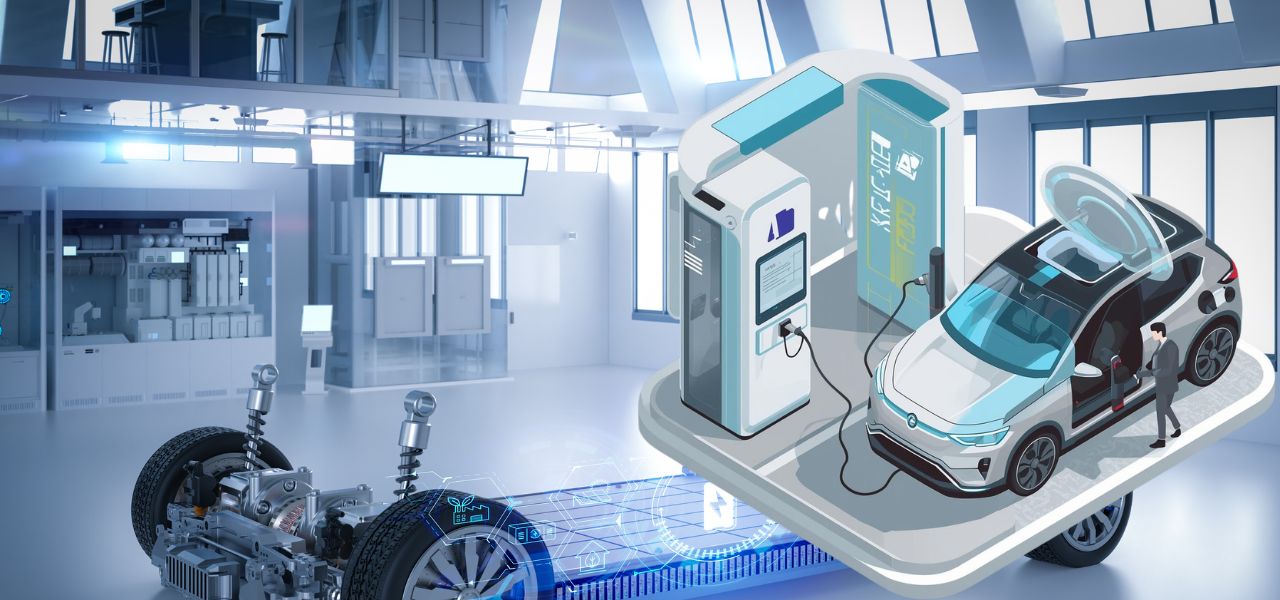
For decades, the economics of ownership in India have been defined by a simple equation: you buy an asset, you own it, you maintain it. But a profound shift is underway-one that decouples usage from ownership and replaces capital expenditure with operational flexibility. At the heart of this transformation lies Battery-as-a-Service (BaaS) , an IoT-enabled business model that is reshaping how India approaches electric mobility and energy storage.
For senior executives eyeing the convergence of clean energy, digital infrastructure, and financial innovation, BaaS represents not merely a product offering but a fundamental reimagining of value creation. The question is no longer if this model will scale, but how enterprises can strategically position themselves to capture its immense potential.
The BaaS Value Proposition: Economics Meets Technology
Battery-as-a-Service is elegantly simple in concept: instead of purchasing a battery outright, customers pay for access on a subscription or pay-per-use basis. The battery remains an asset owned and managed by the service provider, who assumes responsibility for its performance, maintenance, and eventual recycling.
This model delivers three transformative benefits:
First, it dramatically lowers upfront costs. By separating the battery from the vehicle or energy system, BaaS reduces the initial purchase price by 20% to 50%. For commercial fleet operators running hundreds of vehicles, this capital relief is game-changing.
Second, it eliminates range anxiety and downtime. Through battery swapping networks, drivers can exchange depleted batteries for fully charged ones in minutes-not hours. As Pulkit Khurana, CEO of Battery Smart, notes, recharging a drained battery takes 3-5 hours, while swapping takes just a few minutes. For gig workers whose earnings depend on continuous operation, every minute saved translates directly to income.
Third, it optimizes battery lifecycle value. BaaS providers, equipped with IoT-enabled battery management systems, can monitor battery health in real-time, optimize charging patterns, and ensure safe operation throughout the battery’s life. At end-of-life, they can recycle and repurpose cells, creating circular economy value.
The Market Trajectory: Numbers That Demand Attention
The scale of India’s BaaS opportunity is staggering. The market was valued at USD 86.50 billion in 2024 and is projected to grow at a CAGR of 18.70% through 2034, reaching USD 480.31 billion. This growth is fueled by India’s accelerating EV adoption-over 2 million electric two- and three-wheelers are already on the road, with another 2 million expected in FY25 alone.
Two-wheelers dominate the market, driven by their affordability and suitability for urban mobility. The commercial segment-particularly last-mile delivery fleets-is expanding rapidly as logistics providers seek to reduce operating costs while maintaining reliability.
The IoT Backbone: How Intelligence Powers BaaS
None of this would be possible without the deep integration of Internet of Things technologies. BaaS is fundamentally an IoT-enabled business model, and its success depends on three critical technological layers:
1. Intelligent Battery Management Systems (BMS)
Every battery in a BaaS network is equipped with an advanced BMS that continuously monitors voltage, current, temperature, and state of charge. This “brain of the battery” ensures safe operation and optimal performance. Companies like LG Energy Solution have taken this further with cloud-based platforms like B.Around, which uses AI to predict battery degradation with industry-leading error rates of around 1%.
2. Real-Time Connectivity and Telematics
IoT connectivity enables continuous data flow between batteries, swapping stations, and cloud platforms. This telemetry allows providers to track battery location, usage patterns, and health metrics across distributed networks. When a delivery driver swaps a battery at a kiosk in Delhi, the system instantly updates inventory, triggers billing, and records performance data for predictive analytics.
3. Edge Analytics and Predictive Maintenance
The true intelligence of BaaS lies in its ability to anticipate problems before they occur. AI-driven platforms analyze historical and real-time data to optimize charging cycles, balance cell loads, and predict maintenance needs. This extends battery life, reduces downtime, and improves safety-all critical for commercial viability.
The Indian Ecosystem: Players, Partnerships, and Innovation
India’s BaaS landscape is vibrant and rapidly evolving, with multiple players pursuing distinct strategies.
Battery Smart has emerged as the market leader, controlling an estimated 70% of India’s EV battery swapping market. The company operates over 1,500 swapping stations across 41 cities, serving gig workers from quick-commerce platforms like Swiggy and Zomato. Its partner-led model-enlisting local mom-and-pop stores as station operators-enables rapid, capital-efficient expansion. The company has raised over $130 million and achieved approximately 60% revenue growth in FY25.
BatteryPool offers a “sachet-style” pay-as-you-go model, allowing users to pay in small daily, weekly, or monthly installments. Founded in 2020, the company manages 2,000+ batteries across six cities and recently secured ₹8 crore in funding. Founder Ashwin Shankar draws a compelling parallel: just as sachet pricing transformed how Indians consumed data and essentials, BaaS will democratize EV access.
Strategic partnerships are accelerating adoption. Wardwizard Innovations has partnered with Battery Smart to offer Joy e-bike vehicles without batteries, reducing upfront costs by 20-30%. Mahindra Last Mile Mobility and Vidyut have announced a collaboration to deliver BaaS financing for electric three-wheelers. JSW MG Motor India and Vidyut have also teamed up to introduce passenger car financing strategies.
Beyond Mobility: BaaS for Stationary Energy Storage
While electric mobility dominates current BaaS discussions, the model’s application to stationary energy storage is equally transformative. India’s renewable energy ambitions-500 GW of non-fossil capacity by 2030-demand massive battery deployment to manage intermittency and ensure grid stability.
Battery Energy Storage Systems-as-a-Service (BESS-as-a-Service) is gaining traction globally and in India. Global players like ABB and GridBeyond have partnered to offer fully managed energy storage services to commercial and industrial customers, eliminating upfront capital requirements while providing real-time optimization and access to energy market revenues.
In India, policy momentum is accelerating. The government has introduced Viability Gap Funding (VGF) schemes to support BESS deployment, and states like Gujarat, Maharashtra, and Rajasthan are driving project pipelines with supportive regulations. The National Energy Storage Missionand production-linked incentives for Advanced Chemistry Cell batteries are further strengthening the ecosystem.
The Strategic Imperative for Indian Enterprises
For senior executives, the BaaS revolution presents both opportunity and imperative. Here’s how to think strategically:
1. Recognize the Shift from Products to Services
BaaS exemplifies the broader transition from asset sales to outcome-based models. Customers don’t want batteries; they want mobility, reliability, and energy availability. Enterprises that embrace this mindset can capture recurring revenue streams and deepen customer relationships.
2. Leverage IoT as a Competitive Moat
The BaaS model’s viability depends on sophisticated IoT infrastructure-real-time monitoring, predictive analytics, and seamless user experiences. Companies that build proprietary technology stacks (like Battery Smart’s ground-up platform) create defensible advantages.
3. Pursue Ecosystem Partnerships
No single player can succeed alone. Success requires collaboration across OEMs, battery manufacturers, swapping station operators, financiers, and government agencies. The most valuable players will be those who orchestrate these ecosystems effectively.
4. Design for Circularity
Battery lifecycle management is both an environmental imperative and an economic opportunity. Providers that optimize for second-life applications and recycling will capture additional value while meeting ESG commitments.
5. Prepare for Policy Evolution
Government support through FAME-II, state-level policies, and emerging battery standards will shape market dynamics. Forward-looking enterprises engage proactively with policymakers to help shape favorable frameworks.
The Cionlabs Advantage
At Cionlabs, we sit at the intersection of this transformation. Our expertise in IoT hardware design, edge intelligence, and connectivity integration positions us uniquely to architect the technological backbone of BaaS solutions.
Our deep partnership with chipset leaders like Beken enables us to design ultra-low-power, reliable connectivity solutions for battery management systems-whether for EV batteries in urban fleets or stationary storage in renewable projects. We understand that BaaS is not merely about batteries; it is about intelligent, connected systems that deliver continuous value through real-time data, predictive analytics, and seamless user experiences.
From designing custom BMS hardware to building the IoT telemetry layer that powers battery tracking and optimization, we help enterprises bridge the gap between physical assets and digital intelligence. For OEMs seeking to integrate BaaS into their offerings, or for entrepreneurs building next-generation swapping networks, we provide the engineering depth to turn vision into reality.
Challenges on the Horizon
The path forward, while promising, is not without obstacles. Infrastructure gaps remain significant-India needs over 26,000 swapping kiosks by FY26 and roughly 111,000 by FY30 to meet projected demand. Battery standardization is essential for interoperability; currently, proprietary designs across OEMs complicate swapping networks. High initial procurement costs for BaaS providers affect pricing models and profitability. And regulatory clarity around battery ownership, liability, and second-life use continues to evolve.
Yet these challenges also create opportunities. Companies that solve interoperability through strategic partnerships, that optimize battery lifecycle economics through advanced analytics, and that navigate regulatory complexity through proactive engagement will emerge as market leaders.
Conclusion: The Asset-Lite Future
Battery-as-a-Service represents a profound shift in how India will power its mobility and energy future. By decoupling ownership from usage, it democratizes access, optimizes asset utilization, and enables circular economy principles. By embedding IoT intelligence into every battery, it creates continuous value streams and unprecedented operational visibility.
For Indian enterprises, the message is clear: the BaaS revolution is underway, and its trajectory is accelerating. The convergence of favorable policies, maturing technology, and innovative business models has created a once-in-a-generation opportunity.
The question is not whether to participate, but how boldly to lead.
Ready to explore how IoT-enabled BaaS can transform your business model? Let’s engineer the connected energy future together.
Cionlabs. Powering Intelligence, Enabling Access for India.