

Blog
Beyond Sourcing: The Executive’s Guide to Strategic ODM Partnerships That Drive Innovation

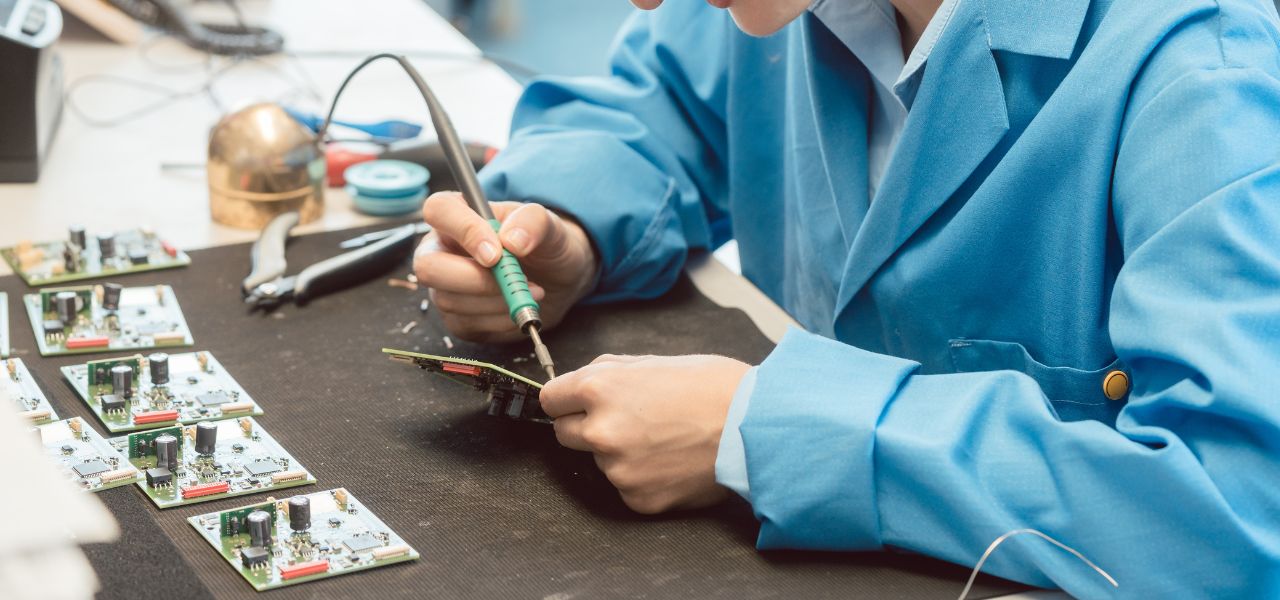
For most executives, the relationship with an Original Design Manufacturer (ODM) has long been a function of procurement. The mandate was clear: take our blueprints, manufacture to our specifications, and deliver at the lowest possible cost. This was a transaction—a tactical outsourcing of capacity. Today, this mindset is a strategic myopia that cedes competitive advantage. In an era where hardware innovation cycles are collapsing, and technology convergence is non-negotiable, a world-class ODM is not a vendor; it is your most potent external innovation engine.
The forward-thinking executive now looks beyond sourcing to strategic co-creation. The question shifts from “What can you build for us?” to “What can we discover and build with you?” This guide outlines how to transform your ODM relationship from a cost center into the cornerstone of your innovation strategy.
The Evolution: From Hand-Off to Hand-in-Hand
The Traditional Model (The “Spec & Build” Hand-Off):
- Relationship: Transactional, adversarial on cost.
- Communication: One-way (brand to ODM). Rigid specifications.
- Innovation Locus: 100% internal with the brand. The ODM is an executor.
- Risk: High for the brand (bears all R&D risk). Low for the ODM.
- Outcome: Incremental improvements, missed opportunities, slow time-to-market.
The Strategic Partnership Model (The “Explore & Create” Collaboration):
- Relationship: Integrated, aligned on value creation.
- Communication: Continuous, bidirectional. Co-creation workshops.
- Innovation Locus: Shared. The ODM brings technology and manufacturing foresight to the table.
- Risk: Shared. The ODM invests in joint development.
- Outcome: Leapfrog innovations, accelerated timelines, shared IP, and defensible market advantage.
The Executive Framework: The Four Pillars of a Strategic ODM Partnership
Moving beyond sourcing requires a deliberate framework built on four pillars.
Pillar 1: Shared Strategic Vision & Roadmapping
Innovation cannot be outsourced in a vacuum. It must stem from shared ambition.
- The Executive Action: Invite your ODM’s CTO and Head of Strategy to your annual product roadmap session. Share your 3-year market vision, not just your 12-month product specs. Discuss white-space opportunities and disruptive threats.
- The ODM’s Value: They bring a cross-industry lens. Having worked with automotive, consumer, and industrial clients, they can identify technology adjacencies you might miss. They can say, “The low-power display tech we’re developing for a medical device could revolutionize your next handheld terminal’s battery life.”
Pillar 2: Co-Investment in Foundational Technology Platforms
True partnership means sharing both the burden and the bounty of foundational R&D.
- The Executive Action: Jointly fund the development of a shared technology platform—a modular hardware architecture, a proprietary connectivity stack, or a core sensor fusion algorithm. Define clear IP ownership (background vs. foreground IP) from the outset.
- The ODM’s Value: They can amortize this R&D investment across multiple clients (in non-competing verticals), giving you access to a more advanced, cost-effective platform than you could develop alone. You get a competitive edge in your market, funded partially by others.
Pillar 3: Deep Integration of Teams & Processes
You cannot co-create through purchase orders and quarterly business reviews. Your teams must operate as one.
- The Executive Action: Co-locate a small, dedicated “Tiger Team” of your engineers with the ODM’s core design team. Implement shared project management tools and establish a single source of truth for requirements and decisions.
- The ODM’s Value: They provide the “Design for Excellence” (DfX) muscle from day one. Their engineers can immediately flag manufacturability issues, suggest component optimizations, and propose design alterations that cut 30% from the Bill of Materials (BOM) while improving reliability. This is real-time value engineering.
Pillar 4: Transparent Economics & Value-Sharing
A strategic partnership thrives on aligned incentives, not squeezed margins.
- The Executive Action: Move beyond unit price negotiations. Structure agreements that share value based on outcomes. Examples:
- A BOM Cost-Savings Bonus: Share the savings 50/50 from any design improvement the ODM proposes that reduces cost.
- A Time-to-Market Accelerator Fee: Provide a bonus for launching a product ahead of the aggressive market window.
- A Royalty on Joint IP: If the co-developed platform is licensed to other (non-competing) industries, share the royalty revenue.
- The ODM’s Value: This aligns their profitability with your success. They are incentivized to innovate for your benefit, not just to minimize their own production cost.
The Strategic ODM Checklist: How to Identify a True Partner
Not every ODM can make this leap. Use this checklist to evaluate potential or current partners:
- ❏ Possesses a Proactive “Technology Roadmap”: Do they present you with white papers and prototypes for technologies you haven’t even asked about?
- ❏ Demonstrates Cross-Industry Application: Do they show how they’ve successfully translated technology from one vertical (e.g., automotive radar) to solve a problem in another (e.g., industrial safety)?
- ❏ Has a Dedicated Co-Development/Advanced Engineering Group: Is there a team not tied to immediate production, focused on next-generation tech?
- ❏ Is Transparent About Their Own Supply Chain & Ecosystem: Do they introduce you to their key chipset and component partners, fostering a three-way collaboration?
- ❏ Operates with Flexible, Modern IP Frameworks: Are they comfortable with nuanced IP agreements that protect both parties and encourage joint creation?
The Cionlabs Model: The Archetype of a Strategic Innovation Partner
We are built on this partnership paradigm. Our engagements are designed to be strategic from the outset.
- We Begin with “Why”: Our discovery process focuses on your market problem and business objective, not just your product spec.
- We Maintain a “Technology Radar”: We continuously scout and develop core platforms (in connectivity, sensing, power management) that we bring to our partners as innovation accelerators.
- We Practice Radical Transparency: We function as an extension of your team, with full visibility into challenges and opportunities. Our goal is to be your indispensable innovation arm.
Conclusion: The Asymmetric Advantage
In the race to market, the winner is often not the company with the largest internal R&D budget, but the one that most effectively orchestrates a world-class innovation ecosystem. A strategic ODM partnership is the most powerful instrument in that orchestra.
By moving beyond sourcing, you gain an asymmetric advantage: the R&D horsepower and manufacturing intelligence of a global expert, deeply aligned with your commercial goals. You are no longer buying components and labor; you are buying time, insight, and de-risked innovation.
The call to action for the executive is clear: Audit your key ODM relationships today. Are they tactical suppliers or strategic partners? If it’s the former, you are leaving exponential value on the table. The future belongs to those who build not just products, but profound and productive partnerships. It’s time to move beyond the RFP and start writing the joint business plan.
Ready to transform your ODM relationship into your most powerful innovation accelerator?
Contact Cionlabs to explore a strategic partnership where we become the co-creation engine for your next generation of market-leading products.