

Blog
Beyond the Field Force: How AI Smart Glasses Will Transform India’s Distributed Workforce

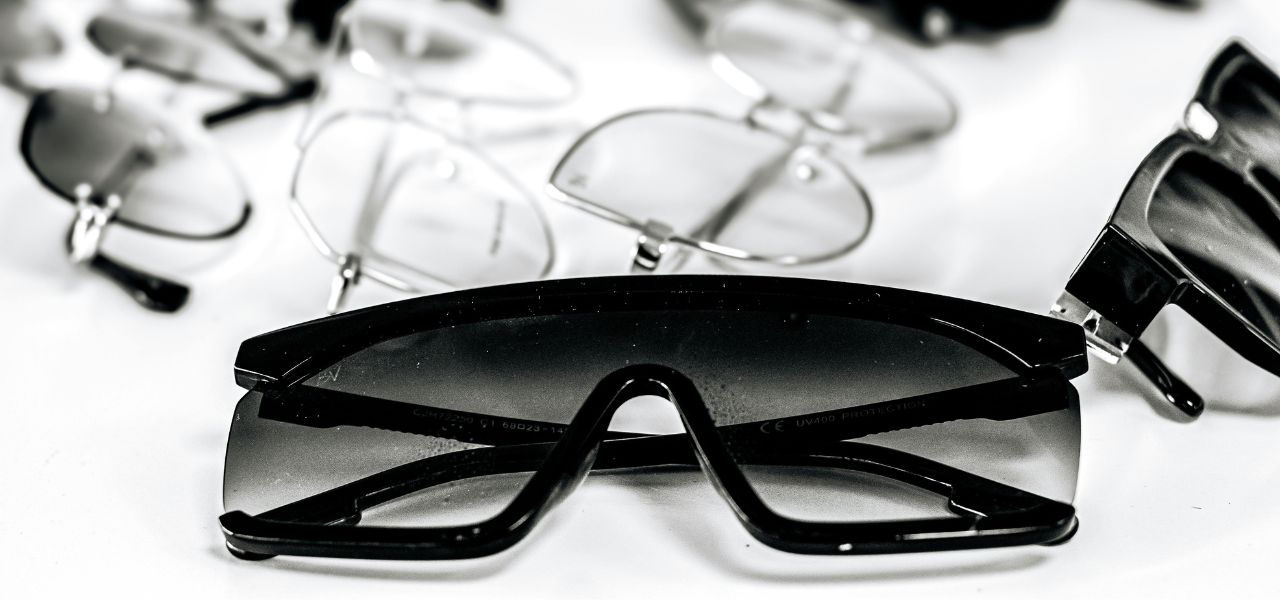
For decades, the productivity paradox of India’s workforce has been this: the tools we use to make work more efficient – laptops, smartphones, apps – were designed for people who sit at desks. Yet, India does not work at desks. India works on factory floors, in warehouses, on delivery routes, in hospital wards, and across millions of retail counters. It works on the move. And until now, the digital revolution has largely passed this distributed workforce by.
That is changing. AI smart glasses are emerging as the first productivity tools designed not for the desk, but for the hands-busy, eyes-up, on-the-go reality of how most Indians actually work. What began as a novelty for early adopters is now becoming an enterprise-grade solution with the potential to transform productivity across India’s core industries.
For the CEO, COO, and Chief Digital Officer, this is not a consumer gadget story. It is a story about radical operational efficiency, workforce empowerment, and competitive advantage in a market where margins are won or lost on the front lines.
The Mobile-First Paradox: Why Phones Fail the Distributed Worker
India’s workforce is among the most mobile in the world. From sales representatives covering vast territories to logistics workers managing thousands of deliveries, from warehouse pickers to field maintenance technicians, the common denominator is constant motion.
Yet the tools we give them – smartphones, tablets, handheld scanners – demand the opposite: stopping, looking down, tapping, scrolling. Every time a worker reaches for a phone, they break focus. They stop moving. They introduce friction into what should be a seamless workflow. In safety-critical environments like factory floors or construction sites, that friction can be dangerous.
AI smart glasses solve this by delivering information where it belongs: in the worker’s field of view, hands-free, and contextually triggered. They don’t replace the smartphone; they make it irrelevant for work tasks.
The Field Sales Transformation: KYC on the Move
Consider the field sales representative—a ubiquitous figure in India’s consumer goods, insurance, and financial services industries. Their day involves visiting dozens of customers, documenting interactions, capturing forms, and answering queries. Traditionally, this meant juggling a phone, a notepad, and a stack of documents.
Sarvam AI, the Bengaluru-based startup behind India’s sovereign AI models, recently demonstrated a radically different approach. At the India AI Impact Summit 2026, co-founder Pratyush Kumar illustrated the potential with a simple scenario: a sales representative doing KYC for a customer.
“Imagine a sales guy walking around doing KYC… he just clicks this ring and asks a question about an insurance policy and gets an answer,” Kumar explained. The representative never reaches for a phone. Never breaks eye contact with the customer. Never stops the flow of conversation.
This is not speculative. Sarvam’s AI-powered smart glasses, Sarvam Kaze, are scheduled to launch in May 2026, designed and built entirely in India. Prime Minister Narendra Modi became the first person to try them at the India AI Expo. The message is unmistakable: sovereign AI hardware for India’s workforce is no longer a distant vision – it’s arriving this year.
The Logistics Revolution: Amazon’s “Amelia” and the 100,000-Driver Pilot
If field sales represent one end of the spectrum, logistics represents the other. And here, the world’s largest e-commerce company is placing a billion-dollar bet.
Amazon is preparing to pilot its own augmented reality smart glasses, codenamed “Amelia,” with approximately 100,000 delivery drivers starting in mid-2026. The goal is ruthlessly practical: using a single-lens embedded display, drivers will see navigation prompts, package details, and real-time instructions right in front of their eyes, without ever touching their phones.
The implications for India’s booming e-commerce and logistics sector are profound. With millions of deliveries occurring daily across chaotic urban streets and remote rural routes, a tool that keeps drivers’ eyes on the road while providing real-time navigation and package information could dramatically improve both safety and efficiency. Amazon’s approach—testing the technology first within its own massive workforce before releasing a consumer version – signals a recognition that enterprise-grade reliability matters more than consumer flashiness.
Industrial Training and Remote Expertise
Beyond sales and logistics, AI smart glasses are finding powerful applications in industrial training and remote expert collaboration.
For India’s manufacturing sector, which faces a persistent skills gap, the ability to train workers faster and more effectively is a critical competitive advantage. Smart glasses enable “see-what-I-see” remote guidance, where an expert in a central location can guide a technician through a complex repair, overlaying instructions directly onto the equipment in view.
This is not theoretical. Industrial AR smart glasses are already demonstrating measurable ROI in Indian factories, reducing training time, minimizing human error, and improving operational efficiency. For a country racing to build manufacturing capacity under the Production Linked Incentive (PLI) schemes, this capability is not a luxury—it is an enabler of scale.
The Indian Context: Why Now?
Several factors are converging to make AI smart glasses a practical reality for India’s workforce in 2026:
1. Sovereign AI Models: Sarvam AI’s foundational models are trained on trillions of India-specific data tokens and optimized for code-switching between English and regional languages. This means a field worker in Tamil Nadu can ask questions in Tamil and receive answers in Tamil – a level of linguistic accessibility global competitors struggle to match.
2. On-Device Intelligence: Sarvam Edge allows AI models to run locally on devices, ensuring responses are instant, private, and functional without internet connectivity. For workers in remote areas with patchy networks, this is transformative.
3. Domestic Manufacturing: The emergence of India-based XR manufacturing, such as the QWR-Kaynes partnership, signals that the hardware itself can now be produced domestically, reducing import dependence and enabling cost-competitive pricing.
4. Platform Economics: Sarvam is opening its smart glasses platform to Indian developers, enabling a wave of custom applications tailored to specific industries and use cases. Lenskart is pursuing a similar strategy with its upcoming “B by Lenskart” smart glasses, inviting developers to build apps for food delivery, navigation, productivity, and more.
The Enterprise ROI: What Leaders Should Measure
For executives evaluating whether AI smart glasses belong in their workforce strategy, the metrics are straightforward:
- Time Saved: Eliminating phone-based micro-interactions saves seconds per task, which compounds into hours per week.
- Error Reduction: Visual guidance and real-time verification reduce mistakes in picking, packing, and assembly.
- Training Acceleration: New workers can be productive faster with augmented reality guidance.
- Safety Improvement: Keeping eyes on the environment reduces accidents in hazardous settings.
- Customer Experience: Uninterrupted face-to-face interaction improves trust and satisfaction.
The Privacy Imperative
Any discussion of workplace wearables must address privacy. Devices that see what workers see raise legitimate concerns about surveillance and data ownership. The winning solutions will be those that prioritize on-device processing, transparent data policies, and visible recording indicators.
Sarvam’s approach—processing AI locally on the device rather than in the cloud—aligns with India’s Digital Personal Data Protection (DPDP) Act principles and builds trust with both enterprises and their employees.
Conclusion: The Hands-Free Future Is Arriving
India’s workforce has always been distributed, mobile, and hands-on. Finally, the technology is catching up.
AI smart glasses are not about giving workers another screen to stare at. They are about removing screens from the equation entirely—delivering information when and where it’s needed, without breaking focus or flow.
With Sarvam Kaze launching in May 2026, Amazon piloting Amelia with 100,000 drivers, and Lenskart preparing its own entry, the message to Indian business leaders is clear: this technology is moving from pilot to scale. The companies that understand its potential—and deploy it thoughtfully—will build a workforce that is safer, faster, and fundamentally more productive.
The question is no longer whether AI smart glasses will transform India’s distributed workforce. It is how quickly your organization will be ready to lead that transformation.
Ready to explore how AI smart glasses can transform your field workforce?
Contact Cionlabs to discuss white-label smart glass solutions based on the Beken chipset tailored to your industry, from design and prototyping to manufacturing and deployment.