

Blog
Building the Unbreakable Home: A Senior Executive’s Framework for Integrated Physical and Cyber Security

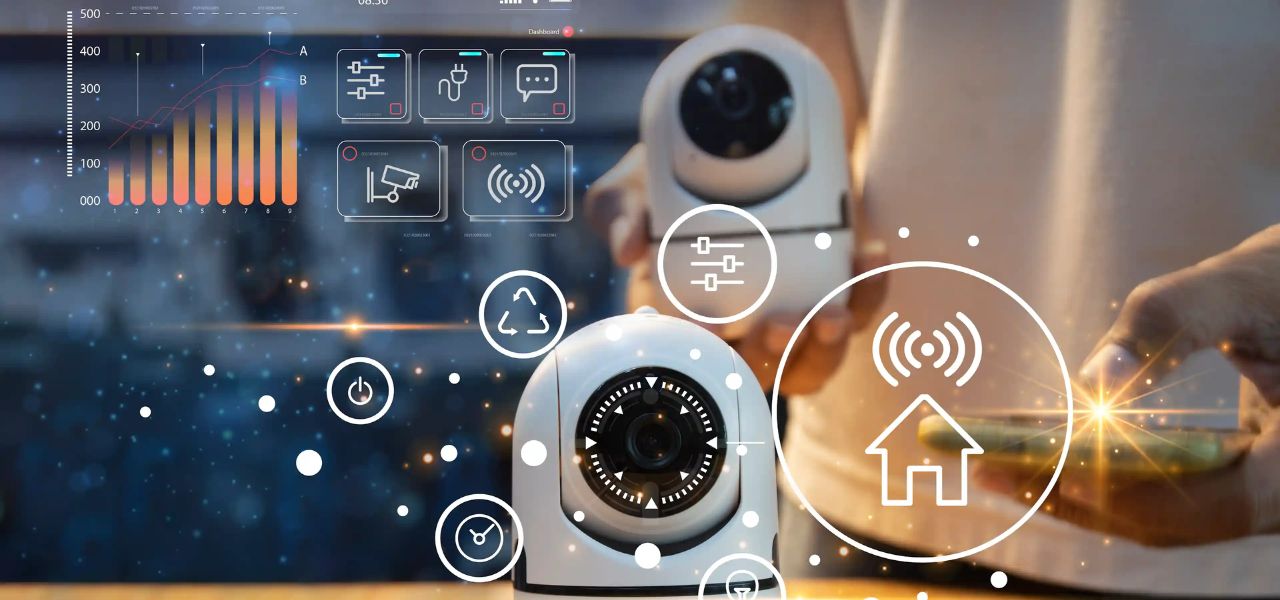
As a senior executive, you understand that assets must be protected. You’ve invested in robust financial controls, legal safeguards, and competitive strategies. Yet, there is one critical asset where the traditional lines of defense have blurred, creating a dangerous vulnerability: your home.
In the modern, connected residence, the distinction between physical and cyber security has collapsed. The smart lock on your front door is a cyber endpoint. The Wi-Fi camera monitoring your perimeter is a data stream. The thermostat controlling your environment is a node on your home network. This convergence means a hacker in a remote country can now orchestrate a physical breach, and a trespasser at your gate can attempt to access your digital life.
For leaders like you, whose personal lives are inextricably linked to corporate reputation and access, a fragmented security approach is an unacceptable risk. It’s time to apply a strategic framework to domestic protection. We must build the unbreakable home through integrated physical-cyber security.
The Executive Threat Matrix: Understanding the New Risk Landscape
The threats are no longer isolated; they are synergistic.
- The Digital Lockpick: An attacker exploits a vulnerability in your smart home hub, granting them not just your personal data, but the ability to disable alarms, unlock doors, and observe family movements in real-time.
- The Corporate Espionage Bridge: A compromised personal device or home network becomes a stepping stone into your corporate network. Unsecured IoT devices are a soft, often overlooked, entry point for advanced persistent threats (APTs) targeting your company’s crown jewels.
- The Integrated Extortion Plot: Adversaries combine physical surveillance (tracking your movements) with cyber attacks (locking down your home systems) to create sophisticated blackmail or extortion scenarios.
- Reputational Sabotage: Breaching personal emails, manipulating private video feeds, or public displays of control over your home systems can inflict immediate and severe damage to your professional standing and shareholder confidence.
The Integrated Security Framework: Four Pillars for the Modern Executive
Moving from a reactive to a proactive stance requires a holistic framework. Think of it as building a resilient organization, with your home as the headquarters.
Pillar 1: Governance and Risk Assessment
Objective: Establish clear oversight and understand your exposure.
You would never leave a critical business unit without a leader. Your home security deserves the same governance.
- Appoint a Single Point of Responsibility: This could be a trusted family office manager, a dedicated security lead, or a vetted external firm. Their role is to unify all security efforts.
- Conduct an Integrated Risk Assessment: This goes beyond a perimeter check. It must map all connected devices (from iPads to smart refrigerators) to potential physical and digital threat vectors. What data does each device hold? What physical function does it control? What is the impact of its compromise?
- Develop an Incident Response Plan: If a breach occurs, is the protocol to call the IT consultant, the alarm company, or both? Have a clear playbook that defines roles, communication chains, and recovery steps for hybrid incidents.
Pillar 2: The Secure Foundation: Network and Access
Objective: Create a defensible digital and physical perimeter.
In business, you segment your network to protect core servers. Apply the same principle at home.
- Network Segmentation: Isolate your critical systems. Your corporate laptop and family financial documents should be on a separate, highly secure network segment from your children’s gaming consoles and smart TVs. A guest network is non-negotiable.
- Zero-Trust Access Control: Implement the principle of “never trust, always verify.” Use multi-factor authentication (MFA) on all administrative accounts for home systems. Just as you wouldn’t give every employee a master key, not every family member needs administrative access to every smart home function.
- Physical Access as a Privilege: Re-evaluate physical access controls. Keys are a liability; modern access systems use biometrics or encrypted fobs that can be instantly revoked. Ensure all physical entry points are monitored and logged, integrating with your digital security console.
Pillar 3: Unified Technology and Monitoring
Objective: Achieve situational awareness across all domains.
Silos kill efficiency and security. Your security systems must speak the same language.
- Invest in an Integrated Platform: Seek out security systems where the access control, video surveillance, alarm sensors, and network monitoring tools feed into a single, unified dashboard. An alert from a motion sensor should trigger the nearest camera to record and prompt a network scan for anomalous device activity.
- Prioritize Encryption and Patches: Insist that all smart home devices and communication channels use end-to-end encryption. Establish a mandatory patch management policy—outdated firmware is one of the most common exploit vectors.
- Centralized Logging and Monitoring: All activity—failed login attempts, door unlocks, unknown device connections—should be aggregated and monitored, preferably by a professional security operations center (SOC) that understands the residential context.
Pillar 4: The Human Firewall: Family and Staff
Objective: Cultivate a culture of security awareness.
The most sophisticated system can be undone by human error.
- Regular, Relevant Training: Conduct brief, engaging security briefings for your family and household staff. Don’t use technical jargon. Frame it around real-world scenarios: “This is what a phishing text looks like,” or “This is why we don’t plug in unknown USB devices.”
- Clear Security Protocols: Establish and rehearse simple rules. How are guests granted Wi-Fi access? What is the procedure for admitting service personnel? Who is the first point of contact for a suspicious event?
- Vetting and Oversight: Ensure rigorous background checks for all staff with access to your home or systems. Re-evaluate these periodically, just as you would for employees with high-level clearance.
The Bottom Line
For today’s executive, personal security is not a private matter; it is a corporate imperative. The unbreakable home is not a fortress of impenetrable walls, but an intelligent, adaptive system where physical and digital defenses are seamlessly woven together. By applying this strategic framework—Governance, Foundation, Technology, and People—you transform your home from a vulnerable target into a resilient sanctuary. You protect not just your family and assets, but your reputation, your access, and your peace of mind. In the modern world, that isn’t just prudent; it’s essential leadership.
Cionlabs has developed a total solution for home automation with proven technologies. We are helping our clients to quickly launch the products with our white-label solutions. Drop us a note at contact@cionlabs.com for details.