

Blog
Digital Twins of National Infrastructure: The Strategic Play for Indian EPC and Smart City Leaders

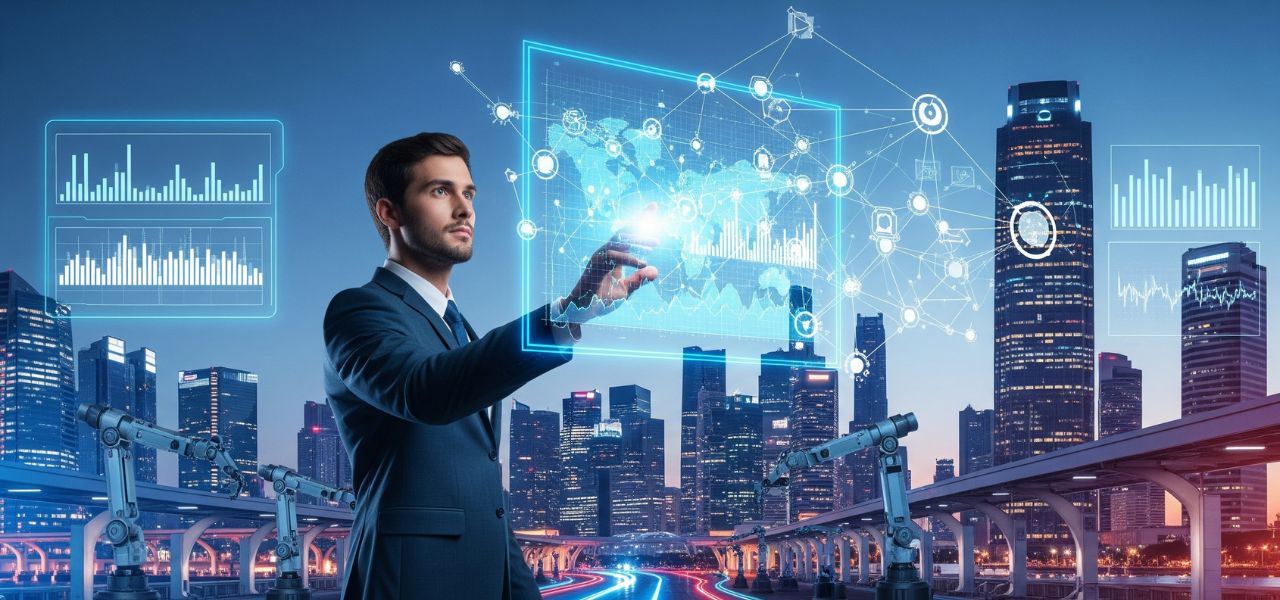
Beneath the cranes and concrete reshaping India’s skyline, a parallel, more intelligent revolution is taking place. For decades, Engineering, Procurement, and Construction (EPC) companies and city administrators have managed the world’s most complex systems—highways, ports, power grids, water networks—through a fragmented collage of 2D blueprints, periodic inspections, and reactive maintenance logs. This model is breaking under the weight of scale, complexity, and the demand for resilience. The future of building and governing India’s physical backbone lies not in these static documents, but in living, breathing digital twins—and for the leaders of this sector, mastering them is no longer a technological experiment; it is the definitive strategic play for the coming decade.
A digital twin is not a 3D model. It is a dynamic, data-driven virtual replica of a physical asset or system, updated in real-time by a flood of IoT sensor data and empowered by simulation AI. It is the difference between looking at a photograph of a bridge and interacting with a living simulation that knows the stress on every girder, the corrosion rate of each cable, and the traffic flow it will experience tomorrow.
The Scale of the Stakes: Why India Cannot Afford the Old Model
India is undertaking the largest infrastructure build-out in human history—from the National Infrastructure Pipeline (NIP) valued at over ₹111 lakh crore to the 100 Smart Cities Mission. The cost of inefficiency at this scale is catastrophic. Traditional methods lead to:
- Capital Overruns: “Surprises” during construction from unforeseen subsurface conditions or clashes between mechanical, electrical, and plumbing (MEP) systems.
- Operational Blindness: Running critical infrastructure like water treatment plants or metro networks with limited insight into real-time performance, leading to waste, breakdowns, and service failures.
- Inability to Simulate Stress: No way to answer critical “what-if” questions before a crisis: *What is the flood-risk to this new highway? How will this port handle a 30% increase in cargo?*
A digital twin transforms these challenges from reactive crises into managed variables.
The Four-Dimensional Value Engine: How Digital Twins Create Advantage
The strategic value of a digital twin unfolds across the entire asset lifecycle, creating a compounding ROI.
1. The Design & Build Phase: From Clash Detection to “Build-Before-You-Build”
- The Twin: A federated digital twin integrates architectural, structural, and MEP models with geospatial and geological data.
- The Strategic Play: EPC companies use the twin to simulate construction sequencing, optimize crane placements, and pre-fabricate components with absolute precision. They identify costly physical clashes in the virtual world, not on-site. This can reduce construction time by 15-20% and cut material waste by up to 25%, directly improving bid competitiveness and project margins.
2. The Operate & Maintain Phase: From Scheduled to Predictive & Prescriptive
- The Twin: IoT sensors embedded in the structure (measuring vibration, strain, corrosion, flow rates, energy consumption) feed live data into the operational twin.
- The Strategic Play: City managers and asset owners move from calendar-based maintenance to condition-based and predictive upkeep. The twin’s AI models detect anomalies—a developing crack in a pier, a pump operating outside its efficiency band—and prescribe specific interventions. This extends asset lifespan by 20-30% and slashes unplanned downtime, transforming CapEx into optimized, long-term value.
3. The Simulate & Optimize Phase: Governing with Foresight
- The Twin: The system-level twin of an entire smart city district or a national highway network, incorporating real-time data from traffic, weather, and utility usage.
- The Strategic Play: Administrators can run dynamic simulations. Simulate an emergency evacuation. Model the impact of a new transit line on traffic patterns. Optimize the energy grid by simulating tomorrow’s demand. This enables evidence-based policy, resilient urban planning, and dynamic public service delivery.
4. The Innovate & Monetize Phase: The Platform Play
- The Twin: A secure, API-enabled digital twin platform.
- The Strategic Play: The infrastructure owner can create new revenue streams. Offer anonymized traffic flow data to logistics companies. Allow urban planners to test development proposals in the virtual city. The twin becomes a platform for innovation and a source of data-as-a-service, fundamentally changing the business model of public infrastructure.
The Indian Inflection Point: A Greenfield Advantage in a Brownfield World
While Western nations struggle to retrofit digital twins onto century-old crumbling assets, India’s infrastructure boom is predominantly greenfield. This is a monumental strategic advantage. We have the opportunity to “twin at birth”—to design, build, and commission assets with their digital twins from day one. This embeds intelligence, resilience, and operational excellence into the DNA of our national infrastructure, setting a global benchmark.
The Leadership Blueprint: Building Your Twin Capability
For the CEOs of EPC majors and the heads of smart city SPVs, the path is deliberate:
- Start with a Lighthouse Asset: Begin not with an entire city, but with a high-value, complex asset—a new wastewater treatment plant, a key bridge, or a transit hub. Demonstrate ROI in a contained environment.
- Mandate BIM & IoT from the Tender Stage: Make Building Information Modeling (BIM) Level 2+ and IoT sensorization non-negotiable in your RFPs. The digital twin is built on this data foundation.
- Forge Ecosystem Partnerships: No single company holds all the keys. Success requires a consortium: EPC expertise, IoT hardware and connectivity specialists (like Cionlabs), AI/Simulation software firms, and domain experts.
- Develop In-House “TwinOps” Teams: Cultivate a new discipline within your organization that blends data science, civil engineering, and operations to manage and extract value from the digital twin.
The Cionlabs Enabler: From Physical Grain to Digital Thread
Our role is to ensure the physical world accurately and reliably speaks to the digital twin. We provide the central nervous system of sensors and edge intelligence that makes the twin “live.”
- Infrastructure-Grade Sensing: We design and deploy ruggedized, long-life sensor networks for harsh environments—embedded in concrete, mounted on high-mast poles, submerged in water—that deliver faithful data for decades.
- Edge Data Integrity: We process and validate sensor data at the source, ensuring the twin receives clean, actionable information, not just noise.
- Secure, Scalable Integration: We build the robust data pipeline from the OT (Operational Technology) layer of the infrastructure into the IT layer of the twin platform, ensuring scalability and cybersecurity.
The Strategic Verdict: Redefining National Competitiveness
The organizations that master the digital twin will not just win more projects; they will define the future of India’s built environment. They will deliver projects faster, safer, and under budget. They will operate assets with unprecedented efficiency and resilience. They will transition from contractors and administrators to long-term custodians of national intelligence.
For India’s infrastructure leaders, the digital twin is more than a tool. It is the strategic lens through which the next century of growth will be planned, built, and optimized. The race is not for the tallest tower, but for the most intelligent one. The time to build your twin is now.
Ready to make your next infrastructure project its own intelligent, living blueprint? Contact Cionlabs to discuss building the sensor network and data foundation for a lighthouse digital twin project. Let’s construct the future, twice—first in digital certainty, then in physical reality.