

Blog
“From PIL to Product: How Indian Energy Startups Can White-Label a Grid-Edge Wi-Fi Sensor in 12 Weeks

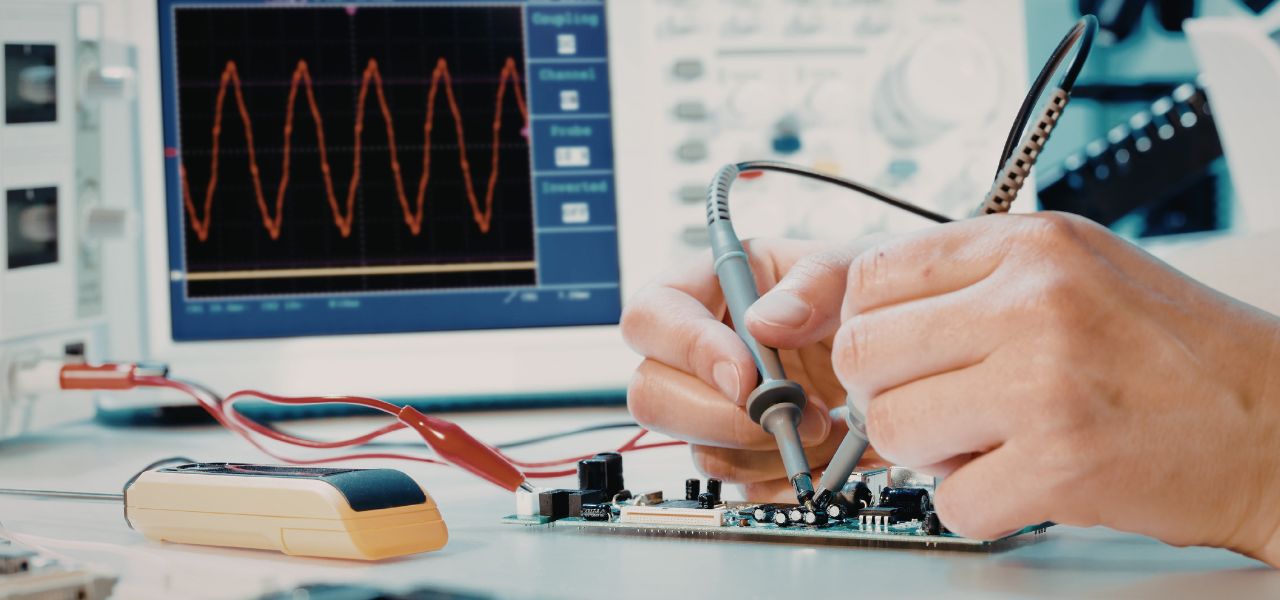
You have a public interest litigation, a state discom pilot, or a smart meter mandate. You also have a problem. The hardware is not ready. Your software team is excellent at the cloud and analytics, but they have never designed a PCB for India’s grid environment. Voltage sags, 50°C ambient temperatures, and intermittent neutral issues are not in their GitHub repository.
You need a grid edge Wi-Fi sensor. You need it in 12 weeks. And you need it as your own brand, not someone else’s.
Here is the path.
The Indian Energy Startup Trap: Underestimating Hardware Risk
Most energy founders in India start with a proof of concept using imported development boards. That works for exactly one day. The moment you move to field trials in a Tier 2 city, three things fail. The Wi-Fi reconnection after a power cut is unreliable. The enclosure cannot handle dust and humidity. The cost per unit crosses the discom’s unstated threshold of ₹1,200.
The result is not a delayed launch. The result is a dead pilot. Indian energy regulators and state utilities do not reward elegant code. They reward uptime and unit economics.
You have two choices. Build an in-house hardware team requiring 9 to 12 months and multiple respins. Or white-label a proven design that is already grid hardened.
Why White Label, Not Custom From Scratch
A fully custom design from zero can take 6 to 9 months for certification alone in India. You need BIS, TEC, and sometimes state specific approvals. A white label model, when done correctly, cuts that timeline to 12 weeks for the first production batch.
White label does not mean off the shelf generic. It means you take a reference design built for Indian grid conditions, add your firmware, your branding, your cloud endpoints, and your analytics stack. The connectivity layer, the power supply isolation, the surge protection, and the thermal management are already solved.
This is where the partnership between Cionlabs and Beken becomes relevant for energy startups.
The Connectivity Non Negotiable: Beken Wi-Fi for Indian Grids
Most Wi-Fi chipsets are designed for living rooms, not distribution transformers. Beken’s Wi-Fi family, specifically the BK7231 series, is different. It is designed for cost sensitive, power constrained, thermally harsh environments. The chip recovers from brownouts in milliseconds. The RF front end maintains sensitivity even when grid harmonics introduce noise into the power supply.
For an energy startup, this means one thing. You do not spend three months debugging Wi-Fi dropouts. You spend that time on your differentiation layer, which is your energy analytics, your predictive algorithms, and your customer dashboards.
Beken provides the reliable pipe. Cionlabs provides the complete hardware stack around it.
The 12 Week White Label Roadmap
Here is how the timeline works with Cionlabs as your design and manufacturing partner.
Week 1 to 2: Requirements and Customization
You share your sensor requirements. Single phase or three phase. Current transformer or shunt based. Sampling rate. Data payload size. Cloud protocol, typically MQTT or CoAP. Cionlabs maps these to an existing grid edge reference design built around Beken Wi-Fi.
Week 3 to 5: Firmware and Cloud Integration
You provide your API endpoints and authentication logic. Cionlabs ports the Beken SDK to your specific data schema. Over the air update policies are defined. Security keys for FIDO based device authentication are injected.
Week 6 to 8: Prototype and Field Readiness Testing
Ten units are built. They are tested for three Indian grid conditions. Voltage surge from 140V to 300V AC. Neutral floating. Repeated power cycling every 15 minutes for 72 hours. Wi-Fi reconnection time is measured and validated under 8 seconds.
Week 9 to 11: Certification and Compliance
Cionlabs manages BIS and TEC documentation for the base design. Your white label variant inherits most approvals. Only delta testing is required. This is where weeks turn into months for in-house teams, but not here.
Week 12: First Production Batch
You receive 500 to 1,000 units with your logo, your packaging, and your firmware. You deploy them to your pilot site. You do not worry about connectivity.
The ROI Model for Indian Energy Startups
Let us quantify the risk reduction. An in-house hardware team of three engineers, even at conservative Indian salaries, costs you ₹25 to ₹35 lakhs over six months. That does not include PCB fabrication, certification fees, or component procurement delays.
The white label route with Cionlabs typically costs 60 to 70 percent less in engineering overhead. More importantly, it reduces your time to revenue by at least four months. For an energy startup targeting a discom contract worth ₹2 to ₹3 crore annually, those four months represent direct opportunity cost.
You are not paying for engineering. You are paying for speed and certainty.
What You Retain, What You Hand Over
You retain the most valuable parts. Your cloud software, your customer relationship, your pricing model, your brand. You hand over the parts that do not scale for a startup. PCB layout, thermal design, certification management, supply chain for passive components, and Beken Wi-Fi module integration.
This is not outsourcing. This is strategic focus.
A Note on Indian Regulatory Tailwinds
The Ministry of Power’s Revamped Distribution Sector Scheme (RDSS) mandates smart metering and grid monitoring for loss reduction. State discoms are under pressure to deploy IOT based sensors on feeders and distribution transformers. However, they will not buy expensive imported hardware. They will buy cost effective, locally manufactured, compliant devices.
That is your window. A white labeled grid edge Wi-Fi sensor with Beken inside and Cionlabs behind it is exactly what the market needs right now.
The Only Question That Matters
Do you want to spend the next six months learning about conducted emissions testing and thermal pad placement? Or do you want to spend the next six months winning discom contracts and refining your energy algorithms?
If your answer is the latter, the white label path is not a compromise. It is the fastest route from a public interest litigation to a product that works under Indian sun, Indian rain, and Indian voltage swings.
Cionlabs has the reference design. Beken has the reliable Wi-Fi. You have the vision for India’s smarter grid. Let us skip the hardware debug and get to deployment.
Ready to go from PIL to product in 12 weeks? Contact Cionlabs for a white label grid sensor briefing.