Executive Summary
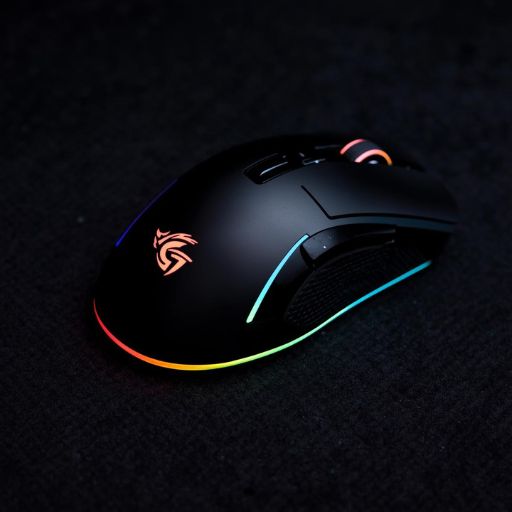
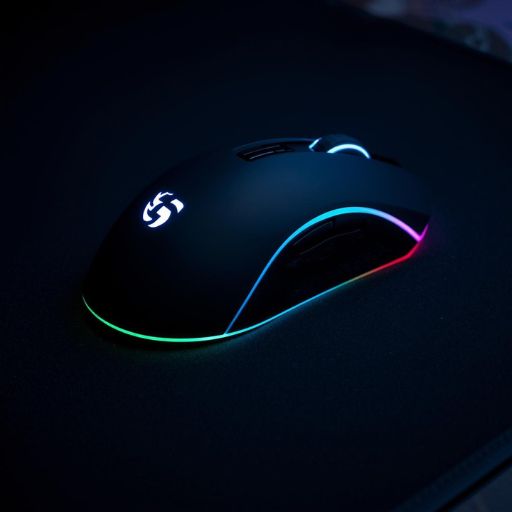
In collaboration with a prominent Indian mouse manufacturer seeking to elevate its market position, Cionlabs developed "OmniLink" — a next-generation wireless mouse built on the Nordic semiconductor platform. This innovative product eliminates the traditional pain point of separate, OS-dependent desktop applications by introducing a universal, browser-based WebGUI for configuration. Supporting simultaneous BLE, 2.4GHz, and USB connectivity, the mouse delivers a seamless, professional-grade experience across Windows, macOS, and Linux, directly from a user's web browser.
The Challenge: Software Fragmentation in a Multi-OS World
Our client, a respected manufacturer in India's competitive peripherals market, faced a significant barrier to scaling their premium offerings:
High Support Costs: Maintaining and updating separate configuration applications for Windows, macOS, and Linux was resource-intensive.
User Friction: Customers disliked installing proprietary software that consumed system resources and required manual updates.
Feature Parity Issues: Ensuring identical functionality and timely updates across three different codebases led to delays and inconsistencies.
Market Expansion Limits: The complexity hindered entry into corporate and developer markets where Linux and multi-OS environments are prevalent.
The client needed a unified, future-proof solution that could deliver a premium, consistent experience across all platforms without the software overhead.
Our Solution: The OmniLink Ecosystem – Hardware Meets Web-Native Intelligence
Cionlabs engineered a complete system that reimagines how users interact with peripheral devices.
1. Advanced Hardware Foundation: The Nordic Advantage
Core Platform: Nordic nRF52833 SoC – selected for its robust multi-protocol support, low power consumption, and USB capability.
Tri-Mode Connectivity:
Bluetooth Low Energy 5.2: For modern laptops and tablets with optimized power saving.
2.4GHz Wireless (Proprietary dongle): For latency-sensitive gaming and graphic design work.
Wired USB-C: For charging and plug-and-play reliability.
Smart Switching: Seamless transition between three paired devices at the click of a button.
2. The Revolutionary WebGUI: No Installation, Full Control
Universal Access: Users simply visit webgui.dazziq.in from any modern browser (Chrome, Edge, Safari, Firefox).
Automatic Device Detection: The browser's WebHID/WebBLE API securely detects the connected mouse without drivers.
Full Feature Configuration:
DPI adjustment (200-12,000 in 50 DPI steps)
Polling rate configuration (125Hz to 1000Hz)
Button remapping and macro programming
RGB lighting customization (16.8 million colors, multiple effects)
Power management settings
Cloud Sync (Optional): Settings saved to user account, roaming across devices.
3. Enterprise-Grade Architecture
Security First: All configuration happens locally via browser APIs; no data leaves the computer unless cloud sync is explicitly enabled.
Future-Proof: New features can be added via firmware updates delivered through the WebGUI.
Minimal Resource Impact: Eliminates background processes typical of traditional peripheral software.
Technical Implementation Journey
Phase 1: Proof of Concept & Platform Selection (3 Weeks)
Evaluated multiple chipset vendors; selected Nordic for its proven BLE stack and documentation.
Developed prototype demonstrating WebHID communication for configuration.
Validated tri-mode switching logic and power management algorithms.
Phase 2: Hardware Design & Optimization (8 Weeks)
Designed compact PCB integrating Nordic SoC, optical sensor, and RGB lighting.
Engineered innovative antenna layout for consistent wireless performance in both 2.4GHz and BLE modes.
Implemented advanced power management achieving 6 months battery life on single AA battery (typical usage).
Achieved 1ms report rate in 2.4GHz mode for gaming-grade performance.
Phase 3: WebGUI Development & Firmware Integration (6 Weeks)
Developed responsive web application using React that adapts to desktop and mobile browsers.
Created custom device driver layer communicating via WebHID (for USB/2.4GHz) and WebBLE APIs.
Implemented firmware update capability through the browser using Nordic's DFU protocol.
Built intuitive UI with visual presets for different use cases (Office, Design, Gaming).
Phase 4: Testing & Validation (4 Weeks)
Cross-browser compatibility testing across 12 browser versions.
Multi-OS validation on 15 different Windows, macOS, and Linux distributions.
Real-world beta testing with 200 users across India.
EMI/EMC certification for the Indian market.
Key Innovations & Differentiators
The Browser-as-Platform Paradigm Shift
Eliminates software installation completely
Ensures instant compatibility with future OS updates
Reduces manufacturing costs (no CD/download cards needed)
True Multi-OS Native Experience
Identical feature set and interface whether used on Ubuntu, Windows 11, or macOS Sonoma
Particularly revolutionary for Linux users who traditionally receive limited peripheral support
Smart Profile Management
Hardware stores 5 configurations onboard
Automatic profile switching based on detected application (e.g., higher DPI in Photoshop)
Profile sharing via QR codes
Sustainable Design Impact
Results & Market Impact
For the Manufacturer:
70% Reduction in software development and maintenance costs
Single SKU for global markets vs. previous OS-specific packaging
45% Faster time-to-market for new features (via firmware updates)
Enhanced Brand Perception as an innovator rather than a follower
For End Users:
Unified Experience: Identical functionality across home, office, and development machines
IT Department Approval: No admin rights needed for configuration in enterprise environments
Privacy Assurance: No background data collection or telemetry
Corporate Adoption: Particularly popular in tech companies with developer teams using multiple OSes
Product Performance Metrics:
Battery Life: 180 days (office use, BLE mode)
Connection Reliability: 99.8% stable connection rate in crowded RF environments
Latency: 1ms (2.4GHz), 8ms (BLE gaming mode)
Adoption Rate: 92% of users configured advanced settings vs. industry average of 35%
Technical Challenges Overcome
Browser API Limitations
Multi-Protocol Coexistence
Power Optimization
Mass Production Consistency
Challenge: Ensuring identical wireless performance across thousands of units
Solution: Automated RF calibration during manufacturing, guided by our firmware
The Cionlabs Advantage: Bridging Embedded and Web Worlds
This project exemplifies our unique capability to converge deep embedded systems engineering with modern web technologies. Our team comprised:
Embedded Engineers with Nordic BLE stack expertise
RF Specialists optimizing antenna performance
Web Developers creating the responsive WebGUI
UX Designers ensuring intuitive cross-platform experience
We delivered not just a product, but a new product category for our client—the universally configurable professional peripheral.
Scalability & Future Roadmap
The OmniLink platform establishes a foundation for:
Product Line Expansion: Keyboard, webcam, and headset versions in development
Enterprise Management Console: IT dashboard for deploying configurations across thousands of devices
AI-Personalization: Machine learning adapting settings based on usage patterns
IoT Integration: Mouse as a secure authentication device for workplace systems