

Blog
Solar Inverter Wi-Fi Failures in Indian Summers: Root Cause & Custom Fix

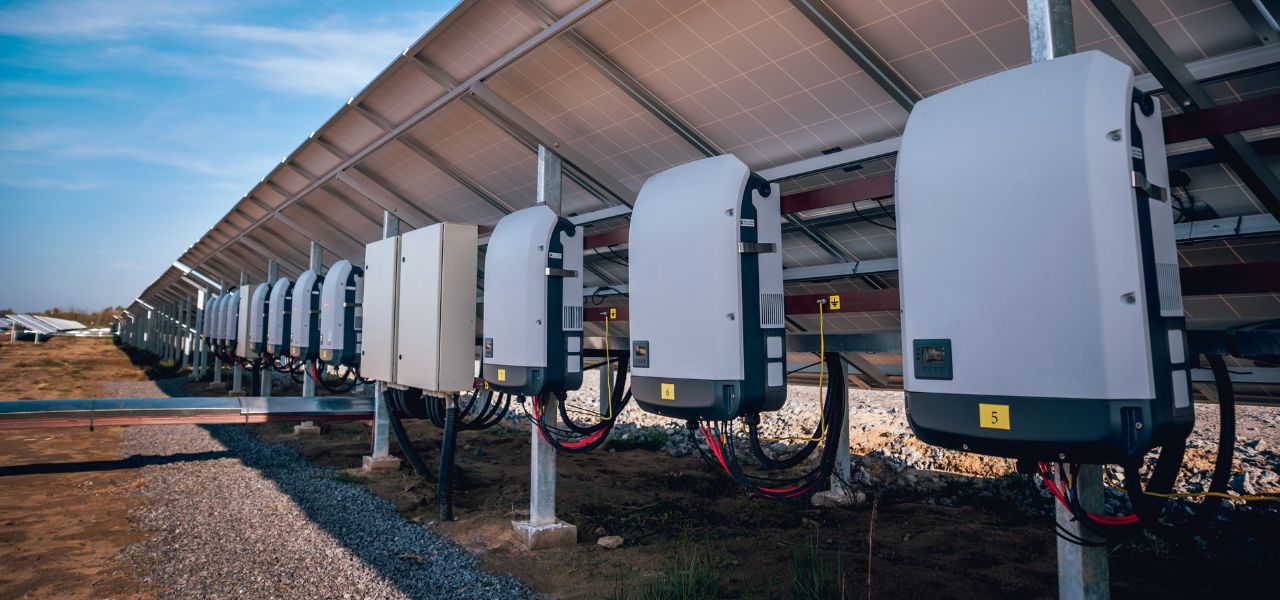
India added over 15 GW of solar capacity in 2024 alone. A significant portion of this capacity relies on Wi Fi enabled inverters for remote monitoring, performance tracking, and firmware updates. Yet every summer, thousands of these inverters go offline not because of panel failure or battery degradation, but because their onboard Wi Fi simply stops working.
For senior executives in India’s renewable energy sector, this is not a minor nuisance. It is a direct hit to operational ROI. A non reporting inverter means delayed maintenance, underperformance penalties, and frustrated end customers. The root cause is rarely a design flaw in the chip itself. It is a failure to design for India’s specific thermal and electrical environment.
The Real Root Causes Inside Indian Solar Installations
Temperatures inside a solar inverter enclosure in Rajasthan or Tamil Nadu can exceed 75 degrees Celsius during peak afternoon hours. Most commercially available Wi Fi modules, especially those designed for European or Chinese markets, are rated for 0 to 70 degrees Celsius ambient. Once internal temperatures cross 70 degrees, three things happen sequentially.
First, the Wi Fi chip’s oscillator drifts, causing beacon loss and disconnection from the access point. Second, the power amplifier degrades, reducing transmit power by as much as 40 percent. Third, the module enters thermal throttling or shuts down entirely. The monitoring dashboard shows “last seen 4 hours ago.” The site manager sees nothing.
The second root cause is voltage instability. Indian rural and semi urban grids frequently experience surges and sags. Inverters themselves generate electrical noise. Low cost Wi Fi modules lack proper input protection and brownout detection. A momentary dip below 3.0 volts resets the module. Recovery is slow or nonexistent without a hard power cycle. In a locked rooftop cabinet, that cycle may never happen.
The third root cause is enclosure design. Many white label inverters imported or locally assembled use sealed metal casings that trap heat. The Wi Fi antenna is placed near switching power supplies or transformer coils. The result is both thermal and electromagnetic interference. The module is literally cooking itself while trying to shout through a wall of noise.
The Business Cost of Summer Disconnects
For a commercial solar installer with 500 inverters deployed across three states, a 10 percent summer dropout rate means 50 sites go dark. Each site requires a technician visit. Each visit costs between ₹2,500 and ₹5,000 depending on location. That is ₹1.25 to 2.5 lakh per summer just for diagnostics. Replacement of failed modules adds another ₹500 to ₹1,000 per unit plus logistics.
More damaging is the loss of performance data. Without reliable connectivity, plant operators cannot claim carbon credits, validate generation guarantees, or predict cleaning schedules. A single large inverter losing 5 percent of its annual output due to delayed fault detection can erase ₹50,000 to ₹1 lakh in revenue. Multiply that across a portfolio. The numbers become uncomfortable quickly.
Why Off the Shelf Modules Cannot Solve This
Indian system integrators often assume that any Wi Fi module certified by the chip vendor will work. This is false. Reference designs are tested in controlled labs at 25 degrees Celsius with clean power supplies and ideal antenna placement. They are not tested inside a sun baked inverter next to a humming transformer at 3 PM in May.
Swapping one commercial module for another does not solve the root problem. The real solution requires three deliberate design choices. First, a Wi Fi chipset rated for industrial temperature ranges of 40 to +85 degrees Celsius or higher. Second, a power management subsystem with brownout protection and graceful recovery. Third, antenna placement and shielding designed for the actual electromagnetic environment of a solar inverter.
The Cionlabs Approach Using Beken Wi Fi Chipsets
Cionlabs has addressed this exact failure pattern using Beken Wi Fi chipsets, specifically the BK7231 and BK7252 series. These chips are designed with a wider operating temperature range and superior RF interference tolerance compared to typical consumer grade modules. But a chip alone is insufficient. The custom design is where reliability is won or lost.
We build three layers of protection into every solar inverter Wi Fi design for Indian conditions.
First, thermal management. We select Beken chips with on chip temperature sensing and adaptive clocking. We then design the PCB layout to isolate the Wi Fi section from hot components like MOSFETs and transformers. Heat dissipation is improved through dedicated copper planes and, where necessary, small passive heatsinks.
Second, power robustness. We add input overvoltage protection up to 24 volts, undervoltage lockout, and a supercapacitor based hold up circuit. If the main supply dips, the Wi Fi module stays alive long enough to log the event and send a last gasp alert. When power restores, the module reconnects within seconds without manual intervention.
Third, antenna engineering. We relocate the antenna away from noise sources using flexible printed circuits or external whip antennas. The antenna matching network is tuned specifically for the enclosure’s material, whether metal or plastic. The result is a consistent received signal strength indicator even when the inverter door is closed and the sun is overhead.
White Label Advantages for Solar Brands and OEMs
For Indian solar inverter brands and contract manufacturers, the choice is between importing generic modules and accepting summer failures or partnering with Cionlabs for a purpose built solution. The white label path offers three strategic benefits.
Speed to market. We deliver a production ready Wi Fi daughterboard or fully integrated mainboard design in 10 to 12 weeks. The design includes firmware for MQTT, Modbus, or proprietary cloud protocols. Your team focuses on inverter core technology while we handle connectivity.
Risk reduction. Every design is tested in our thermal chamber at 80 degrees Celsius and with simulated grid fluctuations. We also test for real world interference using recorded noise profiles from operating solar sites. What works in the lab must work in Latur and Ludhiana.
Cost control. A custom design using Beken chips is often less expensive than a generic module after volume scaling. There are no unnecessary components, no redundant certifications, and no paid feature bloat. You pay only for what India’s summer demands.
A Practical Path Forward
The first step is a connectivity audit of your existing inverter fleet. Identify which sites lose connectivity most frequently and correlate with temperature data. If you see a clear summer versus winter pattern, the root cause is almost certainly thermal or power related.
The second step is a proof of concept. Cionlabs can build a small batch of modified Wi Fi modules using Beken chips and your existing inverter hardware. These can be deployed in a handful of high temperature sites alongside unmodified units. The difference in uptime is typically visible within two weeks.
The third step is transitioning to a custom white label design for your next production run. The incremental cost is negligible compared to the operational savings from eliminated truck rolls and preserved generation data.
Conclusion
Indian summers are not a bug. They are a feature of the operating environment. Wi Fi failures in solar inverters are not inevitable. They are a design choice. By selecting the right chipset, adding robust power and thermal engineering, and testing against real Indian conditions, you can eliminate the seasonal connectivity gap.
Cionlabs has done this for multiple energy sector clients using Beken Wi Fi technology. We are ready to do it for you. Let us build a white label solution that stays online when everything else is sweating.
About Cionlabs
Cionlabs is an Indian electronics design house specializing in IoT, AIoT, edge intelligence, RFID, biometrics, FIDO, medical devices, and smart systems. We partner with Beken, a pioneer in Wi Fi chipsets, to deliver reliable, cost effective, and India ready connectivity solutions for manufacturing, healthcare, smart home, security, and energy sectors.
Contact: Reach out to our strategy team to discuss a custom design for your solar inverter or energy monitoring product.