

Blog
Spatial Computing Meets Industrial IoT: How AR/VR Will Transform Indian Factory Floors and Field Service

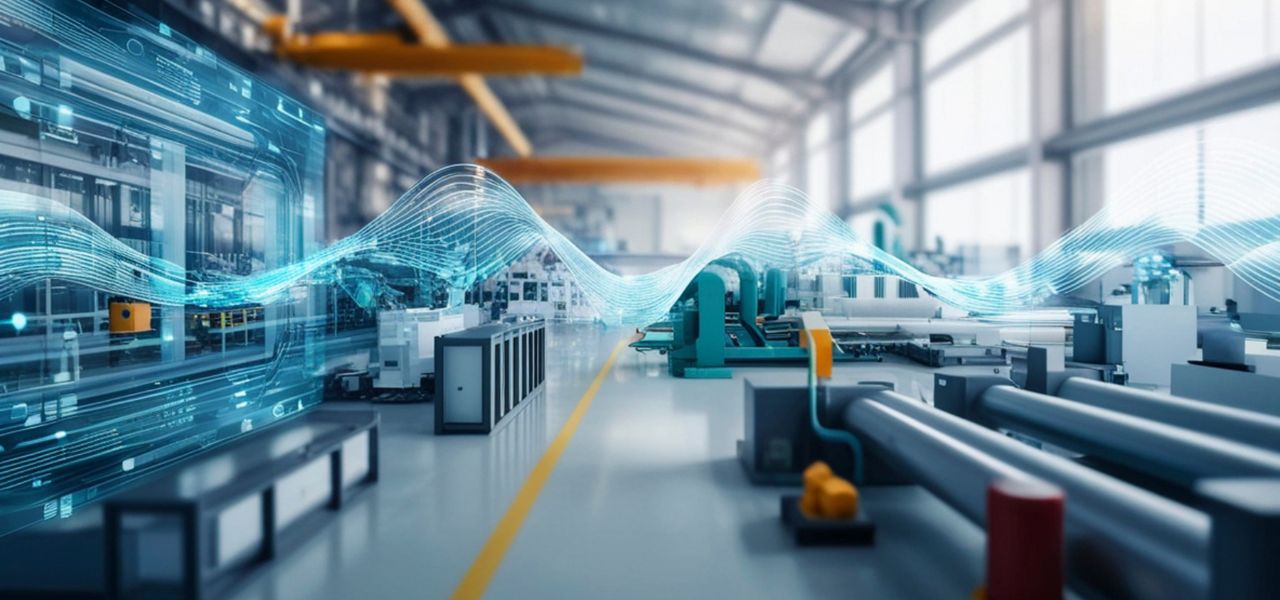
For decades, the Indian factory floor has operated on a familiar rhythm: skilled operators monitoring machines, paper-based checklists, and field service engineers traveling to remote sites with bulky manuals and years of tacit knowledge. But a new convergence is quietly rewriting this industrial narrative. At the intersection of spatial computing – encompassing Augmented Reality (AR) and Virtual Reality (VR) – and the Industrial Internet of Things (IIoT) lies a transformative opportunity for Indian manufacturing.
For senior executives steering India’s manufacturing renaissance, this convergence represents not just an operational upgrade but a fundamental reimagining of how work gets done—from the factory floor in Pune to the wind turbine in rural Karnataka. The question is no longer if spatial computing will enter industrial workflows, but how enterprises can strategically harness it to build competitive advantage.
The Convergence: When Digital Twins Become Living, Breathing Entities
The true power of spatial computing emerges when it meets IIoT. IIoT provides the data stream – real-time sensor readings from machines, environmental conditions, and asset health metrics. Spatial computing provides the visualization layer – immersive interfaces that make this data intuitive, actionable, and contextually relevant.
This convergence creates what industry experts call “living digital twins” – connected, real-time views of physical assets throughout their life cycles. Unlike static 3D models, these living twins are continuously updated with live IoT data, enabling faster, more precise, and more proactive outcomes across manufacturing operations.
Consider what this means in practice: a maintenance engineer wearing AR glasses doesn’t just see a machine; they see its internal components overlaid with real-time temperature data, vibration analytics, and predictive maintenance alerts. The digital and physical worlds fuse into a single, actionable interface.
Transforming the Indian Factory Floor
Indian manufacturing is already embracing this vision. The recently launched DiFact (Digital Factory & Connected Technologies Pavilion) at HIMTEX 2026 dedicated an entire platform to these technologies, featuring AR/VR-based digital twins and simulation tools as core exhibitor zones. This reflects a broader industry recognition that spatial computing is moving from experimental to essential.
Next-Level Training and Skill Development
One of the most immediate applications is workforce training. The manufacturing sector is increasingly aided by AR through next-level training and maintenance. New operators can learn complex assembly procedures through AR-guided workflows overlaid directly on their field of view, reducing training time and minimizing errors.
More dramatically, companies like Imaginate demonstrated at India Energy Week 2026 an XR-based subsea operations training solution developed on the Atom immersive platform. This solution integrates AI-powered virtual trainers that engage trainees in real-time contextual conversations, adjusting their responses based on trainee inputs. For India’s energy sector, where offshore operations are complex and high-risk, such immersive training enables safe, scalable skill development without exposing personnel to dangerous environments.
Virtual Commissioning and Maintenance
AR and VR are also transforming how factories are designed and commissioned. Virtual commissioning—simulating production lines before physical installation—allows manufacturers to identify bottlenecks, test configurations, and optimize layouts without costly physical iterations. This is particularly valuable for India’s rapidly expanding manufacturing capacity, where speed-to-market and capital efficiency are critical.
For maintenance, the benefits are equally compelling. Field service engineers equipped with AR smart glasses can access remote expert guidance, view equipment history overlaid on physical assets, and follow step-by-step repair instructions generated from IoT data. This transforms maintenance from reactive firefighting to proactive, data-driven asset management.
Field Service: The Remote Expert Advantage
India’s geographic diversity presents unique challenges for field service. Power generation assets in remote locations, telecom infrastructure across difficult terrain, and agricultural equipment in far-flung rural areas all demand maintenance support. Spatial computing offers a solution: the remote expert.
Bharat Bijlee, a leading electrical engineering company, demonstrated this potential at the Smart Lift & Mobility World Expo 2026 in Bengaluru. The company showcased a Virtual Reality zone offering visitors an immersive tour of their manufacturing plant, providing deeper insight into their capabilities and processes. While this application focused on customer engagement, it illustrates the broader potential—imagine field engineers conducting virtual site visits, inspecting equipment remotely, and guiding on-site technicians through complex repairs from a centralized location.
This capability is particularly relevant for India’s infrastructure sector, where specialized expertise is often concentrated in metropolitan areas, but assets are distributed nationwide. AR/VR bridges this gap, democratizing access to scarce technical knowledge.
The Indian Ecosystem: Emerging Capabilities
India’s spatial computing ecosystem is maturing rapidly. Indigenous companies like AjnaLens are supplying XR technology-based devices to the armed forces and the Defence Research and Development Organisation (DRDO). In a striking deployment for Republic Day 2026, the Delhi Police utilized 100 AI-enabled smart spectacles from AjnaLens, equipped with integrated facial recognition and thermal imaging technology.
While this application focuses on security, it demonstrates that India possesses domestic capability in developing and deploying advanced AR hardware-capability that can be adapted for industrial applications. For manufacturing executives, this means supply chain advantages and the potential for solutions tailored to Indian operational contexts.
Universities are also embracing spatial computing, integrating AR/VR classrooms for medical and engineering education. This builds a pipeline of talent familiar with these technologies, accelerating future industrial adoption.
The Integration Challenge: Making It Work
Despite the transformative potential, integrating spatial computing with industrial IoT presents significant challenges that demand careful strategic planning.
Initial Investment and Infrastructure
AR and VR implementations involve increased initial and implementation costs. For Indian manufacturers operating on thin margins, the business case must be compelling. However, the declining cost of smart glasses, the availability of cloud-based platforms, and the measurable ROI from reduced downtime and training costs are making the economics increasingly favorable.
Data Integration and Interoperability
The value of spatial computing depends entirely on the quality and accessibility of underlying IoT data. Enterprises must invest in robust data infrastructure—integrating sensors, establishing reliable connectivity, and ensuring data flows seamlessly to visualization platforms. As noted by industry experts, enterprises are now doubling down on building secure, scalable, and intelligent digital foundations.
User Acceptance and Change Management
User-friendliness and acceptance remain significant barriers. Industrial workers, particularly those with decades of experience, may resist adopting AR-guided workflows. Successful implementation requires involving end-users in solution design, providing adequate training, and demonstrating clear value—reduced physical strain, fewer errors, and enhanced capabilities rather than replacement of human judgment.
The Strategic Imperative for Indian Manufacturing Leaders
For senior executives, the convergence of spatial computing and industrial IoT presents a strategic inflection point. Early adopters will capture advantages in three critical dimensions:
Operational Excellence: Faster training, reduced maintenance downtime, and fewer errors translate directly to improved asset utilization and lower costs.
Workforce Empowerment: As India’s manufacturing sector faces skill shortages, AR/VR enables less experienced workers to perform at the level of seasoned veterans, capturing and codifying institutional knowledge.
Customer Experience: Exceptional customer experience is becoming a competitive differentiator in manufacturing. Spatial computing enables immersive product demonstrations, remote troubleshooting, and transparent visibility into manufacturing processes—building customer trust and loyalty.
Cionlabs: Engineering the Spatial-Industrial Future
At Cionlabs, we are at the forefront of this convergence. Our expertise in industrial IoT—designing robust, low-power sensor systems and edge intelligence solutions powered by partnerships with chipset leaders like Beken—creates the reliable data foundation that spatial computing requires. We understand that AR/VR visualization is only as valuable as the data it visualizes.
By integrating our IIoT capabilities with emerging spatial computing platforms, we help Indian enterprises architect complete solutions: from sensor to edge intelligence to immersive interface. Whether for factory floor optimization, field service transformation, or workforce training, we design systems that are scalable, secure, and tailored to India’s unique industrial landscape.
Conclusion: The Future is Immersive and Intelligent
Spatial computing meeting industrial IoT represents the next great leap in Indian manufacturing—a leap from disconnected data and manual processes to immersive, intelligent operations where information flows seamlessly between physical assets and human operators.
For enterprises positioned to lead in this space, the opportunity extends beyond operational efficiency. It encompasses workforce development, customer differentiation, and the ability to compete globally on the strength of digital capabilities.
The sensors are deployed. The connectivity is expanding. The spatial interfaces are maturing. What remains is the strategic vision to integrate these elements into solutions that transform how India builds, maintains, and services the physical infrastructure of its economy.
Ready to bring spatial intelligence to your factory floor or field service operations? Let’s engineer your immersive industrial future.
Cionlabs. Connecting the Physical and Digital for the Indian Industry.