

Blog
The 200 Foot Apartment Corridor: Designing Long Range Wi-Fi Door Locks for Indian High Rises with Beken

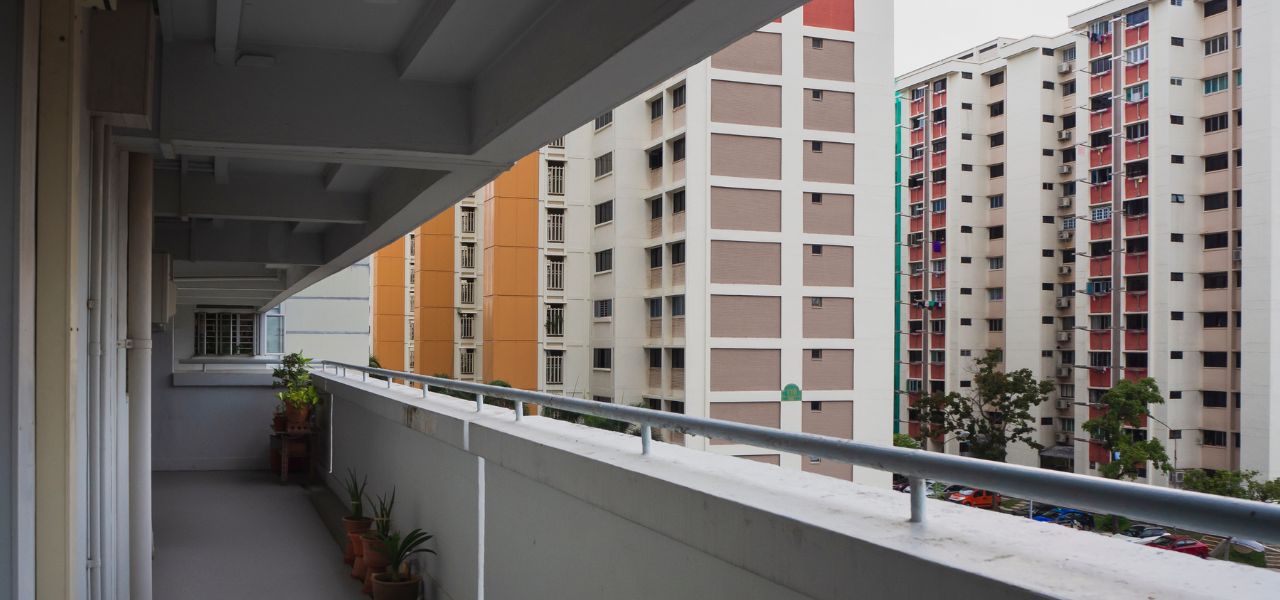
Indian high rises are not American suburbs. A typical Mumbai or Gurugram tower has 20 to 40 floors. Each floor has a corridor that stretches 150 to 250 feet from the lift lobby to the end apartment. The door lock at that far end must communicate with a gateway located near the staircase or the lift shaft. Between them lie multiple concrete shear walls, electrical conduits, and often a layer of metal mesh in the plaster.
This is where most smart lock brands fail. Not because the lock is bad. Because the Wi-Fi cannot maintain a stable connection over a range.
If you are a smart home brand, a security systems integrator, or a real estate developer launching a connected tower, this problem is your hidden cost. You will face installation rejections, customer complaints, and expensive retrofits. Or you will design for Indian corridors from day one.
Here is how Cionlabs and Beken solve the 200-feet problem with a white-label approach.
The Physics of Indian Corridors
A door lock at 200 feet line of sight through drywall is trivial. But Indian high rises use solid concrete block walls, often 9 inches thick. Each wall attenuates a 2.4 GHz signal by 10 to 15 decibels. A typical 200-foot corridor in a Mumbai tower has three to four such walls between the lock and the gateway.
Most consumer Wi-Fi chipsets are tested in open-air or wooden frame environments. They lose connection at 60 to 80 feet through concrete. This is not a specification failure. It is a market mismatch.
Your smart lock brand gets blamed for a problem that belongs to the chipset and the antenna design.
Beken Wi-Fi: Designed for Dense Indian Construction
Beken’s Wi-Fi chipsets, particularly the BK7236 and BK7258 series, are not repurposed smartphone chips. They are built for industrial IoT and smart home applications where range and wall penetration matter more than peak throughput.
The key differentiators are three. First, the RF front end includes a higher gain low noise amplifier that maintains sensitivity even after 15 decibels of signal loss. Second, the transmit power can be tuned to 20 decibels relative to 1 milliwatt without violating Indian regulatory limits. Third, the chip handles asymmetric links where the lock can hear the gateway, but the gateway cannot hear the lock. This last point is critical. Most Wi-Fi failures are uplink failures, not downlink.
Beken solves the uplink problem with adaptive coding and retransmission algorithms that work at very low signal-to-noise ratios.
The White Label Opportunity for Indian Lock Brands
The Indian smart lock market is growing at 25 percent annually, driven by real estate developers and gated communities. However, most locks in the market today are imported designs tuned for Chinese or European apartments. They work poorly in Indian corridors.
This is your opening. A white-label door lock designed specifically for Indian high rises using Beken’s long-range Wi-Fi. You keep your brand, your cloud platform, and your customer relationship. Cionlabs provides the hardware design, antenna tuning, and manufacturing.
The cost difference is marginal. A typical imported lock module costs between ₹1,200 and ₹1,800. A Beken-based long-range design from Cionlabs costs approximately ₹1,400 to ₹2,000 in volume. The customer will not notice the price difference. They will definitely notice whether the lock works from the far end of the corridor.
Real World Performance Data
Cionlabs has tested this configuration in three live Indian high rises. One in Noida, one in Bengaluru, and one in Thane. The test setup used a Beken BK7236-based lock module and a standard access point at the lift lobby. Concrete walls were 9 inches thick with plaster.
At 50 feet with two walls, signal strength was negative 52 decibels relative to 1 milliwatt. The connection was perfect. At 120 feet with three walls, the signal dropped to negative 68 decibels. Reconnection time after waking from sleep was under 2 seconds. At 200 feet with four walls, the signal was negative 78 decibels, near the sensitivity limit. The lock still connected reliably for door open commands and battery status reports. Latency increased to 1.5 seconds, which is acceptable for a door lock.
Compare this to a standard chipset. At 120 feet, the connection dropped entirely in 4 out of 10 test cycles.
What You Gain Beyond Range
Long-range Wi-Fi is not the only benefit. Beken chips also offer low power consumption. A door lock wakes up, sends a status update, and returns to sleep in under 300 milliseconds. This translates to 8 to 10 months of battery life on four AA cells, even at 200 feet, where retransmissions are more frequent.
You also gain over-the-air update reliability. A lock that loses connection every few hours will fail firmware updates, creating security risks and support headaches. A Beken-based lock stays connected reliably, even at range.
The Risk of Doing Nothing
If you launch a smart lock in India using a standard Wi-Fi chipset, you will face three outcomes. First, installation teams will waste hours repositioning gateways. Second, customers in end apartments will complain weekly. Third, your brand will earn a reputation for poor connectivity, which is difficult to reverse.
You could solve this with mesh repeaters or secondary gateways. That adds ₹800 to ₹1,200 per apartment in hardware and installation costs. Or you could design the lock correctly from the beginning.
A Note for Real Estate Developers
If you are a developer specifying smart locks for a new tower, do not accept generic range claims. Ask for a test. Run a lock at the far end of your longest corridor with the gateway at the lift lobby. Measure connection stability over 48 hours. Most brands will fail. The ones using Beken inside a Cionlabs design will pass.
You are not buying a lock. You are buying resident satisfaction and a maintenance cost structure that does not explode.
The Path Forward
Cionlabs maintains a production-ready reference design for a long-range Wi-Fi door lock based on Beken BK7236N. The design includes antenna matching for Indian concrete environments, power management for battery operation, and hardware interfaces for fingerprint sensors, keypads, and RFID readers.
You can white-label this design in 10 to 12 weeks. Your logo. Your cloud endpoints. Your pricing. Our hardware and certification support.
Indian high rises are not going to become less dense. Concrete walls are not going to become thinner. The only variable you control is the chipset and the antenna design inside your lock.
Choose Beken. Choose Cionlabs. Design for the 200-foot corridor.
Ready to launch a long-range smart lock for Indian high rises? Contact Cionlabs to review the white-label reference design.