

Blog
The Developer Ecosystem Opportunity: Building India’s “App Store” for Smart Glasses

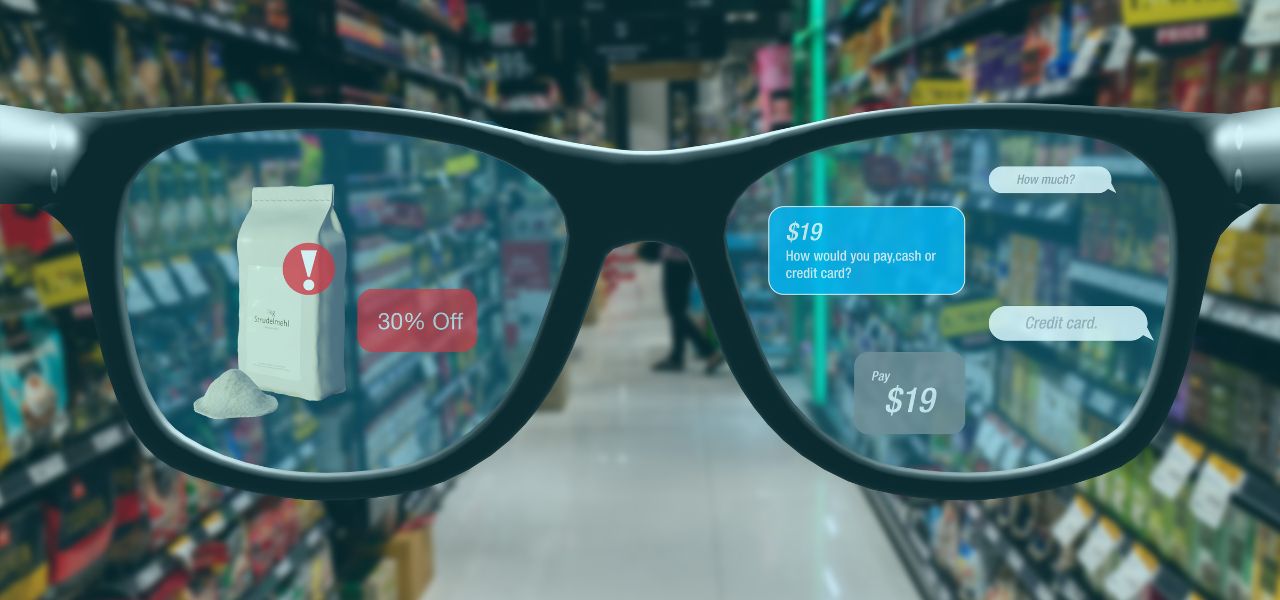
When Prime Minister Narendra Modi donned the Sarvam Kaze AI glasses at the India AI Expo, he wasn’t just testing a piece of hardware. He was witnessing the birth of a new computing platform. But a platform without developers is just a device. The real revolution—the one that transforms smart glasses from a novelty into an indispensable part of daily life – will be written in code by India’s vibrant developer community.
Both Sarvam AI and Lenskart have recognized this fundamental truth. They are not just building hardware; they are building ecosystems. Sarvam has announced that developers will be able to build custom experiences for the Kaze platform. Lenskart is opening its “B by Lenskart” smart glasses to India’s developer community, inviting consumer app companies and independent developers to create localized use cases across food delivery, entertainment, fitness, and navigation.
For the CTO, Head of Product, and Chief Innovation Officer, this represents a strategic inflection point. The question is no longer “When will smart glasses arrive in India?” but “How will our organization participate in the ecosystem that will define their utility?”
The Platform Imperative: Why Hardware Alone Is Not Enough
The history of computing platforms offers a clear lesson: the winners are not those with the best hardware specs, but those with the most vibrant developer ecosystems. Apple’s App Store didn’t just sell iPhones; it sold an infinite expandability of purpose. Google’s Android ecosystem didn’t just offer choice; it offered ubiquity.
Smart glasses represent the next great computing platform—one that moves intelligence from the screen in our pocket to the world before our eyes. And in India, two parallel efforts are laying the foundation for a homegrown ecosystem.
Lenskart’s Developer-First Strategy
Lenskart plans to open its upcoming “B by Lenskart” smart glasses platform to India’s developer community, making its AI and camera technology accessible to popular consumer platforms such as Zomato, Swiggy, and BookMyShow, as well as to independent developers. The company aims to build one of India’s first full-stack wearable ecosystems, integrating hardware, artificial intelligence, and software capabilities.
Powered by Qualcomm’s Snapdragon AR1 Gen 1 chipset and featuring a built-in Sony camera, the B by Lenskart glasses will include an AI assistant powered by Google’s Gemini 2.5 Live, enabling voice-based interactions, UPI payments, live translation, and wellness tracking. Weighing just 40 grams—approximately 20% lighter than comparable smart glasses—the device is engineered for everyday wear.
But the hardware is only the beginning. By opening its platform, Lenskart is signaling that the real value lies in the applications that will be built on top of it.
Sarvam’s Sovereign AI Platform
Sarvam AI, meanwhile, is taking a complementary approach. With the launch of Sarvam Kaze, the startup is bringing its AI models “into your hands with our devices – designed and built here in India”. Founder Pratyush Kumar has confirmed that developers will be able to build custom experiences for the device using the Sarvam platform, suggesting an app ecosystem around the hardware.
The company is also set to launch a homegrown full-stack sovereign AI platform, including foundational models trained on sovereign Indian data, applications designed to deliver impact at population scale, and the underlying compute infrastructure. This creates a vertically integrated stack where developers can build applications on top of AI models that truly understand Indian languages and contexts.
The Killer Apps: What Indian Developers Are Building
The potential applications for smart glasses extend far beyond the obvious. Indian developers are already exploring use cases that could define the platform’s utility.
Hands-Free Food Delivery and Navigation
Imagine a Zomato delivery partner navigating chaotic urban streets with turn-by-turn directions appearing in their field of view, never needing to glance at a phone. Or a Swiggy user tracking their order while cooking, with updates displayed discreetly in their glasses. These are not distant possibilities; they are the kinds of integrations Lenskart is actively enabling.
Live Translation in a Multilingual Nation
India’s linguistic diversity is both a challenge and an opportunity. Smart glasses with on-device translation capabilities could transform how we navigate a country with 22 official languages and countless dialects. Ray-Ban Meta glasses already support translations between English, French, Italian, and Spanish. Indian developers building on Sarvam’s Indic language models can deliver a fundamentally superior experience for local users—understanding Hinglish, responding in Tamil, and translating Hindi signage in real-time.
UPI Payments Without the Phone
Lenskart has already showcased a new feature for its B Camera Smartglasses: direct UPI payments. Users can complete transactions instantly by scanning a QR code with their smart glasses, requiring neither a phone nor a PIN. For a country where UPI transactions have become the lifeblood of digital commerce, this is transformative.
AR Gaming with Gesture Control
Gesture recognition technology enables users to control games through natural hand movements—pinching, swiping, or grabbing in mid-air. This creates immersive experiences that turn physical spaces into playgrounds, with games overlaying digital characters in living spaces or creating neighborhood-wide scavenger hunts.
Voice-Enabled Productivity Tools
Users can perform tasks hands-free through voice commands, such as saying “take a video” to record. These glasses can work with popular platforms so users can send messages, make calls, and control music through simple voice instructions. For professionals juggling multiple tasks, this is not a convenience; it’s a productivity multiplier.
The Developer Opportunity: What’s at Stake
For Indian developers, the emergence of smart glasses platforms represents a multi-billion-dollar opportunity.
First-Mover Advantage
The smart glasses market in India is in its infancy. The AR and VR eyewear market touched $608 million in 2024 and is projected to reach $1.67 billion by 2033. Globally, the market could reach $4-5 billion by 2030, with a compound annual growth rate of nearly 30%, and India is poised to be among the key markets.
Developers who build for these platforms now will have a first-mover advantage in categories that are just emerging. The apps that define food delivery, navigation, payments, and entertainment on smart glasses will be built by those who start today.
Access to SDKs and Development Tools
Development kits for smart glasses have become substantially more available throughout India. Local companies now offer detailed SDKs with documentation, sample code, and testing frameworks designed for developers. Affordable AI glasses SDKs have revolutionized the landscape for independent developers and startups. Smart glasses development used to need expensive hardware and proprietary environments. Now developers can build applications with minimal upfront costs.
Support from Local Tech Platforms
Local tech platforms are actively supporting the smart glasses ecosystem through specialized incubator programs. These programs give mentorship, funding, and technical resources to wearable development projects in India. Educational institutions have added smart glasses technology to their curriculum. IITs and private universities teach specialized courses in AR/VR development, preparing students to build wearable applications and meet industry demands.
The Challenges Developers Face
The opportunity is real, but so are the challenges.
Hardware Limitations
Smart glasses face tough engineering challenges due to strict size and weight limits. Components must fit into thin, lightweight frames without bothering the wearer. This size limit affects processing power and leads to performance trade-offs.
Battery Life Constraints
Battery constraints create the most important barrier to widespread adoption. Many AR glasses work for only 2-4 hours, which falls short for all-day use. Developers must build applications that are responsive and useful while respecting these power limitations.
India-Specific Design Requirements
Development for India needs a special approach. Success depends on thoughtful localization, affordable pricing, and understanding India’s unique environment. Applications built for Western users cannot simply be translated; they must be reimagined for Indian contexts.
The Strategic Play for Enterprises
For enterprise leaders, the developer ecosystem opportunity is not just about consumer apps. It’s about building custom solutions for your workforce.
Field Force Enablement
Imagine your sales team equipped with glasses that display customer history, product information, and real-time pricing—all without reaching for a phone. Your warehouse workers are guided by visual pick lists overlaid on shelves. Your maintenance technicians are connected to remote experts who can see what they see and guide them through complex repairs.
These are not science fiction. They are applications that can be built today on emerging platforms.
The Build vs. Partner Decision
For most enterprises, building a custom smart glasses application from scratch will be complex and expensive. The better path is to partner with experienced hardware designers and platform developers who can accelerate your journey.
This is where Cionlabs provides unique value. We bridge the gap between hardware platforms and enterprise needs, helping organizations identify use cases, design solutions, and integrate smart glasses into their workflows.
Conclusion: The Platform Is Rising
The developer ecosystem for smart glasses in India is taking shape. Lenskart is opening its platform to consumer apps and independent developers. Sarvam is inviting developers to build on its sovereign AI stack. Global giants like Meta are already in the market, and Chinese players such as Xiaomi, Baidu, and ByteDance are expected to roll out competing products over 2025–26.
For developers, this is the moment to learn the platforms, experiment with use cases, and stake a claim in a growing market. For enterprises, this is the moment to explore how smart glasses can transform your workforce, improve safety, and boost productivity.
The hardware is arriving. The platforms are opening. The developers are coding. India’s “App Store” for smart glasses is being built right now. The question is not whether you will participate, but how.
Ready to explore how smart glasses can transform your enterprise workforce?
Contact Cionlabs to discuss custom solutions built on India’s emerging smart glasses platforms, from use case identification to hardware integration and application development.