

Blog
The Great Re-shoring Paradox: Why Local Manufacturing Needs Global Technology Partners

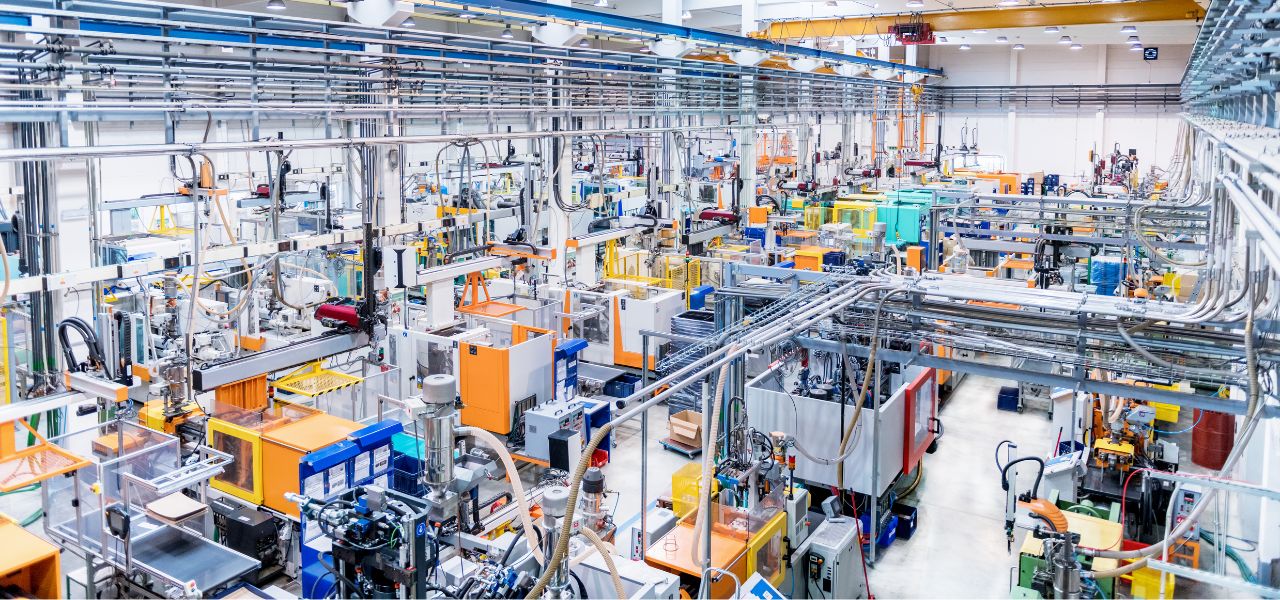
A powerful narrative is sweeping through boardrooms and policy circles: re-shoring. The drive to bring manufacturing closer to home—to India, to North America, to Europe—is framed as a quest for sovereignty, resilience, and self-reliance. It is a reaction to the fragility of global supply chains and a strategic bid for economic security. Yet, within this vital movement lies a dangerous, self-defeating paradox: the belief that local manufacturing must mean insular technology. The pursuit of sovereignty through isolation is a path to obsolescence. The truth is, to build world-class, competitive manufacturing at home, you need more, not less, engagement with global technology partners. For the CEO of an Indian manufacturing firm or the head of a national industrial initiative, navigating this paradox is the defining strategic challenge of the decade.
The Allure and the Trap of “Sovereign Isolation”
The impetus for re-shoring is undeniable and correct:
- Supply Chain Shock Absorbers: Reducing dependency on single geographies.
- IP Protection: Keeping critical designs and processes within controlled jurisdictions.
- Speed & Agility: Shortening the distance between R&D and production.
- Job Creation & Economic Multipliers: Building domestic industrial capacity.
The trap occurs when “self-reliance” is misinterpreted as technological autarky—the attempt to reinvent every wheel, from the silicon up, within national borders. This approach is fatally flawed. It ignores the reality of asymmetric technological evolution.
The Asymmetry of Innovation: No One Country Owns the Stack
Modern manufacturing, especially in electronics and smart systems, is not a single discipline. It is a convergent stack of deep specializations, each evolving at breakneck speed in different global hubs.
- Silicon & Semiconductors: Advanced design and fabrication are concentrated in the US, Taiwan, South Korea, and Europe. No single nation has a monopoly, nor can one quickly replicate the ecosystem.
- Advanced Materials & Chemicals: Specialty polymers, composites, and photoresists are the domain of specialized firms in Germany, Japan, and the US.
- Precision Machinery & Robotics: The highest-accuracy machine tools and collaborative robots come from Germany, Switzerland, and Japan.
- Industrial Software & AI: Platforms for digital twins, advanced process control, and predictive maintenance are led by firms in the US and Europe.
Attempting to locally recreate all these pillars simultaneously is astronomically expensive and slow. By the time you succeed, the global frontier will have advanced two generations, leaving your “sovereign” industry perpetually behind.
The Resolution: Sovereignty Through Strategic Partnership
True sovereignty in local manufacturing is not ownership of all technology, but control over your destiny through strategic access to the best technology. This is the core of the paradox: You achieve resilience and independence by building deep, trusted interdependencies with global leaders in specific domains.
This requires a shift from a mindset of vertical integration to one of orchestration.
The Orchestrator’s Playbook: Three Strategic Models
1. The Technology Licensing & Co-Development Model
Instead of trying to design a cutting-edge motor driver IC from scratch, license the core IP from a global leader and co-develop a variant optimized for Indian voltage conditions and cost points. You gain rapid access to world-class technology, they gain a new market-specific product and a loyal partner. Sovereignty lies in your adaptation and application expertise.
2. The “Globally Sourced, Locally Integrated” Platform
Build your final product on a global best-in-class technology platform. Use a German motion controller, a Japanese precision gearbox, and an American connectivity module. Your sovereign value is not in making these components, but in the system integration, software intelligence, and domain-specific applications that turn these global parts into a unique solution for Indian smart farms or factories. This is how Apple operates—a master orchestrator, not a master manufacturer of every component.
3. The Joint Venture for Leapfrogging
For areas critical to national strategy (e.g., certain semiconductor processes), form 50/50 joint ventures with global technology leaders. They contribute the advanced process technology and IP; you contribute the capital, market access, and focus on sovereign supply. The venture is located in India, creates high-tech jobs, and transfers knowledge, while ensuring you are plugged into the global innovation roadmap.
The Critical Role of the “Technology Interpreter” Partner
This orchestration model creates a new, crucial need: partners who can navigate both worlds. You need a bridge between your local manufacturing ambition and the fragmented, complex global technology landscape.
This is the role of a partner like Cionlabs. We act as your strategic technology interpreter and integration partner. Our value is in:
- Global Scouting & Validation: Identifying the right global technology partners for your specific need—not just the biggest brand, but the one with the right IP, business model, and cultural fit for collaboration.
- Localization Engineering: Taking sourced core technologies globally and re-engineering them for Indian realities—ruggedizing for climate, optimizing for cost, integrating with India Stack.
- De-risking Integration: Managing the complex technical and commercial integration, ensuring the global components work seamlessly together in your final product, built on your local line.
The Leadership Mandate: From Nationalist to Globalist in Mindset
For leaders driving re-shoring, the required mindset shift is profound:
- Define Your “Sovereign Core”: Be brutally honest. What is the unique IP, process, or market knowledge that you must own and control? For everything else, be open to partnership.
- Build Partnership Capital, Not Just Financial Capital: Invest in relationships with global technology leaders. Be a valuable, reliable, and strategic partner to them, not just a buyer.
- Measure Success in Capability, Not Just Capacity: The goal is not just to have a factory in India. It is to have a factory in India that is as productive, innovative, and technologically advanced as the best in the world. That requires global technology infusion.
- Champion “Open Sovereignty”: Advocate for policies that encourage strategic global partnerships and technology transfer, rather than tariffs and walls that foster mediocre local copies.
Conclusion: The Resilient Network, Not the Fortress
The pandemic and geopolitical shifts taught us that excessively long, concentrated supply chains are fragile. The wrong lesson is to build a national fortress. The right lesson is to build a resilient, multi-geography network of trusted partnerships.
The great re-shoring paradox is resolved by understanding that sovereignty and globalization are not opposites. In the 21st century, sovereignty is the power to participate confidently in global networks on your own terms, leveraging world-class technology to solve local problems at a global scale.
The winners of the re-shoring era will not be the most insular manufacturers, but the most connected and savvy orchestrators. They will have factories on home soil, filled with technology from around the world, producing goods that are uniquely competitive because they blend global innovation with local genius. Your local manufacturing future doesn’t need less of the world. It needs the best of the world, intelligently integrated at home.
Ready to navigate the re-shoring paradox and build world-class local manufacturing through global technology partnerships?
Contact Cionlabs to be your strategic interpreter and integration partner, connecting your vision to the global technology ecosystem and engineering solutions for the Indian market.