

Blog
The India Stack for Hardware: Leveraging UPI, ONDC, and OCEN to Monetize Connected Devices

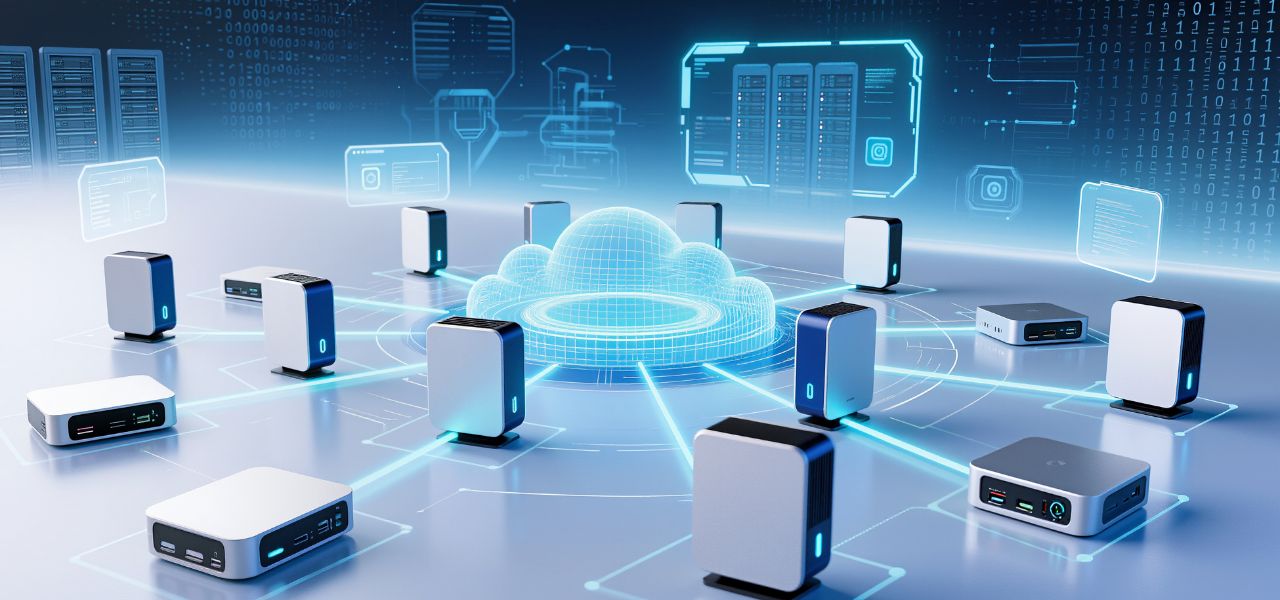
A quiet revolution is transforming how value moves in India. While software startups have rapidly harnessed the power of India Stack—the set of open APIs and digital public infrastructure—a far larger opportunity is now materializing for the physical world. For manufacturers, OEMs, and IoT innovators, the convergence of UPI, ONDC, and OCEN is no longer a fintech phenomenon alone. It is becoming the essential business layer that will turn every connected device from a cost center into a dynamic, revenue-generating node in a national digital economy.
For the executive leading a hardware product company, this represents a paradigm shift. The question is no longer just “What does our device do?” but “What transactions can our device enable?” The India Stack provides the answer, offering a ready-made, scalable, and trusted infrastructure to monetize hardware in ways previously unimaginable.
The Trinity of Transactional Infrastructure
To leverage this stack, hardware leaders must first understand its components not as abstract protocols, but as commercial tools.
1. UPI (Unified Payments Interface): The Engine of Frictionless Value Exchange
UPI is more than a payment rail; it is a universal settlement language that hardware can now speak.
- For Hardware: Embedding a UPI stack means any IoT device—a smart meter, a vending machine, a farming sensor—can become a point of sale or a point of collection. It moves payments from the user’s phone to the device itself.
- The Monetization Shift: Your connected water purifier doesn’t just alert for a filter change; it offers a UPI payment link to order and pay for a new one directly. Your EV charger authenticates the vehicle and initiates a micro-payment for each unit of energy consumed, settled instantly.
2. ONDC (Open Network for Digital Commerce): The Device as a Storefront
ONDC is often described as democratizing e-commerce. For hardware, it democratizes distribution and discovery.
- For Hardware: By integrating with ONDC protocols, your device can list its own consumables, services, or data on an open network. It becomes both a seller and a buyer.
- The Monetization Shift: An industrial 3D printer running low on filament can autonomously query the ONDC network, compare prices and delivery times from multiple suppliers, and place an order. A smart kitchen appliance can reorder groceries when supplies run low, choosing from any seller on the network, not a single locked-in ecosystem. The device itself generates the demand and fulfills it.
3. OCEN (Open Credit Enablement Network): The Device as a Creditworthy Entity
This is the most transformative layer. OCEN provides a standardized framework for credit to flow to underserved segments. For hardware, it enables “Device-as-a-Service” and micro-credit models.
- For Hardware: A device can share its own operational and payment history (with user consent) to build a credit profile. Lenders on the OCEN network can then offer loans or leases based on the device’s performance, not just the user’s credit history.
- The Monetization Shift: A farmer cannot afford a ₹2 lakh smart irrigation system. Instead, they pay per irrigation cycle. The device, via OCEN, facilitates a micro-loan for each cycle, repaying it automatically from the farmer’s UPI account post-harvest. The hardware company gets full price upfront from the lender, while the user pays in manageable micro-transactions. This unlocks mass-market adoption for high-value capital equipment.
The Strategic Blueprint: Building “Stack-Native” Hardware
Integrating this stack is not a software overlay; it requires a fundamental rethink of hardware architecture and business models.
Phase 1: Design for Embedded Identity & Trust
Every device must have a verifiable, unique digital identity (building on DI/Data Empowerment and Protection Architecture principles) to transact autonomously. This requires:
- Secure Element Integration: Hardware-based secure storage for cryptographic keys and transaction logs.
- Consent Layer Architecture: Designing user interfaces (simple screens, LED patterns, voice) that allow users to grant and revoke consent for transactions.
Phase 2: Develop the Transaction Engine
The device firmware needs a lightweight, robust module that can:
- Initiate a UPI Collect Request or display a UPI QR code.
- Publish and discover on ONDC using standardized product catalogs.
- Share consented performance data with OCEN-linked lenders to facilitate credit.
Phase 3: Rethink the Business Model Canvas
Move beyond a one-time sale price to a multi-dimensional revenue grid:
- Transaction Fees: A small margin on every commerce or payment the device facilitates.
- Data-as-a-Service (with Consent): Anonymized, aggregated usage data sold to insurers, agri-tech firms, or urban planners.
- Credit Facilitator Fees: Revenue share from lenders for originating high-quality, low-risk credit via your device.
- Subscription for Premium Intelligence: The hardware is sold at cost; revenue comes from the AI insights it generates (e.g., “Your machine will fail in 30 days. Pay ₹500 to see the report and order parts”).
The Competitive Moats of Stack-Native Hardware
Adopting this approach builds powerful, defensible advantages:
- Unbreakable Ecosystem Lock-in: When your tractor facilitates cheaper credit and better prices for produce via ONDC, the farmer is tied to your brand by economic utility, not just features.
- First-Mover Data Advantage: The first company to have 10,000 devices transacting on OCEN will possess an unparalleled dataset on small-ticket credit risk in the real economy.
- Distribution at Zero Marginal Cost: Your existing installed base becomes a new distribution channel overnight. Every water purifier becomes a storefront for consumables.
The Cionlabs Imperative: Engineering the Transactional Device
We are at the forefront of building this new class of hardware. Our work involves:
- Secure Hardware Architecture: Designing devices with the necessary compute, connectivity, and hardware security to be trusted transaction endpoints.
- Firmware Stacks for India Stack: Developing modular, certified firmware blocks that handle UPI, ONDC, and OCEN protocols, abstracting the complexity for our clients.
- Lifecycle Monetization Design: Working with clients to architect the complete revenue model, then engineering the device to enable it from day one.
The Leadership Mandate: From Product Manager to Platform Governor
The call to action for hardware company leaders is urgent and profound:
- Reconstitute Your Product Roadmap: Mandate that every new connected product design must answer: “How will it transact on India Stack?”
- Form Airtight Fintech Partnerships: Collaborate not with generic IoT platforms, but with banks, NBFCs, and lenders ready to experiment with OCEN-enabled device-led lending.
- Pilot in Your Largest Market: Start with your most volume-driven product line. Implement a “pay-per-use” model via OCEN/UPI and measure the increase in market penetration.
Conclusion: The Physical Layer of a Digital Nation
India Stack was built to democratize digital services. Its next and most impactful phase will be to democratize the means of production and consumption through intelligent, connected hardware.
The companies that will dominate the next decade are not those that simply make things, but those that make things that participate in the economy. Your device is no longer just a tool; it is a shopkeeper, a bank teller, and a trusted broker. By engineering your hardware to be a native citizen of India Stack, you are not just selling a product—you are embedding your company into the very circulatory system of India’s economic future.
The infrastructure is open. The protocols are live. The market is waiting. The only hardware that will become obsolete is the kind that cannot transact.
Ready to engineer your hardware products as native participants in India’s transactional economy?
Contact Cionlabs to design and build ‘Stack-Native’ devices that leverage UPI, ONDC, and OCEN to unlock revolutionary new revenue models.