

Blog
The MSME Digitalization Tipping Point: Why India’s Small Manufacturers Are Ready for Industry 4.0

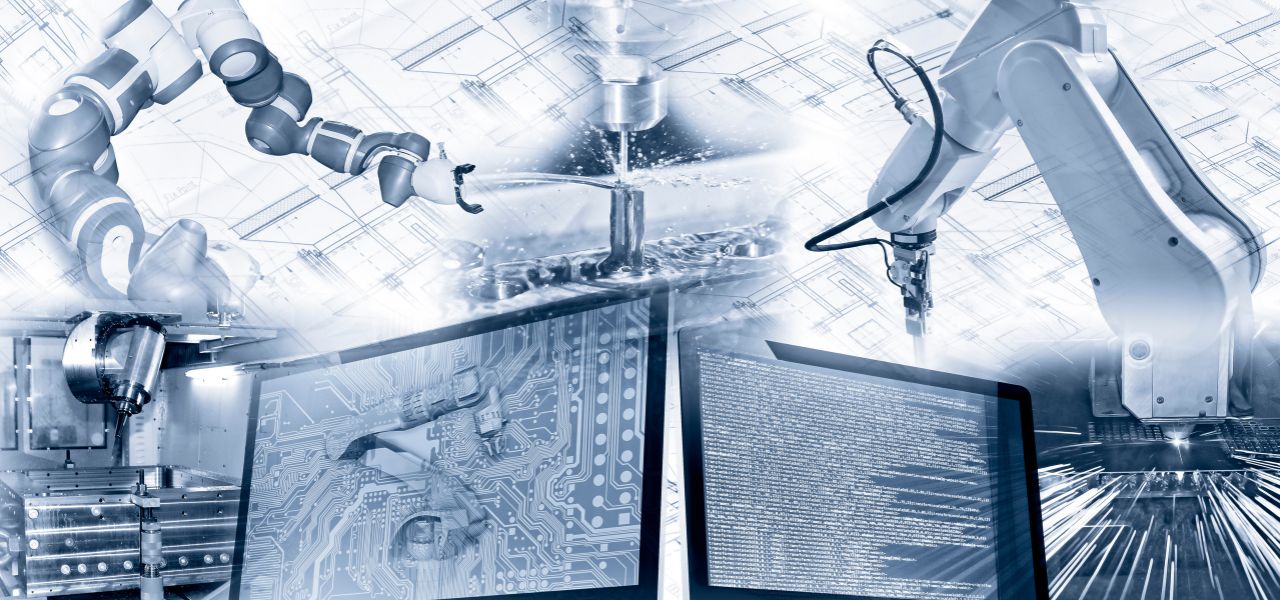
For decades, the narrative around Industry 4.0 in India carried a quiet assumption: that smart factories, connected machines, and AI-driven analytics were the preserve of large enterprises with deep pockets and dedicated engineering teams. Micro, small, and medium enterprises (MSMEs)—the very backbone of India’s manufacturing economy—were seen as perpetually “not yet ready.”
That assumption is now obsolete.
As we move through 2026, India’s MSME sector stands at a genuine tipping point. A confluence of falling technology costs, policy momentum, digital infrastructure maturation, and market pressures has fundamentally altered the calculus for small manufacturers. Industry 4.0 is no longer a distant aspiration for MSMEs; it is becoming an immediate operational imperative.
The Scale of the Opportunity
India’s MSME sector is staggering in its dimensions. With over 6.8 crore enterprises registered on the Udyam platform, the sector employs nearly 30 crore people and contributes approximately 30 per cent of national GDP, 35 per cent of manufacturing output, and 45 per cent of exports. Yet, despite this economic weight, many MSMEs have historically operated at sub-scale levels with low technology adoption and constrained productivity.
What has changed is the enabling environment. Nearly three-quarters of MSME transactions are now digital, driven by the deep penetration of UPI and formalization initiatives. This digital footprint creates something unprecedented: data. And data is the raw material of Industry 4.0.
The Tipping Point Drivers: Why Now?
Several converging forces explain why this moment is different.
1. The Cost Barrier Has Crumbled
Perhaps the most significant enabler is economics. Industrial sensor costs have fallen sharply, making real-time monitoring affordable even for small manufacturing units. Cloud-based software, accessible through subscription pricing models, has lowered entry barriers dramatically—software revenue in the automation space is now growing at over 15 per cent CAGR, precisely because smaller players can participate. What once required crores in capital expenditure can now be accessed through modest operational expenditure.
2. Policy Momentum Reaches the Factory Floor
The Production Linked Incentive (PLI) scheme, which had disbursed over ₹14,000 crore by 2025, is increasingly linking incentives to Industry 4.0 readiness. This creates a powerful cascading effect: as large manufacturers and tier-one suppliers modernize, tier-two and tier-three MSMEs supplying into these value chains must adopt compatible automation layers to remain competitive.
The Union Budget 2026 reinforced this trajectory with enhanced credit access, extended guarantee coverage, and specific incentives for digital transformation among MSMEs. For the first time, the policy framework explicitly recognizes that technology adoption must precede—or at least accompany—financing in MSME priorities.
3. The Digital Public Infrastructure Advantage
India’s digital public infrastructure—GST, e-invoicing, TReDS, ONDC—has created a foundational layer upon which Industry 4.0 applications can be built. This infrastructure reduces compliance friction, generates cash-flow data that enables new lending models, and integrates small manufacturers into formal value chains.
4. Market Pressure as an Accelerator
Global supply chains are demanding greater transparency, quality consistency, and traceability. Indian MSMEs that export or supply to exporters face increasing pressure to demonstrate process control and quality assurance—capabilities that digitalization enables. Staying analog is no longer a neutral choice; it is an active competitive disadvantage.
What Industry 4.0 Actually Means for MSMEs
For a small manufacturer, Industry 4.0 need not mean fully lights-out factories or complex robotics. It means practical, incremental gains from accessible technologies:
- Connected Machines and Sensors: Affordable IIoT sensors embedded in equipment continuously capture operational data—temperature, vibration, energy consumption—enabling visibility that was previously impossible.
- Real-Time Production Monitoring: Digital dashboards provide shop-floor visibility, helping owners reduce downtime and optimize cycles without heavy manual intervention.
- Predictive Maintenance: AI-driven analytics predict machine failures before they occur, reducing breakdowns and extending asset life.
- Quality Control Automation: AI-enabled visual inspection and real-time defect detection improve consistency and reduce waste.
- Energy Optimisation: Monitoring energy consumption patterns helps identify inefficiencies, particularly valuable for energy-intensive processes.
The common thread is practical, ROI-focused adoption—not technology for technology’s sake, but tools that address real operational pain points.
The Persistent Challenges: What Still Holds MSMEs Back?
Despite the momentum, significant barriers remain—and acknowledging them is essential for a realistic strategy.
Skill Deficits and the Need for Handholding
Perhaps the most critical constraint is human capacity. A 2025 survey found that only 7 per cent of India’s MSMEs are exploring AI-powered tools, with 36 per cent citing resistance to adopting new technology and 18 per cent struggling with implementation costs.
More fundamentally, as Debjani Ghosh, Distinguished Fellow at NITI Aayog, recently emphasized, MSMEs need sustained handholding, not one-time training. Many small enterprises “lack the know-how, the tools, and the guidance in figuring out how they should embark on this journey of digital transformation”.
Initiatives like CII’s X-Edge programme, which places trained students from tier-two and tier-three cities with MSMEs for sustained digital advisory support, point toward a scalable model for addressing this gap.
Capital Constraints and the Credit Challenge
While falling technology costs help, capital remains a constraint—particularly for tier-three suppliers where automation investment can represent a substantial portion of annual revenue. Access to formal credit remains constrained by collateral requirements and delayed receivables, with over 90 per cent of MSMEs classified as micro and struggling to scale.
The way forward lies in cash-flow-based lending models leveraging GST and digital transaction data, moving beyond static balance-sheet assessments.
Integration Quality and Ecosystem Fragmentation
As more MSMEs adopt automation, the quality of system integration becomes critical. The current ecosystem remains fragmented, with variable integrator quality creating execution risks. For a small manufacturer, a poorly implemented system can erode confidence and delay further adoption.
The Cluster Approach: A Made-in-India Solution
One of the most promising pathways for MSME digitalization is the cluster-based approach. India is positioning AI-enabled industrial clusters as a new growth engine, linking physical clusters with digital public infrastructure to move MSMEs up the value chain.
In this model, groups of enterprises in geographic or sectoral clusters adopt technology collectively, sharing costs, expertise, and infrastructure. This approach addresses the scale challenge: individual MSMEs may struggle to justify investment, but clusters can aggregate demand, pool resources, and create shared digital utilities.
The focus, as policymakers emphasize, must be on competitiveness, not subsidies—building capabilities that enable MSMEs to integrate into global value chains on their own strength.
The Strategic Imperative for MSME Leaders
For the MSME owner or senior executive reading this, the message is clear: the time to act is now. Waiting for perfect conditions, lower costs, or simpler solutions will only cede ground to competitors who are already moving.
A practical roadmap might look like this:
- Start with Visibility: Begin with simple monitoring—energy consumption, machine runtime, critical parameters. Data is the foundation.
- Target One Pain Point: Identify the most pressing operational challenge—unplanned downtime, quality variability, high waste—and address it with a focused digital solution.
- Leverage Ecosystem Support: Engage with industry associations, government schemes (like the Design Linked Incentive for technology adoption), and initiatives like X-Edge that provide sustained handholding.
- Think Incrementally, Scale Systematically: Industry 4.0 is a journey, not a destination. Modular, scalable solutions that grow with your business are preferable to big-bang transformations.
Cionlabs: Your Partner in the MSME Digitalization Journey
At Cionlabs, we understand the specific realities of Indian manufacturing—the constraints of capital, the importance of reliability, the need for practical ROI. We design and deploy IIoT solutions tailored for small and mid-sized manufacturers: affordable, scalable, and engineered for Indian conditions.
From connected machine monitoring to predictive maintenance systems, our solutions leverage deep expertise in low-power design and edge intelligence, powered by partnerships with chipset leaders like Beken. We don’t just sell technology; we partner with manufacturers to ensure sustained value creation.
Conclusion: The Tipping Point Is Here
India’s MSMEs have always been the country’s resilience engine—absorbing shocks, generating employment, and driving entrepreneurship. The digitalization tipping point offers something new: the chance for that resilience to be matched by productivity, competitiveness, and global scale.
The tools are affordable. The policies are supportive. The infrastructure is ready. What remains is the will to begin the journey.
For India’s small manufacturers, Industry 4.0 is no longer a distant possibility. It is a present necessity—and a remarkable opportunity.
Ready to explore how Industry 4.0 can transform your manufacturing operations? Let’s engineer your digital future together.
Cionlabs. Practical Industry 4.0 for Indian Manufacturing.