

Blog
The Neural Interface Horizon: Preparing for Meta’s Next-Gen Wearables in India

The way we interact with technology is about to undergo its most profound shift since the touchscreen. For the past two decades, our relationship with computing has been defined by a single, repetitive gesture: looking down. We glance at phones, tap at screens, and scroll through endless feeds, our attention pulled constantly away from the physical world and into the digital one. Meta, the company that has mastered the art of capturing our attention, now wants to free it.
At the heart of this vision lies the neural interface. And for Indian business leaders—whether in consumer electronics, enterprise technology, or retail—the arrival of this technology is not a distant science experiment. It is a strategic inflection point that will redefine how products are designed, how services are delivered, and how consumers engage with brands. The horizon is closer than you think.
The Dawn of Wrist-Based Control
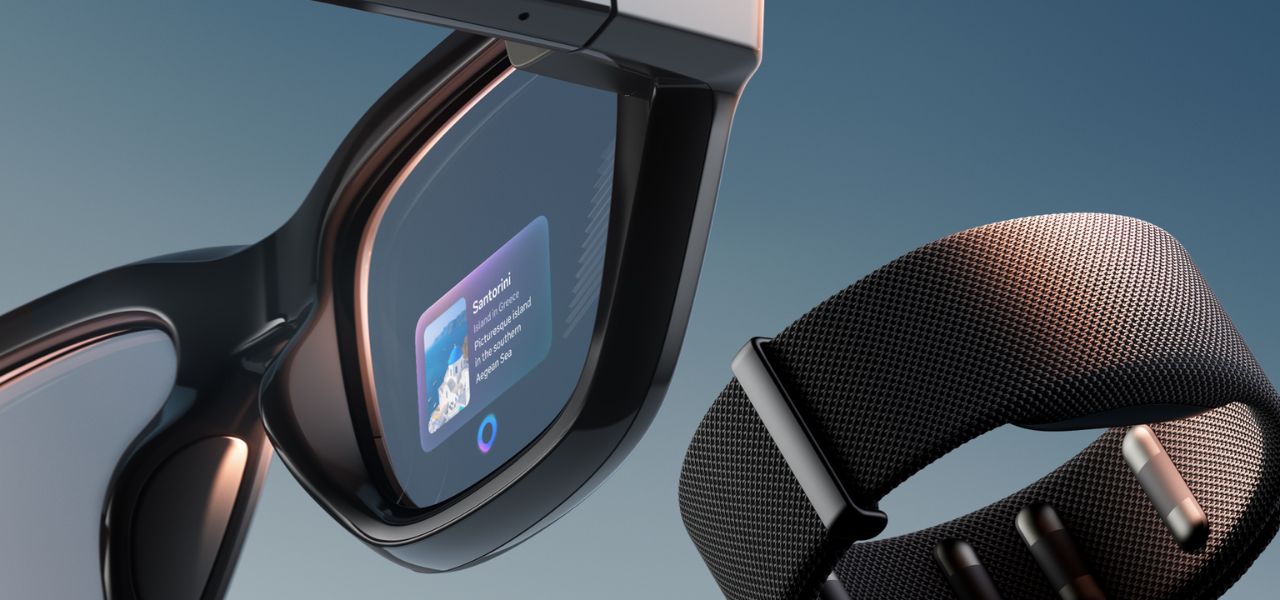
At Meta Connect 2025, Mark Zuckerberg unveiled the hardware that will power this transition: the Meta Ray-Ban Display glasses and the Meta Neural Band. Priced at $799 (approximately ₹70,000) in the US, the glasses feature a full-colour, high-resolution in-lens display that allows users to check messages, preview photos, and interact with AI without ever looking at a phone.
But the true breakthrough is the Neural Band. This wrist-worn device uses surface electromyography (EMG) to read electrical signals from the user’s muscles—the tiny, almost imperceptible firings that occur when we intend to move a finger. It translates these signals into commands. A subtle pinch of the fingers can select an item. A light tap can scroll. A tracing motion on any surface can be converted into text.
At CES 2026, Meta demonstrated the potential of this technology with a new handwriting-based messaging feature. Users enrolled in the Early Access program can now trace letters with a finger on any surface—a table, a leg, a notebook—while wearing the Neural Band, and have those movements converted into real-time text for WhatsApp and Messenger. This is not voice control. It is not touch control. It is intention-based control.
The Strategic Shift: Why Meta Is Building Its Own Platform
For Indian executives, understanding Meta’s motivation is essential to anticipating its impact. As one analysis noted, up until now, Meta has been dependent on Apple and Google for its survival. All its apps—WhatsApp, Instagram, Facebook, Messenger—live on iOS and Android devices, controlled by companies that can change the rules anytime. Apple’s privacy updates have already slashed Meta’s ad revenue, exposing just how vulnerable this model is.
The Ray-Ban Display glasses and Neural Band mark a turning point. For the first time, Meta isn’t just another app on your phone. It is building its own hardware ecosystem. By putting smart glasses on your face and a neural interface on your wrist, Meta controls not just the software but also the physical hardware. These devices could become the extra pair of eyes and ears that Meta fully owns, a way to bypass Apple and Google and ensure that the world’s most personal moments flow directly through Meta’s systems.
Chris Cox, Meta’s Chief Product Officer, made the company’s ambition clear when asked how Meta stacks up against Apple’s Vision Pro: “They don’t have display glasses. We’re building something personal, something you can live in”. The goal, he said, is simple—”a device that feels comfortable, that disappears into your life, so you don’t have to keep pulling out a phone”.
The India Timeline: What We Know
For Indian consumers and businesses, the question is not if these technologies will arrive, but when and in what form.
Meta’s Chief Product Officer confirmed at Connect 2025 that India will see the Ray-Ban Display glasses “soon,” while global availability, including the UK, was planned for early 2026. However, in January 2026, Meta announced it had paused the planned international expansion of the Ray-Ban Display glasses and Neural Band due to limited inventory and “unprecedented” demand in the United States. Waitlists now extend into 2026, and the company is prioritising fulfilling US orders while reassessing its global rollout strategy.
This delay is frustrating for eager Indian early adopters, but it is also instructive. It signals that demand for this new computing paradigm is real and substantial. When the devices do arrive—and they will—they will enter a market that Meta has already been carefully cultivating.
In February 2026, Meta launched the Oakley Meta Vanguard in India, a new category of performance AI glasses designed for athletes and outdoor enthusiasts, starting at ₹52,300. This followed the rollout of the Ray-Ban Meta (Gen 2) glasses in the country, priced from ₹39,900 onwards. These launches demonstrate Meta’s commitment to the Indian market and its strategy of building a diversified wearable portfolio across lifestyle, performance, and eventually, display-based categories.
Crucially, Meta has also been investing in India-specific localisation. The Oakley Meta Vanguard supports Hindi, Telugu, and Kannada for voice interactions, offers the celebrity voice of Bollywood actor Deepika Padukone, and integrates UPI Lite payments for hands-free QR-code transactions under ₹1,000. This is not a global product being dumped into a local market. It is a platform being tailored for Indian users.
The Indian Ecosystem Response: Sarvam Kaze
Meta is not the only player preparing for this future. In February 2026, Prime Minister Narendra Modi became the first person to try Sarvam Kaze, India’s first indigenous AI-powered smart glasses, developed by Bengaluru-based startup Sarvam AI.
The device, which is scheduled to launch in May 2026, is designed, developed, and built entirely in India. It runs on Sarvam’s homegrown AI technology and is engineered to listen, understand, respond, and capture what the wearer sees, shifting intelligence from traditional screens to the real world.
Sarvam is also developing the underlying infrastructure to power such devices. The company recently introduced Sarvam Edge, an AI model designed to run directly on devices without depending on cloud servers, delivering faster responses and better privacy. Critically, Sarvam is one of twelve organisations selected by the Indian government to develop AI models trained on Indian datasets, and the company plans to allow developers to build custom experiences for the Kaze platform.
This is the emergence of a sovereign Indian wearable ecosystem, one that could offer an alternative to global platforms while being deeply attuned to local linguistic and cultural contexts.
The Enterprise Implications
For Indian business leaders, the neural interface horizon presents both opportunities and challenges:
For Product Design: When users can control devices with subtle gestures and neural signals, the entire paradigm of user interface design shifts. Buttons become optional. Screens become secondary. Products must be designed for ambient, hands-free interaction.
For Field Workforce: As explored in previous analyses, AI smart glasses can transform the productivity of distributed workforces—sales representatives, warehouse pickers, maintenance technicians. The addition of neural control makes these interactions even more seamless, eliminating the need for voice commands in noisy environments.
For Customer Experience: The ability to make UPI payments by simply looking at a QR code and thinking a command will redefine checkout. Retailers must prepare for a world where the customer’s phone never leaves their pocket.
For Data and Privacy: Devices that read neural signals raise profound questions. Meta insists that all EMG data processing happens on-device, and only events like a “click” are sent to the glasses. But the company’s track record on privacy means that Indian businesses and consumers will demand transparency and control.
The Privacy Calculus
No discussion of neural interfaces is complete without addressing the elephant in the room. Chris Cox acknowledged that some interactions with Meta AI will route through servers, raising valid concerns. But he stressed Meta’s focus on transparency and safeguards: “We’re paying close attention to how to design for privacy from the start”.
The glasses feature a small LED indicator to show when recording is active. Yet, as one commentator observed, the bigger question is whether people want to be recorded, captioned, or even translated mid-conversation without their consent. In theory, Meta is selling presence—the idea of staying connected without being distracted by your phone. In practice, it could normalise surveillance in everyday spaces.
For Indian companies building on these platforms, privacy-by-design must be a competitive advantage, not an afterthought.
Preparing for the Horizon
The neural interface horizon is not a single event but an unfolding landscape. The timeline is becoming clearer:
- 2025-2026: Early adoption of camera-first smart glasses (Ray-Ban Meta Gen 2, Oakley Meta Vanguard) with voice and gesture control.
- 2026-2027: Gradual introduction of display-based glasses with neural band control, initially in the US, followed by international markets.
- 2027 onwards: Proliferation of developer ecosystems, third-party applications, and competitive offerings from Indian players like Sarvam.
For business leaders, the time to prepare is now. This means:
- Understanding the Technology: Building internal expertise on neural interfaces, on-device AI, and the capabilities of emerging platforms.
- Identifying Use Cases: Exploring how hands-free, neural-controlled computing can transform your specific industry, whether retail, logistics, healthcare, or education.
- Evaluating Partners: Assessing whether to build on global platforms like Meta’s or explore indigenous alternatives like Sarvam’s emerging ecosystem.
- Addressing Privacy: Developing clear policies and practices for the collection and use of data from neural interfaces and wearable cameras.
Conclusion: The Next Computing Platform
We are witnessing the birth of a new computing platform. Just as the smartphone displaced the PC as the primary way people access digital services, smart glasses with neural interfaces have the potential to displace the smartphone. It will not happen overnight, and the path will be uneven. But the direction is clear.
For India, this represents both a challenge and an opportunity. The challenge is to ensure that Indian consumers are not merely passive recipients of globally designed technology. The opportunity, as demonstrated by Sarvam AI, is to build indigenous alternatives that are deeply attuned to Indian needs and contexts.
The neural interface is arriving. The question for Indian business leaders is not whether to engage with it, but how thoughtfully and strategically to prepare for its arrival. The horizon is visible. The time to act is now.
Ready to explore how neural interfaces and AI smart glasses can transform your business?
Contact Cionlabs to discuss custom hardware design and development partnerships that position your organization for the next era of human-computer interaction.