

Blog
The Silicon Strategy: How Your Choice of Chipset Defines Your Market Position for the Next Decade

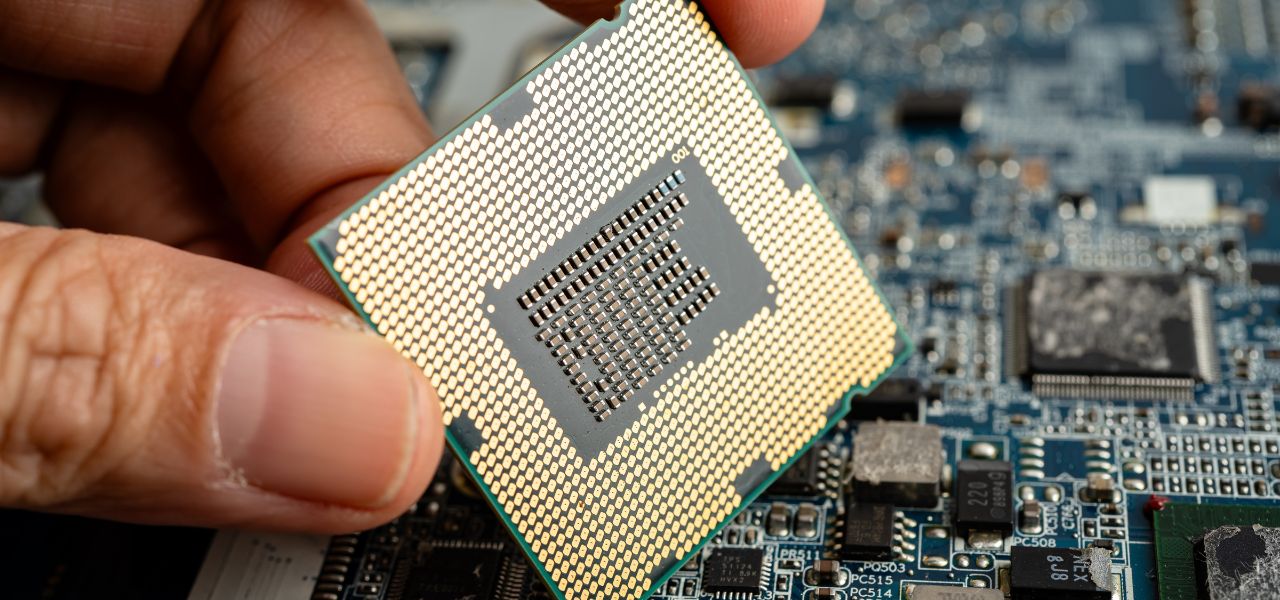
For most companies, the selection of a core chipset—the System-on-a-Chip (SoC) or microcontroller that powers their product—is treated as a mid-level engineering decision. It’s a technical specification buried in a Bill of Materials (BOM), often delegated to hardware architects with a mandate to balance performance, power, and cost. This view is not just reductionist; it is a profound strategic error. In the age of connected, intelligent hardware, your silicon is not a component. It is the foundational layer of your business strategy. The chipset you choose today doesn’t just determine next quarter’s product specs; it defines your market position, your innovation velocity, and your competitive moat for the next decade.
For the CEO, CTO, and Head of Product, this is a paradigm shift. You are no longer just building a product; you are choosing a technological kingdom and its future laws. Your “Silicon Strategy” is as critical as your go-to-market or pricing strategy.
The Three Tiers of Chipset Strategy: From Commodity to Sovereign
Companies fall into one of three strategic postures based on their silicon approach, each with cascading consequences.
Tier 1: The Buyer (The Commodity Path)
- Strategy: Select an off-the-shelf, general-purpose chipset from a major vendor (e.g., a generic ARM Cortex-M series MCU or a Qualcomm/Mediatek module). Prioritize unit cost and immediate availability.
- Market Position: Follower / Commodity Supplier.
- The Decade-Long Impact:
- Innovation Ceiling: Your product capabilities are gated by the vendor’s public roadmap. You wait for them to add the AI accelerator or the new wireless standard you need.
- Margin Erosion: You compete with every other company using the same chip on identical specs and price. Your differentiator is marketing, not technology.
- Strategic Vulnerability: You are hostage to global shortages and allocation priorities set in distant headquarters. A single chipset end-of-life can force a painful, expensive redesign.
- Outcome: You operate in a red ocean. Your product is a feature checklist. Your brand is built on cost, not capability.
Tier 2: The Strategic Partner (The Differentiated Path)
- Strategy: Engage deeply with a leading chipset vendor (e.g., Nordic, NXP, STM, or a segment leader like Ambarella for vision). You are not just a customer; you are a design-win partner. You work with their engineering teams, provide early feedback, and may get access to pre-release silicon or custom firmware features.
- Market Position: Fast Follower / Differentiated Player.
- The Decade-Long Impact:
- Innovation Velocity: You get early access to features, allowing you to launch with cutting-edge capabilities (e.g., new Bluetooth profiles, lower power states) 6-12 months ahead of the commodity buyers.
- De-risked Roadmap: You have visibility and influence on the vendor’s roadmap, ensuring your future products align with silicon evolution.
- Supply Chain Priority: In times of shortage, strategic partners get allocation ahead of transactional buyers.
- Outcome: You can command a premium and build a brand known for technical excellence. You win on performance and time-to-market, but the fundamental architecture is still set by another company.
Tier 3: The Architect (The Sovereign Path)
- Strategy: You design your own silicon. This doesn’t necessarily mean building a fab. It means designing an Application-Specific Integrated Circuit (ASIC) or a highly customized SoC, working with a fabless design house and a foundry like TSMC or GlobalFoundries. You define the architecture.
- Market Position: Category Leader / Innovator.
- The Decade-Long Impact:
- Unassailable Moat: Your IP is baked into silicon. Competitors cannot replicate your performance-per-watt, your unique sensor fusion, or your cost structure. Think of Apple’s M-series chips or Tesla’s Dojo and FSD chips.
- Total Optimization: The silicon is designed for your exact software stack and use case. This yields radical efficiencies—10x better AI inference, 50% longer battery life, 30% lower BOM cost—that are impossible with off-the-shelf parts.
- Control of Destiny: Your roadmap is yours. You are not waiting for anyone. You can iterate rapidly and create entirely new product categories built around your proprietary silicon capability.
- Outcome: You define the future of your industry. You compete on a different plane, where the game is not about features but about fundamental physics and architecture. This is the ultimate hardware moat.
The Strategic Decision Matrix: Choosing Your Tier
This is not a choice between “good” and “bad.” It is a choice of ambition, investment, and risk tolerance.
| Dimension | Tier 1: The Buyer | Tier 2: The Strategic Partner | Tier 3: The Architect |
|---|---|---|---|
| Upfront Investment | Low (unit cost) | Medium (engineering partnership) | Very High ($5M – $50M+ NRE) |
| Time-to-Market | Fastest | Fast (with advantage) | Slow (2-3 year lead time) |
| Competitive Advantage | None (Cost) | Moderate (Performance, Timing) | Extreme (Uncopyable IP) |
| Strategic Control | None | Moderate | Absolute |
| Best For… | Commodity products, short-lifecycle goods, market tests. | Aspiring leaders in fast-moving tech segments (IoT, wearables). | Companies defining new categories, with volume >1M units/year, where performance is everything. |
The Leadership Mandate: Asking the Right Questions
Moving silicon strategy to the boardroom means asking fundamentally different questions:
- Not: “What’s the cheapest chip that meets our spec?”
But: “What silicon choice gives us a 5-year head start on the competition?” - Not: “Can we get samples in 8 weeks?”
But: “Which silicon partner’s 2027 roadmap aligns with our vision for ambient computing?” - Not: “How do we reduce BOM by $0.50?”
But: “Would a $3M investment in a custom ASIC reduce our total system cost by $10 per unit and double our battery life, creating an unbridgeable gap?”
The Cionlabs Bridge: From Strategy to Silicon
We help companies navigate this journey, especially the leap from Tier 2 to Tier 3. Our role is to be the translator between business strategy and silicon reality.
- For Tier 2 Strategies: We are expert system integrators for leading-edge chipsets. We maximize their potential through superior board design, firmware, and thermal management, extracting every ounce of performance to give you a Tier-2 advantage.
- For Tier 3 Ambitions: We act as your co-pilot on the ASIC journey. We help define the specification, manage the relationship with the design house and foundry, and design the system that unleashes the full power of your custom silicon. We make the sovereign path achievable.
Conclusion: Your Kingdom, Your Crown Jewels
In the 21st century, the most valuable real estate is measured in square millimeters of silicon. The companies that understand this treat their chipset not as a purchased part, but as their crown jewel intellectual property.
Your Silicon Strategy is your declaration of ambition. Are you content to rent space in someone else’s kingdom (Tier 1), become a favored duke with special privileges (Tier 2), or are you building your own sovereign nation from the bedrock up (Tier 3)?
The decision you make today echoes for a decade. It determines whether you are playing someone else’s game or defining the game itself. Choose your silicon not for the product you are launching next quarter, but for the market you intend to own in 2030.
Ready to define your Silicon Strategy and build an unassailable market position for the next decade?
Contact Cionlabs. Whether you seek to maximize a strategic partnership or embark on the sovereign path of custom silicon, we provide the architectural insight and execution excellence to turn your silicon strategy into market dominance.