

Blog
The Smart Meter Mandate: A ₹2 Lakh Crore Opportunity in India’s Energy Transition

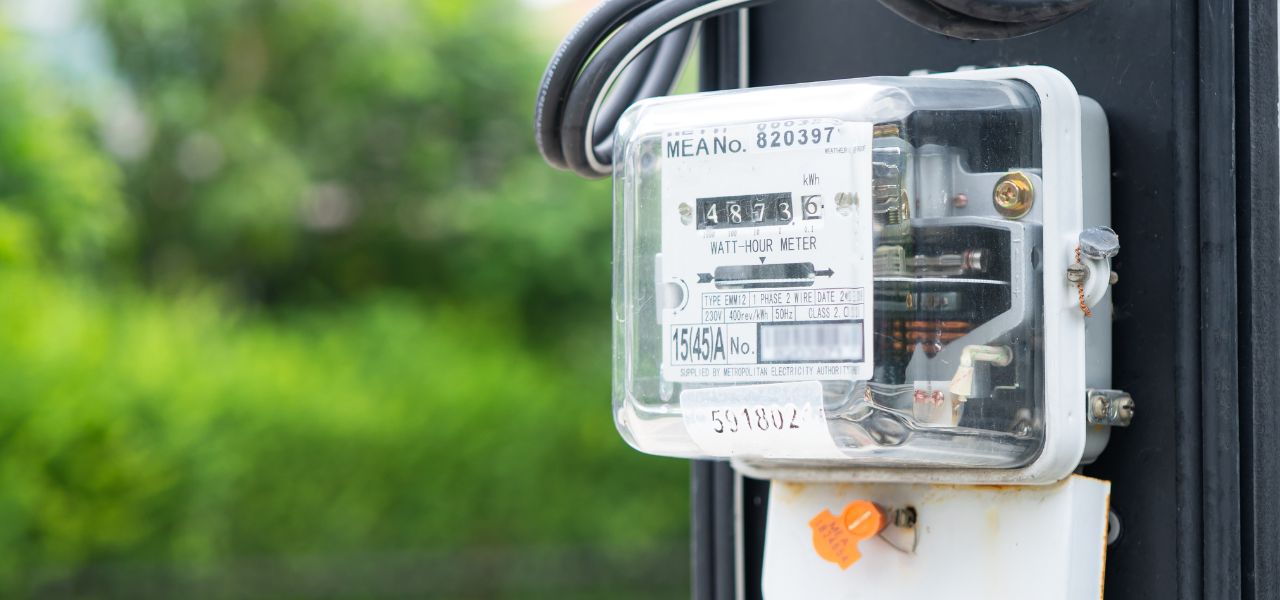
India’s energy landscape is undergoing its most significant transformation since the grid was first established. At the heart of this revolution lies a humble device that is rapidly becoming the most critical node in our national infrastructure: the smart meter.
For senior executives evaluating market opportunities, the numbers are staggering. But beyond the sheer scale of procurement, the smart meter mandate represents a fundamental shift in how India consumes, pays for, and thinks about energy. It is a ₹2 lakh crore opportunity that will reshape the power sector for decades to come.
The Scale of the Mandate
Let us begin with the magnitude of what is unfolding. The Government of India has set an ambitious target to install 25 crore (250 million) smart meters across the country. To put this in perspective, this is one of the largest utility-grade IoT deployments anywhere in the world.
The market size for smart energy meters in India reached USD 297.9 million in 2025 and is projected to hit USD 3.6 billion by 2034, growing at a remarkable CAGR of nearly 31%. Other analyses place the figure even higher, with the market expected to reach USD 4.17 billion by 2033.
In rupee terms, the cumulative market opportunity is estimated between ₹60,000 crore and ₹90,000 crore according to industry players, with some estimates pushing the total addressable market closer to ₹2 lakh crore when including associated infrastructure, software, and long-term operations.
The Regulatory Tailwinds
What makes this opportunity particularly compelling is the regulatory momentum behind it. In February 2026, the Central Electricity Authority (CEA) notified draft amendments to the metering regulations that effectively mandate the smart meter transition.
The key provisions are unambiguous:
- All consumers in areas with communication networks must be supplied electricity through smart meters conforming to Indian standards
- All Advanced Metering Infrastructure (AMI) systems must include prepayment functionality
- Meters must be interoperable in accordance with CEA guidelines
For areas without communication coverage, prepayment meters are permitted subject to regulatory approval. The message is clear: the era of conventional metering is ending.
As of February 15, 2026, approximately 5.83 crore smart meters have been installed, with the installation rate now touching 1.35 lakh meters per day. While this represents progress, it also highlights the enormous headroom; nearly 80% of the target remains to be fulfilled, with the revised timeline extending to March 2028.
The Business Case: Why This Matters
For senior executives, the smart meter mandate is not merely a compliance exercise. It is a fundamental enabler of business efficiency and revenue assurance.
The Revamped Distribution Sector Scheme (RDSS) aims to reduce Aggregate Technical and Commercial (AT&C) losses from current levels of around 22% to 12-15%. The financial impact is already visible where deployment has progressed.
Consider these real-world outcomes:
- Assam’s power utility reported revenue improvements of nearly 30% following smart meter deployment
- In the Kargil district (Ladakh), losses in fully converted regions have fallen sharply
- In Indore, a deployment of 400,000 smart meters detected 688 tampering cases and generated ₹31.84 crore through remote connect/disconnect operations, while average consumer billing increased by 17% due to accurate consumption tracking
These are not marginal improvements. They represent a structural transformation in how utilities manage their revenue cycle.
The AMISP Model: De-risking Investment
One of the most innovative aspects of India’s smart meter programme is the Advanced Metering Infrastructure Service Provider (AMISP) model. Under this framework, private players finance, install, and operate the metering infrastructure over concession periods typically lasting 8-10 years.
This model has attracted significant foreign investment. I Squared Capital, a US-based private equity firm, has invested $150 million in Polaris Smart Metering, which now holds an order book of one crore smart meters and is scaling its manufacturing capacity to 10 million units annually.
The credit risk mitigation mechanism is particularly elegant. The RDSS enables a direct debit escrow facility that channels consumer payments directly to AMISPs, ensuring predictable cash flows despite the financial stress often faced by state distribution companies (DISCOMs).
The Market Leaders and Their Order Books
The scale of awards already made provides visibility into the multi-year opportunity:
- Genus Power Infrastructure leads with an executable order book of approximately ₹27,217 crore, covering about 2.75 crore smart meters. The company has already supplied 2.5 crore smart meters, commanding nearly 45% market share of installed units.
- Techno Electric & Engineering Company has an active order book of 22.4 lakh meters valued at ₹2,612 crore, with execution rates touching 3,000 meters per day.
- HPL Electric & Power holds an order book of ₹3,100 crore, with over 99% coming from smart metering projects.
- Polaris Smart Metering has committed nearly ₹4,500 crore in capital expenditure and holds orders for one crore meters.
Beyond Electricity: The Gas and Water Opportunity
For executives with a longer planning horizon, the adjacent markets are equally attractive. Smart gas metering in India is approximately 5-7 years behind electricity in terms of adoption, but the potential is enormous.
With 1.4 crore gas consumers currently and rapid city gas distribution expansion underway, the total addressable market for gas meters is estimated at 12 crore connections by 2030. Polaris has already signed a 10-year contract worth approximately ₹1,000 crore for 1.6 million smart gas meters.
Water metering represents another frontier, with the market estimated to exceed ₹3,000 crore by 2030. HPL Electric has recently entered this space with its Niram Pulse smart water meter, while Genus Power is similarly investing in water metering capabilities.
The Technology Imperative: Building for Scale and Security
This is where Cionlabs’ expertise becomes relevant to the conversation. A deployment of 250 million connected devices is not simply a procurement exercise; it is a massive IoT engineering challenge.
Smart meters must function reliably for over a decade in harsh conditions: high temperatures, voltage fluctuations, dusty environments, and often in locations with challenging communication connectivity. They must be secure by design, given their position as critical national infrastructure.
The Parliamentary Committee on Energy has specifically flagged concerns regarding data privacy, cybersecurity, and billing accuracy. The committee has recommended comprehensive safeguards for data ownership, access, storage, and grievance redressal. It has also called for stringent testing, certification, and quality assurance before installation.
This is not a commodity play. It is a systems integration and reliability engineering challenge of the highest order.
The Cionlabs Opportunity
For companies looking to participate in this ecosystem, whether as AMISPs, meter manufacturers, or technology providers, the choice of technology partner is critical.
At Cionlabs, we bring deep expertise in designing connected devices for the Indian context. Our partnership with Beken, a pioneer in Wi-Fi and IoT chipsets, enables us to build metering solutions that are:
- Secure at the silicon level, with hardware roots of trust and cryptographic acceleration
- Optimized for low power consumption, critical for battery-backed metering applications
- Designed for Indian conditions, with robust performance across temperature extremes and grid fluctuations
- Compliant with Indian standards, including the latest CEA and BIS requirements
Whether you are an existing meter manufacturer looking to upgrade your product line, an AMISP seeking to optimize your supply chain, or a corporation exploring entry into the smart energy space, we offer white-label product design and development services tailored to your requirements.
Conclusion: A Once-in-a-Generation Opportunity
The smart meter mandate represents one of the largest infrastructure modernization programmes in independent India’s history. With 25 crore devices to be deployed, nearly ₹2 lakh crore in market value, and a regulatory framework that actively encourages private participation, the opportunity is unprecedented.
But success requires more than capital. It requires technology partners who understand the Indian context, who can design for scale and reliability, and who prioritize security as a foundational principle rather than an afterthought.
At Cionlabs, we are ready to partner with you in capturing this opportunity. Whether you need end-to-end product design, firmware development, or manufacturing support, our team has the expertise to help you succeed in India’s energy transition.
The meters are just the beginning. The smart grid is the destination. Let’s build it together.