

Blog
Visual AI for the Visually Impaired: The Transformative Accessibility Use Case

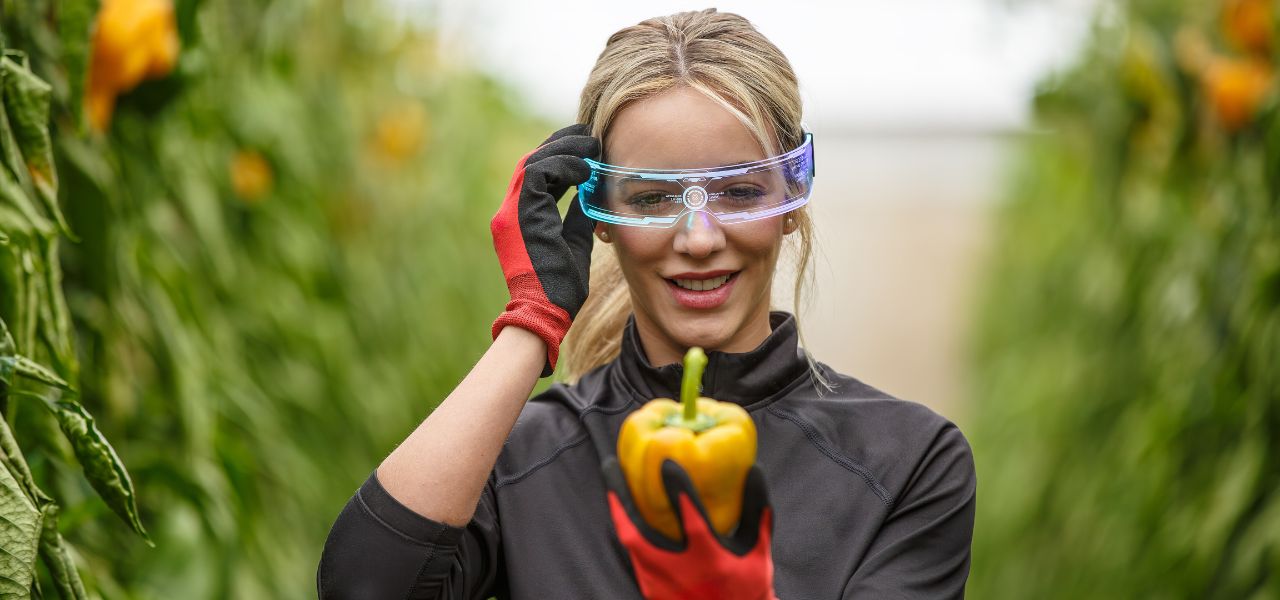
In the bustling corridors of Narayana Nethralaya in Bengaluru, a quiet revolution is unfolding. Patients who have lived with blindness or severe low vision are being fitted with a pair of sleek glasses that do not just sit on their faces—they see for them. These glasses can read handwritten prescriptions, identify currency notes, recognise familiar faces, and describe the world through audio cues. For someone who has navigated life by touch and sound alone, this is not a convenience. It is a transformation of independence.
This is the promise of Visual AI for the visually impaired. And in India, where an estimated 70 crore people live with preventable or irreversible sight loss, this technology is not just a niche accessibility feature. It is a massive, underserved market with profound social impact.
For the CEO, Head of Product, and Chief Strategy Officer, the message is clear: the convergence of artificial intelligence, edge computing, and affordable hardware has created an unprecedented opportunity to build products that are both commercially viable and socially transformative. The question is no longer whether Visual AI for accessibility will scale. It is those who will build the solutions that define this category in India.
The Scale of the Need: India’s Invisible Market
The numbers are staggering. According to a 2025 report by the International Agency for the Prevention of Blindness (IAPB), approximately 70 crore people in India are living with preventable sight loss, affecting employment, education, income, and caregiving responsibilities. The National Sample Survey (NSS) 76th round estimated the prevalence of visual disability in the general population at 0.23%, with about 15% of people with visual disability lacking access to disability-related healthcare.
Critically, affordability is the leading barrier. The same NSS data revealed that around 55% of people with visual disability had zero out-of-pocket expenditure on healthcare—a figure that speaks not to lack of need, but to lack of means. For decades, this population has been underserved by technology. Imported assistive devices often cost upwards of ₹3.4 lakh, placing them far beyond the reach of most Indians.
Yet the economic case for intervention is compelling. The IAPB estimates that investing in eye health and assistive technologies could unlock ₹3.6 lakh crore for the Indian economy annually, with a ₹16 return for every ₹1 invested. This is not charity. This is macroeconomic sense.
The Indian Innovators: A New Generation of Assistive Technology
The gap between need and affordability has catalysed a wave of homegrown innovation. Indian startups are now building world-class Visual AI solutions at a fraction of the cost of imported alternatives.
SHG Technologies, founded in 2020 by former Indian Navy officer and IIT Kanpur alumnus Ramu Muthangi, emerged from a deeply personal tragedy. Muthangi’s sister lost her vision to diabetic retinopathy, and her struggle with blindness inspired the creation of Smart Vision Glasses—an AI-powered wearable designed to restore independence and dignity. Priced nearly ten times lower than imported equivalents, the glasses use AI, machine vision, and augmented reality to provide real-time voice feedback for object recognition, obstacle detection, text reading, facial identification, and navigation.
Clinically validated by Narayana Nethralaya, the latest iteration – Smart Vision Glasses Ultra – features a built-in LiDAR sensor that scans surroundings and provides descriptions via a private Bluetooth speaker. It can read text in all 18 Indian languages and several foreign languages, identify colours, detect signboards in public places like metro stations, and even interpret handwritten prescriptions or classroom notes. An integrated emergency calling feature sends the user’s location, last spoken words, and a front-view image to a designated contact. Priced at around ₹46,000, it has already been adopted by approximately 50 patients at Narayana Nethralaya in its first year.
Sunbots Innovation LLP, incubated at IIM Bangalore’s NSRCEL, offers a product called SMARTON—smart glasses that use AI to transform visuals into audio. The device identifies objects in real time, describes the user’s surroundings, helps read documents and currency, and makes STEM content accessible through interactive learning. Priced at around ₹15,000, more than 7,000 people have used them, primarily in the 14-32 age group, for educational purposes. Critically, 13 Indian languages have been integrated so far.
Torchit, founded by Hunny Bhagchandani, offers the Jyoti AI Glasses, which read text, recognise faces, and interpret environments. The company has expanded from 8 to over 20 Enablemart Experience and Sensitisation Centres across India, operated by persons with disabilities, serving over 6,000 monthly visitors and generating consistent revenue. Bhagchandani’s inspiration came from witnessing a mentor at the Blind People’s Association in Ahmedabad suffer a serious accident while walking independently—a moment that catalysed a mission to ensure “no person with a disability ever has to fear walking outside alone again”.
QWR, the startup behind India’s first AI smart glasses Humbl, is also exploring applications for the visually impaired. Founder Suraj Aiar confirmed interest from accessibility startups working with the blind, noting that the glasses could soon offer a visual assistant for navigation and environmental awareness. Crucially, the device features a hardcoded light indicator that flashes whenever it records, ensuring privacy—a critical consideration for wearable cameras.
The Technology Stack: What Makes It Possible
The rapid advancement of Visual AI for accessibility is driven by convergence across multiple technology layers:
On-Device AI Processing: Modern smart glasses run AI models locally, enabling real-time object detection, text recognition, and scene description without cloud latency. This is essential for tasks like obstacle avoidance, where milliseconds matter.
LiDAR and Depth Sensing: Devices like the Smart Vision Glasses Ultra use LiDAR to build a 3D map of surroundings, providing spatial awareness far beyond simple camera vision.
Multilingual AI: India’s linguistic diversity demands models that understand and generate speech in multiple languages. SHG Technologies’ support for 18 Indian languages and Sunbots’ integration of 13 languages demonstrate that localisation is not optional—it is core functionality.
Edge-Cloud Hybrid Architectures: While core functions run on-device, connectivity enables updates, emergency alerts, and access to cloud-based models for complex queries. Humbl’s design ensures basic tasks like object recognition work offline, with cloud fallback for advanced capabilities.
Beyond Navigation: The Expanding Use Cases
While obstacle detection and navigation are foundational, the application of Visual AI extends far beyond:
Education: SMARTON glasses help students access STEM content through interactive learning, enabling visually impaired learners to engage with material that was previously inaccessible.
Employment: By enabling independent navigation and document reading, these technologies open job opportunities that were previously closed.
Retail: Britannia Industries, in partnership with Google, WPP, and More Retail, launched A-Eye—an AI-powered smartphone assistant that helps visually impaired shoppers navigate supermarkets, identify products, and access pricing, ingredients, and expiry dates through voice feedback. A pilot is underway at a More supermarket in Bengaluru’s TC Palya.
Social Connection: Facial recognition allows users to identify friends and family, restoring a layer of social interaction that sighted people take for granted.
Emergency Response: Integrated alert systems with location sharing provide peace of mind for both users and their families.
The Global Context: India’s Place in a Growing Market
This is not an isolated Indian phenomenon. Globally, major technology companies are investing heavily in accessibility:
Envision, co-founded by IIT alumni Karthik Mahadevan and Karthik Kannan, has partnered with eyewear brand Solos to launch Ally Solos Glasses. Powered by Envision’s AI assistant ‘Ally,’ they can read text, describe environments, perform web searches, and recognise people, signs, and objects. Priced at $399 (around ₹33,000), they offer up to 16 hours of active use and a P67 rating for dust and water resistance.
Meta’s Ray-Ban glasses are already helping blind users navigate the world with greater ease, and Google’s Lookout and Guided Frame features demonstrate the tech giants’ commitment to accessibility.
But India has a unique advantage. Our scale, linguistic diversity, and cost sensitivity create a proving ground for solutions that can then scale globally. As Peter Holland, CEO of IAPB, noted, “India is the first nation to launch the National Programme for Control of Blindness and Visual Impairment (NPCB and VI) policy… more than 98 lakh cataract surgeries were performed in the fiscal year 2024-25 under the NPCB and VI, which is the highest in the last five years”. This policy foundation, combined with private innovation, positions India as a potential global leader in assistive technology.
The Strategic Opportunity for Indian Business Leaders
For companies considering entry into this space, the opportunity is multi-layered:
Product Development: The technology building blocks—cameras, AI processors, edge models, and lightweight optics—are now accessible. Indian design and manufacturing capabilities, as demonstrated by QWR’s focus on the “Indian head” and months of R&D on ergonomics, enable products tailored to local needs.
Distribution Partnerships: SHG Technologies works with eye hospitals, NGOs, corporate CSR programs, and educational institutions. Torchit operates Enablemart Centres in partnership with the Ministry of Social Justice and Empowerment. These channels are established and hungry for solutions.
Government and CSR Funding: With demonstrated social impact and clear economic returns, Visual AI products are attractive candidates for CSR partnerships and government procurement.
Global Export Potential: A product that works in India—with its demanding conditions, linguistic diversity, and cost constraints—is likely to succeed in other emerging markets.
The Cionlabs Advantage
At Cionlabs, we specialise in turning ambitious concepts into manufacturable, scalable products. Our expertise spans the entire smart glasses development stack: optics integration, edge AI hardware design, power management, and certification. We can help organisations—whether established corporations, startups, or NGOs—design and manufacture Visual AI solutions tailored to the Indian market and beyond.
Conclusion: Technology with Purpose
The story of Visual AI for the visually impaired is not about algorithms or hardware specs. It is about people. It is about Gurumurthy, who no longer needs to depend on others to identify currency notes. It is about Ayesha, who can now listen to the news or weather updates in different languages, regaining control over her day. It is about Girish Kumar, who feels a sense of safety walking in crowded places because his glasses alert him to obstacles.
For the seven crore Indians living with preventable sight loss, these technologies are not luxuries. They are bridges to independence, dignity, and participation.
For business leaders, this is an opportunity to build products that matter—to create value that is measured not just in revenue, but in lives transformed. The technology is ready. The market is waiting. The question is: will you answer the call?
Ready to explore how Visual AI can transform lives and build business value?
Contact Cionlabs to discuss smart glasses design, development, and manufacturing partnerships that combine cutting-edge technology with profound social impact.