

Blog
White Label Visitor Management Kiosks for Indian Gated Societies: Privacy First, Cloud Optional

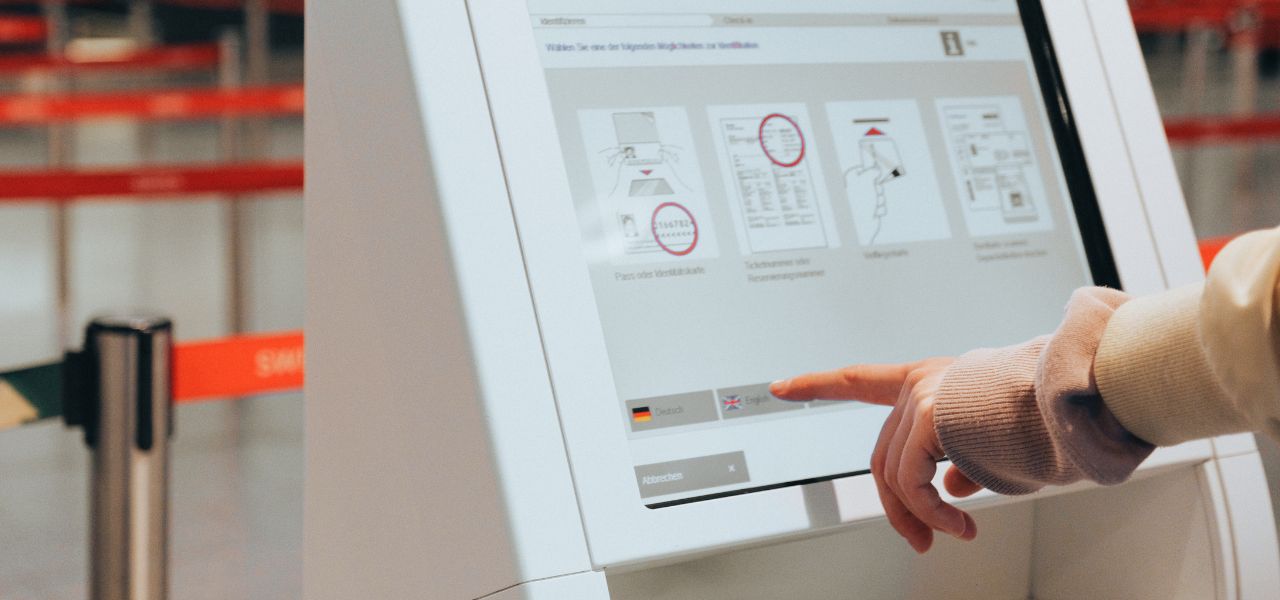
Indian gated societies are growing at an unprecedented rate. Bengaluru, Gurugram, Pune, and Chennai now have over 10,000 large residential communities, each with more than 500 apartments. Every day, millions of visitors enter these societies. Delivery personnel, domestic help, service technicians, and guests. The paper register at the security gate is no longer sufficient. It is slow, unsearchable, and easily manipulated.
However, the shift to digital visitor management has created a new problem. Privacy. Residents do not want their guest data stored on a cloud server operated by an unknown third party. Security guards do not want slow, internet-dependent devices that fail during network outages. Society management committees want compliance with Indian data protection laws without paying recurring software fees per resident.
There is a solution. A white-label visitor management kiosk that puts privacy first and makes the cloud optional. Cionlabs, with Beken Wi-Fi at the core, has built exactly that.
The Three Failures of Cloud First Visitor Systems
Most visitor management systems sold in India today follow a cloud-first architecture. Every check-in sends data to a remote server. Every visitor’s photo is uploaded. Every entry time is logged on someone else’s database. This model fails on three counts for Indian gated societies.
First, liability. Under the Digital Personal Data Protection Act 2023, the society committee is the data fiduciary. If a cloud provider suffers a breach, the committee is legally responsible. Few resident welfare associations understand this risk until a notice arrives.
Second, internet dependence. Indian broadband, despite 5G claims, remains unreliable. A fiber cut during the monsoon or a power failure at the local exchange means the security gate cannot log visitors. The guard reverts to paper. The digital system becomes a decoration.
Third, cost. Cloud-based systems charge per resident per month. For a 1,000-apartment society, this quickly exceeds ₹5 lakh annually. The hardware is often locked to the provider. Switching costs are punishing.
Privacy First: What It Actually Means
A privacy-first visitor kiosk stores data locally on the device or on a local server inside the society’s premises. Visitor photos, ID card scans, and entry logs never leave the society’s physical boundary unless explicitly required for police reporting or remote access by the resident.
This is not a feature. This is a compliance requirement. The DPDP Act explicitly allows data fiduciaries to process personal data without consent for certain legitimate purposes. However, transfer to a third-party cloud triggers consent and notice obligations. Local processing avoids almost all of this administrative overhead.
For a society manager, privacy first means one thing. You are not outsourcing trust to a startup that may shut down next year. You own the data. You control the retention period. You decide what leaves the premises.
Cloud Optional: Why Default Matters
Cloud optional means the kiosk works the same way with or without an active internet connection. When the internet is available, the system can push a notification to the resident’s phone or sync with a central dashboard. When the internet is unavailable, the kiosk continues to log visitors, capture photos, and print visitor passes.
This requires local intelligence. A device that cannot function without the cloud is not a security tool. It is a liability.
Beken Wi Fi chips, specifically the BK7258 and BK7238 series, are designed for this dual-mode operation. A new generation chip BK7259, supports face recognition at the edge without the need for the internet. They manage local storage, run a lightweight web server for configuration, and maintain real-time clock accuracy even when NTP servers are unreachable. The device wakes from deep sleep for each visitor interaction and returns to low power mode instantly. For battery-backed operation during a power cut, this matters.
White Label: Your Brand, Your Rules
Most visitor management kiosks available in India are white-labeled by foreign OEMs. The software is locked. The hardware is generic. The subscription is forever.
A true white-label solution from Cionlabs reverses this. You choose the enclosure design. You choose the screen size: 7-inch, 10-inch, or 21.5-inch. You choose the visitor log retention period: 30 days, 90 days, or indefinite on local storage. You brand the software interface with your logo. You set the pricing model: one-time hardware sale or annual maintenance contract.
The society buys from you. The society pays you. The society calls you when they need an upgrade. Not a foreign OEM. Not a third-party software provider.
Technical Specifications That Matter for Indian Conditions
A visitor kiosk for Indian gated societies must survive real-world conditions. The security gate is often shaded but not air-conditioned. Temperatures reach 45 degrees Celsius. Dust is constant. Power fluctuates.
Cionlabs builds the kiosk around Beken Wi Fi with the following specifications, all tested for Indian environments.
The touch screen is rated for dry and wet finger operation. Monsoon rain does not stop visitor check-ins. The camera captures ID cards under direct sunlight and low light. Polarization filters are included. The printer for visitor passes uses thermal paper that does not fade in humid conditions. The enclosure is IP54 rated with a silicone seal.
Storage is 8 GB microSD, field replaceable. A 5,000-entry log is retained for 12 months. No cloud required.
The Business Model for Security Integrators and Society Vendors
If you sell security systems to Indian residential societies, this is a direct opportunity. The average gated society of 500 apartments spends ₹1.5 lakh to ₹2 lakh on a basic visitor management setup with a one-year cloud subscription. That subscription renews annually. The hardware is often obsolete in three years.
With a privacy-first, cloud-optional white-label kiosk, your offer changes. You sell the hardware for a reasonable margin, typically ₹40,000 to ₹60,000, depending on features. You sell an optional cloud sync module at ₹500 per month for societies that want remote access. Most societies skip the cloud module. They pay once and own the device.
Your relationship with the society shifts from a recurring billing annoyance to a trusted hardware partner. When the kiosk needs an upgrade after five years, they call you. Not your competitor.
Compliance With Indian Regulations
The DPDP Act has specific provisions for resident welfare associations. They are permitted to process biometric and personal data for security purposes without explicit consent, provided the data is deleted after a reasonable period. Local storage with automated deletion after 90 days satisfies this requirement entirely.
Cloud storage triggers additional requirements. Data localization, breach notification, and grievance redressal mechanisms. Many society committees prefer to avoid this complexity.
The Cionlabs white-label kiosk defaults to local storage with automated purging. Cloud sync is an add-on, not a requirement. This design choice is not technical. It is regulatory.
A Note on Integration With Existing Systems
Most gated societies already have some infrastructure. An access control system at the main gate. Boom barriers. RFID tags for residents. The visitor kiosk must work with these, not replace them.
Cionlabs provides APIs for integration with existing access controllers. The kiosk sends a shunt signal to the boom barrier when a pre-approved visitor is validated. Beken Wi Fi also supports serial and GPIO interfaces, so the kiosk can communicate with wired access panels without network dependency.
The Deployment Timeline
A white-label visitor management kiosk for Indian gated societies can be deployed faster than most integrators expect. The hardware base is proven. Beken Wi Fi modules are already production-ready for industrial temperature ranges. Cionlabs maintains an inventory of all long lead components.
Here is the timeline for a security brand or system integrator.
Week 1 to 2. You share your brand assets and any specific enclosure or color requirements. Cionlabs provides firmware images with your logo and default settings.
Week 3. Prototype units are shipped to you for testing. Five units maximum.
Week 4. You approve the prototype. Cionlabs produces the first batch of 50 to 100 units.
Week 5 to 6. The units are delivered to your warehouse. You begin installations.
From brand agreement to field deployment, the entire process takes less than two months. No in-house hardware engineering required. No certification delays. No firmware rewrites.
What You Control, What Cionlabs Handles
You control the pricing, the sales channel, the installation team, and the customer relationship. You decide whether to sell outright or offer a lease model. You set the service level agreement for your clients.
Cionlabs handles the PCB design, the Beken Wi Fi integration, the thermal management, the enclosure sourcing, the display and camera assembly, and the base firmware. Updates to the base firmware are released quarterly and can be pushed over the air if your client chooses the optional cloud module.
This is not outsourcing. This is co-creation with a clear division of labor.
The Window Is Now
Indian gated societies are actively replacing paper registers. The market is young enough that standards have not been set. Security brands that offer a privacy-first, cloud-optional white-label kiosk today will define the category for the next decade.
The alternative is waiting. Waiting for the DPDP Act to be fully enforced. Waiting for a data breach at a competitor. Waiting for your clients to ask why their visitor data is on a server they do not control.
Cionlabs has the reference design. Beken has the reliable, low-power, thermally capable Wi Fi. You have a relationship with India’s residential societies.
Let us build a white-label visitor management kiosk that respects privacy, survives Indian summers, and puts you in control of the recurring hardware upgrade cycle.
Ready to launch your own privacy-first visitor management brand in under 8 weeks? Contact Cionlabs for a white-label briefing package.