

Blog
Made in India, Deployed Global: Designing AI Glasses for Industrial Workers (IIoT)

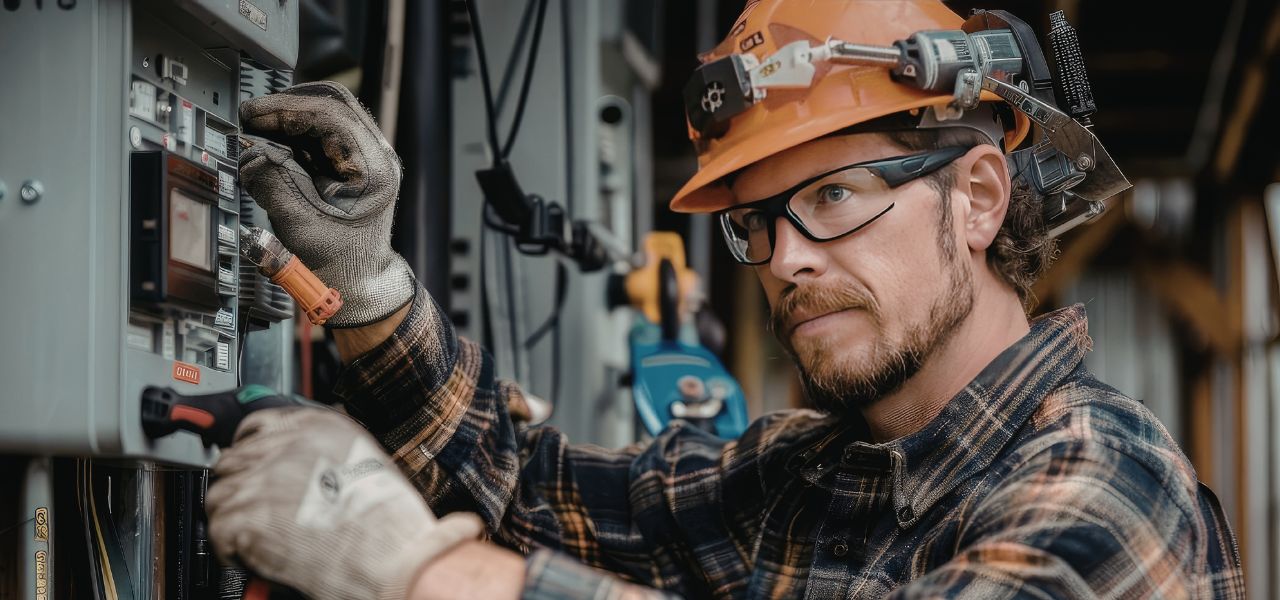
The Next Productivity Frontier is Hands-Free
When most business leaders hear “AI glasses,” they envision futuristic consumer gadgets or gaming peripherals. But for Indian manufacturing, logistics, and field service operations, this technology represents something far more transformative: a practical tool to solve chronic productivity challenges, bridge skill gaps, and achieve quality standards that compete with the best in the world.
India is at a critical inflection point. The country has ambitious production goals, a growing global export mandate, and intensifying pressure to optimize operations. Yet manufacturers face a triad of persistent obstacles: difficulty finding and retaining skilled technicians, manual processes that breed errors and rework, and training bottlenecks that slow workforce scaling.
AI glasses address all three simultaneously. By placing digital intelligence directly in the worker’s line of sight, these devices eliminate the friction of looking away at screens or paper manuals. The result is a measurable, repeatable return on investment.
This blog examines the market opportunity, the compelling performance data, and why India is uniquely positioned to lead in enterprise AI glasses design and deployment.
Market Trajectory: India’s Smart Glasses Boom
The numbers are striking. India’s smart glasses market is projected to expand 16-fold over the next five years, exceeding 3.2 million units by 2030. This represents a compound annual growth rate of approximately 74 percent.
Even more telling is where the value lies. Standalone AI smart glasses account for only 43 percent of unit shipments but dominate 84 percent of total market revenue. Enterprise buyers are not purchasing basic connected displays. They are investing in intelligent, edge-capable devices that deliver real productivity gains.
Within the industrial sector specifically, AI camera glasses for enterprise applications, including field services, warehousing, telemedicine, and smart retail, are driving adoption at over 30 percent CAGR through 2030.
Multiple factors are accelerating this growth. India’s expanding 5G infrastructure enables real-time remote assistance. A growing domestic ecosystem for hardware and optics design makes production more accessible. Localised AI models optimized for Indian languages and operational environments ensure practical utility rather than imported theoretical features.
The Operational Imperative: Solving India’s Skills Challenge
Indian industry faces a specific and urgent problem. The gap between the skilled workforce available and the technical workforce required is widening. Hiring and retaining expert technicians, assemblers, and engineers is increasingly difficult and expensive.
Traditional solutions have failed because they require workers to divide attention between the task and the screen. Pulling up a manual on a tablet, watching a training video, or calling a remote expert all take eyes off the equipment and hands away from tools.
AI glasses solve this by bringing information directly into the worker’s field of vision. Instructions overlay onto the physical machinery. Voice commands control the interface. The worker never looks away.
This capability transforms four critical industrial functions:
1. Complex Assembly and Manufacturing
A technician wearing AI glasses sees digital work instructions superimposed directly onto the equipment being assembled. Computer vision confirms each step is completed correctly. Missing components or improperly connected wires are flagged in real time before they become quality escapes.
The business impact includes a drastic reduction in assembly errors and product recalls, faster production cycles, and significantly shorter new hire training time.
2. Warehouse Logistics and Picking
A picker receives order information in their line of sight with digital arrows guiding the optimal path through the facility. The built-in camera automatically scans barcodes, confirming correct items without requiring any manual scanning motion.
The measurable outcomes include up to a 25 percent increase in picking speed, near elimination of misshipments, and improved worker safety as employees keep their heads up and hands free while moving.
3. Field Service and Maintenance with Remote Expertise
A field engineer working on complex equipment can stream a live first-person view to a senior expert anywhere in the country. That expert annotates the engineer’s field of view with arrows, circles, and notes, guiding the repair as if standing side by side.
This capability slashes travel costs and equipment downtime. Companies resolve up to 90 percent of issues on the first visit. Perhaps most critically, the expertise of retiring veterans is captured and distributed instantly across a distributed workforce.
4. Quality Assurance and Inspection
Computer vision running on the glasses automatically detects microscopic defects, inconsistencies, or safety violations that the human eye might miss. The inspector receives instant alerts when problems are identified.
This delivers unprecedented quality control levels, enhanced regulatory compliance, and proactive risk mitigation rather than reactive problem solving.
The Performance Data: What Rigorous Studies Reveal
The claims above are not marketing speculation. Independent academic research has quantified the impact of combining conversational AI with smart glasses in industrial environments.
A comprehensive evaluation across 52 manufacturing sites documented efficiency improvements averaging a 34.2 percent reduction in maintenance procedure completion time. For high complexity tasks, enhancements reached 46.7 percent. Detailed time motion analyses revealed that technicians spent 73.8 percent less time consulting technical documentation and 47.3 percent less time communicating with remote support personnel.
The error reduction is equally compelling. Controlled comparative studies involving 278 maintenance technicians demonstrated that AR-assisted workers completed complex repair procedures with 68.7 percent fewer errors while experiencing 43.2 percent less cognitive load as measured by standardized assessment tools.
Mean time to repair improved by 36.3 percent for routine maintenance tasks and 41.7 percent for complex repairs requiring specialized expertise. Manufacturing facilities implementing these technologies reported average annual savings of EUR 374,500 (approximately Rs 3.4 crore) per production line through reduced downtime alone.
For quality improvement, error rates in electrical system maintenance decreased by 82.4 percent when using AR guidance for tracing circuits and identifying connection points.
Why India Can Lead: The Cionlabs and Beken Advantage
Global technology alone is insufficient for Indian industrial conditions. Factory environments often have inconsistent connectivity. Cost sensitivity is acute. Equipment must withstand dust, heat, and physical demands.
This is where domestic design capability becomes decisive. Cionlabs has developed enterprise AI glasses built specifically for Indian operating realities.
Offline First Capability: Core artificial intelligence functions work without constant data streaming. This is critical for factories and sites with poor or unreliable connectivity.
Optimized for Cost Efficiency: The solution delivers powerful capabilities without the prohibitive price tags of imported alternatives. This ensures rapid payback periods and accessible entry points for mid-sized enterprises.
Ruggedized Design: The hardware is built to withstand demanding Indian industrial environments, including temperature variations, dust exposure, and physical handling.
Full Stack Integration: From hardware and optics to AI software and cloud dashboards, Cionlabs provides an end-to-end solution, not a component that clients must integrate themselves.
The technology foundation comes from Beken Corporation, a pioneer in wireless chips. Beken’s BK7258 Wi Fi 6 ultra-low power AI SoC chip is specifically designed for wearable devices. It integrates an efficient AI processing unit for on-device image recognition and voice processing while maintaining extremely low energy consumption. This is not a repurposed smartphone chip. It is purpose-built for smart glasses.
Beken’s Armino AIDK development platform provides full-stack software support, accelerating time from concept to production. The same platform that empowered Phancy Group to launch its AI smart glasses solution is available to Cionlabs and its clients.
At CES 2026, the industry consensus was clear: artificial intelligence hardware is moving from command-based interfaces to conversational interactions. Beken CEO Dr. Pengfei Zhang articulated that competition in this era has evolved into a race for collaborative efficiency. Success requires deep integration of communication capability, computing power, and power management.
This is precisely what Cionlabs delivers as a design partner.
The White Label Opportunity for Indian Brands
For Indian enterprises, equipment manufacturers, and solution providers, the question is not whether to adopt AI glasses but how to bring them to market efficiently.
Building from scratch is prohibitively expensive and slow. Custom silicon development alone can take 18 to 24 months. Optical stack integration requires specialized expertise. Thermal management in a glasses form factor demands iterative prototyping.
White-label partnership with an experienced electronics design house eliminates these barriers. Cionlabs offers complete product design and manufacturing enablement for AI glasses tailored to specific industrial use cases.
Client benefits include:
- Reduced time to market from years to months
- Avoidance of multi-crore NRE (non-recurring engineering) costs
- Access to proven Beken-based hardware architecture
- Customisation for specific applications, branding, and software features
- Scalable manufacturing support for volume deployment
The commercial viability analysis is favourable. For enterprise-focused AI glasses targeting industrial clients, a price point of Rs 25,000 to Rs 40,000 per unit with gross margins exceeding 40 percent is achievable in the current market. With deployment scale and given the documented productivity gains, payback periods for buyers typically range from three to nine months.
Conclusion: The Time to Act is Now
India’s smart glasses market is entering a breakout phase. The technology is proven. The performance data is robust. The domestic design and manufacturing ecosystem is maturing rapidly.
For Indian industrial enterprises, early adoption offers a competitive advantage. For brands seeking to enter this category, the window for establishing market presence is open but will not remain so indefinitely.
Cionlabs brings together the essential capabilities: Beken-powered hardware expertise, India-specific design sensibility, full-stack integration, and proven deployment experience. Whether you need custom AI glasses for your own operations or a white-label product to serve your customers, the path forward is clear.
Key Takeaways for Decision Makers
About Cionlabs
Cionlabs is an electronics design house based in India, specialising in IoT, IIoT, and AI-powered products. We partner with Beken Corporation, a pioneer in wireless silicon, to deliver white-label and custom product designs for the Indian and global markets. Our expertise spans WiFi home automation, Zigbee smart home devices, AI cameras, edge intelligence, gateways, smart energy meters, and industrial wearables, including AI glasses.
Ready to explore AI glasses for your industrial operations or product portfolio?
Contact Cionlabs to discuss your requirements. From feasibility assessment to full-scale production, we deliver enterprise-grade solutions built for Indian conditions.