
Blog
LoRaWAN vs. NB-IoT for Indian Agriculture & Smart Metering: Which Wins for Scale?

India is witnessing a silent revolution in connectivity. Not the kind that streams videos on smartphones, but the kind that streams data from a water meter in a Mumbai high-rise or a soil sensor in a remote Punjab farm. For senior executives evaluating IoT and IIoT deployments, the choice of Low Power Wide Area Network (LPWAN) technology is a strategic decision with billion-rupee implications.
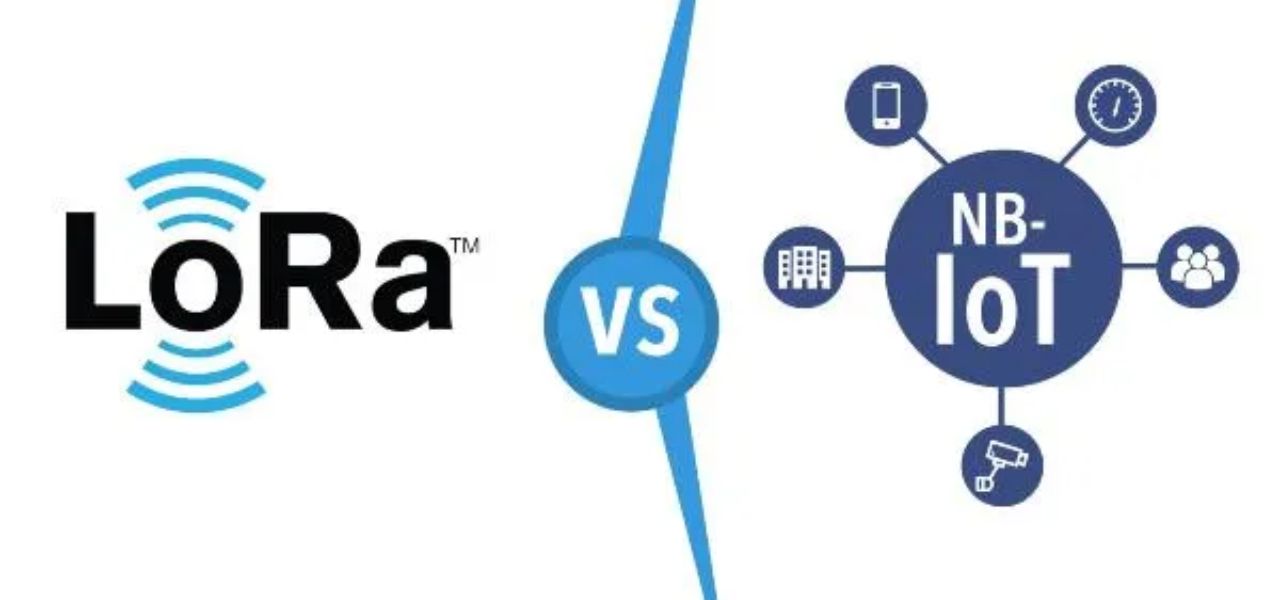
The two dominant contenders are LoRaWAN and NB-IoT. Both promise low power consumption, wide coverage, and cost efficiency. But their architectures, economics, and suitability for India`s unique operating conditions are vastly different. This blog cuts through the marketing noise to deliver data-driven insights for business leaders planning large-scale IoT rollouts in agriculture and smart metering.
We will analyze which technology wins on scalability, total cost of ownership, and real-world performance across Indian urban and rural landscapes.
The Market Opportunity: Why This Decision Matters Now
The numbers are compelling. The global Narrowband IoT Access Service Market, which includes both NB-IoT and LoRaWAN technologies, was valued at USD 1.3 billion in 2024 and is projected to reach USD 5 billion by 2035, growing at a compound annual growth rate of 13.1 percent. Within this, the Narrow Band Internet of Things Access Service Market is expected to grow from USD 3.87 billion in 2025 to USD 18.7 billion by 2035, representing an even steeper CAGR of 17.1 percent.
Smart metering and smart agriculture are two of the largest application segments driving this growth. The Asia Pacific region, led by India and China, is poised to dominate this expansion, fueled by government smart city initiatives and increasing IoT deployments in manufacturing and agriculture. For Indian enterprises, this represents a first-mover advantage. The question is not whether to deploy, but which technology to back.
Technical Deep Dive: How They Work
Before comparing, we must understand what each technology offers at the engineering level.
NB-IoT (Narrowband Internet of Things)
NB-IoT is a cellular standard defined by 3GPP and operates in licensed spectrum, the same frequencies used by 4G and 5G networks. It is deployed by telecom operators like Jio and Airtel alongside their existing LTE infrastructure. Key technical specifications include a downlink speed of approximately 250 kbps, an uplink of 20 to 250 kbps, and a maximum payload of 1600 bytes. NB-IoT offers exceptional indoor penetration with a 20 dB improvement over standard GSM, enabling devices in basements or deep within concrete buildings to transmit data reliably.
However, NB-IoT has limitations. It is designed for stationary devices and does not support mobility or handoffs between towers. Latency ranges from 1.6 to 10 seconds, making it unsuitable for real-time control applications.
LoRaWAN (Long Range Wide Area Network)
LoRaWAN is an open standard built on Semtech`s LoRa modulation technology. It operates in the unlicensed ISM band, specifically 865 to 867 MHz in India. A LoRaWAN deployment consists of end nodes, gateways, a network server, and an application server. Data rates vary from 0.3 kbps to 50 kbps, depending on the spreading factor, with a maximum payload of 222 bytes. The range can reach 2 to 5 kilometers in urban environments and up to 15 kilometers or more in rural open terrain.
Because it uses unlicensed spectrum, anyone can deploy a LoRaWAN gateway without paying operator fees. A single gateway costing between Rs. 8,000 and Rs. 15,000 can serve hundreds of sensor nodes across a 5-kilometer radius with zero per-device monthly cost.
Head-to-Head Comparison
| Parameter | NB-IoT | LoRaWAN |
|---|---|---|
| Spectrum | Licensed (operator controlled) | Unlicensed ISM (865-867 MHz in India) |
| India Coverage (2025) | Metro cities only (Airtel, Jio) | Self deployed anywhere |
| Max Data Rate | ~250 kbps | ~50 kbps |
| Max Payload | 1600 bytes | 222 bytes |
| Battery Life | 10+ years (with PSM) | 10-15 years |
| Indoor Penetration | Excellent (+20 dB gain) | Good (sub-1 GHz) |
| Monthly Cost per Device | Rs. 200 to Rs. 500 for SIM | Rs. 0 (own gateway) |
| Module Cost | Rs. 600 to Rs. 1500 | Rs. 300 to Rs. 800 |
| Infrastructure | Operator required | Self deployable |
| Mobility Support | No (stationary devices only) | Limited (within gateway range) |
| Ownership | Operator controlled network | User owned and controlled |
Data compiled from industry analysis
Smart Metering: The Urban Utility Challenge
India`s smart metering mission aims to replace 250 million conventional meters with smart prepaid meters. This is perhaps the largest single IoT deployment opportunity in the country.
The Case for NB-IoT in Smart Metering
NB-IoT has compelling advantages for urban utility metering. Electricity, water, and gas meters are often located in basements, service shafts, or behind metal cabinets. NB-IoTs 20 dB coverage gain over standard LTE means it can reliably transmit from locations where cellular signals barely reach [citation:2][citation:6]. Because meters are stationary assets that never move, NB-IoTThe lack of mobility support is irrelevant for this use case. Security is handled at the network level with SIM authentication and AES 128 encryption, a critical requirement for utilities handling revenue-critical data.
The operator-managed model also means utilities do not need to deploy or maintain any infrastructure. They simply purchase NB-IoT SIM cards and install the meters. As of 2025, Airtel has commercially launched NB-IoT in major metros, and Jio offers services through its JioThings division. BSNL is piloting NB-IoT in select circles.
The Challenge
The fundamental limitation of NB-IoT for smart metering in India is coverage. NB-IoT is currently available only in tier 1 metro cities. For a utility company needing to deploy meters across an entire state, including tier 2 cities, semi-urban areas, and rural feeder lines, NB-IoT cannot deliver consistent connectivity today. Roaming between operator networks is also not straightforward for NB-IoT devices. If a utility chooses Jio`s NB-IoT but has meter locations where only Airtel has coverage, those meters will not connect.
The LoRaWAN Alternative for Metering
LoRaWAN offers a radically different model for smart metering. A housing society, industrial park, or utility zone can deploy a private LoRaWAN gateway for a one-time cost of Rs. 10,000 to Rs. 20,000 and connect hundreds of meters within a 2 to 5 kilometer radius. There are no monthly SIM costs, and the utility retains complete ownership of the network and the data.
For gated communities, smart apartment complexes, and industrial clusters, this model is highly cost-effective. The meter manufacturer or utility can include the gateway cost in the deployment budget and eliminate recurring connectivity expenses forever. Data remains within the private network, addressing security and data sovereignty concerns that some Indian enterprises have with operator-managed networks.
Smart Agriculture: The Rural Connectivity Frontier
Indian agriculture presents an even starker contrast between the two technologies. Over 60 percent of Indian farmland is in rural and remote areas where cellular coverage remains inconsistent at best.
Real World LoRaWAN Success in India
The practical superiority of LoRaWAN for Indian agriculture is not theoretical. Nibiaa, a system integrator, deployed LoRaWAN environmental monitoring solutions in three tea gardens in Northeast India, one of the world`s largest tea-producing regions. The deployment uses SenseCAP sensors to monitor air temperature, humidity, CO2 levels, light intensity, and soil conditions. Farmers receive data-driven insights for irrigation optimization, fertilizer application, and even carbon credit calculation.
The results have been transformative. Tea estates using the system report reduced labor costs, optimized water usage, and lower input costs for pesticides and fertilizers. Critically, carbon credit certification has opened a new revenue stream for participating estates. The market potential is enormous, with Northeast India alone containing over 1,500 large tea estates averaging 740 acres each, plus 45,000 smallholder tea farmers.
Another example is VarshaKrishi Udhyog, an agtech startup incubated at IIT Kanpur, which builds solar-powered wireless sensor nodes using LoRaWAN radio technology. Their system operates without internet connectivity at the farm level, transmitting data over a 5-kilometer radio range to a gateway that connects to the cloud via 4G cellular. Farmers receive WhatsApp and SMS alerts without needing a smartphone app. One gateway serves up to 50 farms simultaneously, and the system is priced under Rs. 10,000 per node, making it three to five times more affordable than competing precision agriculture solutions.
Why NB-IoT Fails in Rural Agriculture
NB-IoT coverage in India as of 2025 remains concentrated in metro cities. Rural areas, where the majority of agricultural land exists, have sparse or no NB-IoT coverage. Even where coverage exists, agricultural sensors are often deployed in fields with no nearby tower, and the uplink required to send sensor data is slow and limited.
Furthermore, NB-IoT`s reliance on operator SIM cards introduces recurring costs that become prohibitive at scale. A farmer deploying 50 soil moisture sensors across 50 acres would pay monthly SIM fees for each sensor. LoRaWAN, by contrast, requires only a single gateway investment. The total cost of ownership over five years heavily favors LoRaWAN for agricultural deployments.
Total Cost of Ownership Analysis
For senior executives, the total cost of ownership is often the deciding factor. Let us model a realistic deployment scenario.
Scenario: 500 smart meters in an urban industrial zone
NB-IoT Model
- Module cost per device: Rs. 1000 x 500 = Rs. 500,000
- SIM cost per year: Rs. 300 x 500 = Rs. 150,000 per year
- Gateway cost: Rs. 0 (operator provided)
- 5 year TCO: Rs. 500,000 + (Rs. 150,000 x 5) = Rs. 1,250,000
LoRaWAN Model
- Module cost per device: Rs. 500 x 500 = Rs. 250,000
- SIM cost: Rs. 0
- Gateway cost: Rs. 15,000 x 2 gateways = Rs. 30,000
- 5 year TCO: Rs. 250,000 + Rs. 30,000 = Rs. 280,000
Conclusion for this scenario: LoRaWAN delivers an 80 percent lower total cost of ownership over five years.
Scenario: 10,000 smart electricity meters across a mixed urban, semi-urban, and rural distribution circle
NB-IoT Model
- Requires coverage in areas where NB-IoT may not exist today
- Unpredictable connectivity for meters in rural feeders
- 5 year TCO cannot be reliably estimated due to coverage gaps
LoRaWAN Model
- Deploy 20 gateways at strategic locations: Rs. 300,000
- Module cost: Rs. 500 x 10,000 = Rs. 5,000,000
- 5-year TCO: Rs. 5,300,000 plus maintenance
Conclusion for this scenario: LoRaWAN is the only viable option until NB-IoT coverage expands to rural areas. The utility retains control and can deploy immediately without waiting for operator network expansion.
The Hybrid Future: Best of Both Worlds
Industry research suggests that the optimal architecture for large-scale IoT deployments may be hybrid. A study on wireless communication technologies for smart farming found that hybrid communication architectures consistently outperformed single technology deployments, improving packet delivery ratio and operational resilience under varying environmental conditions.
The winning approach for Indian enterprises may be LoRaWAN at the edge with NB-IoT or 4G backhaul. Sensors connect to a local LoRaWAN gateway, and the gateway uses a single 4G or NB-IoT SIM to transmit aggregated data to the cloud. This model combines the low cost, long battery life, and private ownership benefits of LoRaWAN at the sensor level with the reliable, wide area connectivity of cellular for backhaul. This is exactly the architecture used by VarshaKrishi, where LoRaWAN sensors transmit to a gateway that connects to the cloud via 4G cellular.
Decision Framework for Senior Executives
Choose NB-IoT if:
- Your deployment is limited to metro cities with confirmed operator coverage
- Your devices are stationary and located indoors with challenging signal penetration (basements, utility shafts)
- You prefer an operator-managed model with no infrastructure responsibility
- Your application requires higher data rates (up to 250 kbps)
- You can accept recurring SIM costs as an operational expense
Choose LoRaWAN if:
- Your deployment includes semi-urban, rural, or remote locations
- You want to minimize the total cost of ownership and eliminate recurring fees
- You require full ownership of the network infrastructure and data
- Your application involves infrequent, small packet transmissions (sensor readings, meter data, alerts)
- You need to deploy immediately without waiting for operator coverage expansion
- Your deployment spans a defined geographic area (campus, industrial park, agricultural zone, housing society)
The Strategic Takeaway for Your Business
The choice between LoRaWAN and NB-IoT is not merely technical. It is a strategic business decision that impacts your deployment timeline, capital expenditure, operational costs, and data ownership.
For Indian enterprises building smart metering or agricultural IoT solutions at scale, LoRaWAN currently offers the most practical, cost-effective, and immediately deployable path. Its unlicensed spectrum model, low module costs, and zero recurring fees make it uniquely suited to India`s price-sensitive and geographically diverse market. NB-IoT remains a promising technology for urban, indoor, stationary applications, but its limited coverage footprint outside major cities restricts its utility for statewide or nationwide deployments.
At Cionlabs, we have deep expertise in both technologies. Our partnerships with leading chip manufacturers, including Beken, pioneers in WiFi and wireless connectivity, enable us to design optimized LPWAN solutions for any deployment scenario. Whether you need a white-label LoRaWAN gateway, an NB-IoT smart meter, or a hybrid edge intelligence platform, we can take your product from concept to mass production in under nine months.
Ready to scale your IoT deployment in India? Partner with Cionlabs for end-to-end electronics design, from Beken-based wireless modules to complete white-label products. Contact our team to discuss your smart metering or agriculture IoT requirements.