

Blog
White-Label Smart Energy Meters: Accelerating India’s AMI (Advanced Metering Infrastructure) Adoption

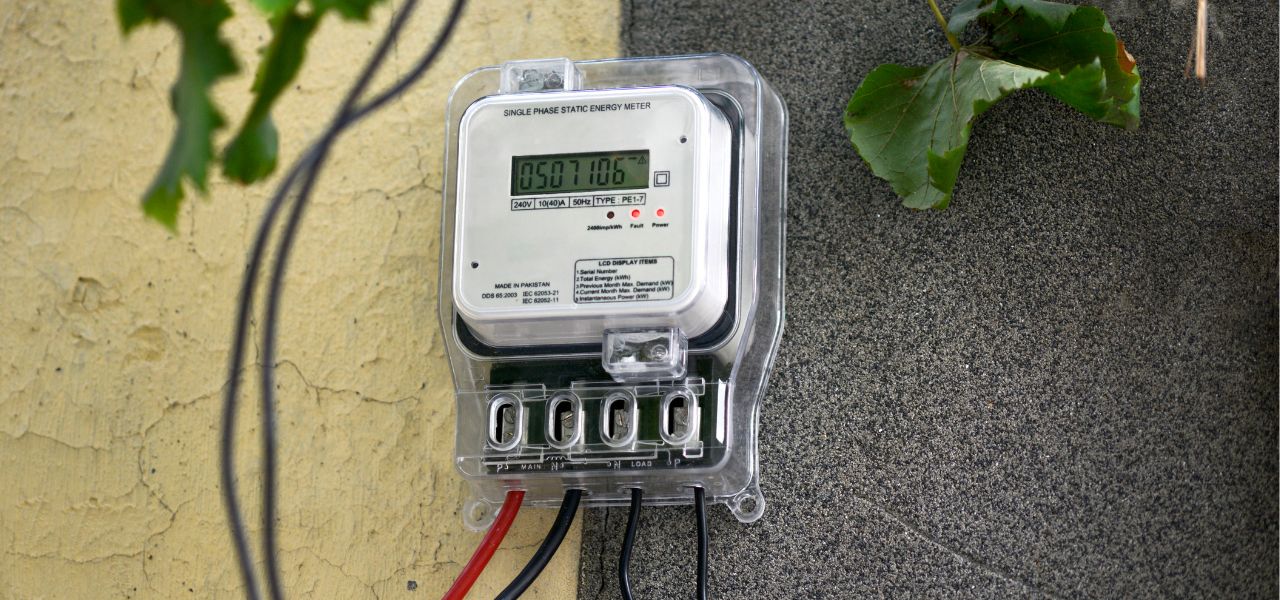
India’s power distribution sector is undergoing its most significant transformation since independence. At the heart of this change lies the Advanced Metering Infrastructure (AMI) program, a cornerstone of the government’s Revamped Distribution Sector Scheme (RDSS). The target is ambitious: replace 250 million conventional meters with smart prepaid meters.
Yet, as of July 2025, only 25.6 million of the 123 million awarded meters had been installed. The gap between policy ambition and on-ground reality presents a massive opportunity for energy OEMs, DISCOMs, and technology partners. This blog examines the market opportunity, the roadblocks, and the compelling case for white-label smart energy meters as the accelerant India needs.
The Market Opportunity: A Rs 4 Lakh Crore Potential
The financial incentives for accelerating AMI adoption are staggering. According to Care Edge Ratings, smart metering could help Indian DISCOMs generate an additional Rs 4 lakh crore in revenue over the next seven years through improved billing and collection efficiency.
The smart meter manufacturing industry itself is booming. Crisil Ratings projects manufacturer revenues to grow 20 per cent in FY26, reaching approximately Rs 9,000 crore. Operating profitability is expected to approach 13 per cent, driven by higher margins on smart meters compared to conventional alternatives.
The total investment required for the 250 million meter target is significant. Care Edge estimates the need for Rs 1.25 lakh crore in investment, with Rs 95,000 crore in debt financing and a 25 per cent equity contribution. This creates a USD 20-25 billion opportunity for the Indian energy sector.
Beyond electricity, adjacent markets are expanding rapidly. India’s ultrasonic smart water meter market is projected to grow at a compound annual growth rate of 10.1 per cent in revenue and 13.2 per cent in volume through 2032, driven by the Jal Jeevan Mission and industrial expansion.
The Reality Check: Why Installation is Lagging
Despite the clear opportunity, execution has fallen significantly behind schedule. If implementation had proceeded according to plan, approximately 60 million meters should have been installed by mid-2025. The actual figure was less than half that.
Crisil Ratings identifies several root causes for this delay :
Right-of-way challenges: Installing meters in dense urban areas and navigating permissions in residential societies has proven more time-consuming than anticipated.
Consumer awareness gaps: Many consumers resist smart meter installation due to concerns about radiation, privacy, or the perception that meters will increase their bills.
Operational issues faced by AMISPs: Advanced Metering Infrastructure Service Providers have struggled with supply chain coordination and field deployment logistics.
Deferred inspections: DISCOMs have been slow to commission and approve installed meters, delaying revenue recognition.
Critically, these delays impact project returns. Crisil estimates that a six to twelve-month execution delay, combined with payment cycles extending beyond expectations, can reduce the internal rate of return for AMISPs by up to 150 basis points.
The Technology Challenge: Connectivity in Indian Conditions
Beyond project management challenges, there is a fundamental technology hurdle. Smart meters require reliable, cost-effective communication networks to transmit consumption data. Traditional approaches have proven inadequate for Indian conditions.
Cellular connectivity (4G/NB-IoT) requires recurring SIM subscriptions. For a DISCOM managing 5 million meters, these recurring fees can exceed Rs 300 crore annually in data costs alone. Furthermore, many meter installation locations, including basement apartments in metropolitan high-rises and rural feeder rooms, have zero cellular signal.
LPWAN technologies like LoRaWAN offer long range but require dense gateway infrastructure, adding significant capital expenditure.
Imported reference designs frequently fail in Indian conditions. Voltage sags, neutral failures, extreme harmonic distortion, and ambient temperatures reaching 75 degrees Celsius inside metal boxes render many foreign designs unreliable within weeks of deployment.
The result is a connectivity gap that threatens the entire AMI value proposition. Without reliable data collection, the benefits of real-time monitoring, theft detection, and demand response remain theoretical.
The White-Label Solution: Faster, Cheaper, India-Ready
White-label smart energy meters address these challenges by providing OEMs and DISCOMs with pre-certified, India-specific designs that eliminate the need for in-house research and development. The value proposition rests on three pillars.
Reduced time to market
A white-label partnership can compress product development timelines from twelve to eighteen months to as little as twelve weeks. The design is already WPC certified for Indian spectrum usage, eliminating a six-month approval process. The bill of materials is optimized for local availability, with chipsets stocked in India for two-day lead times rather than eight-week waits for Shanghai shipments.
Lower total cost of ownership
Wi-Fi and BLE Mesh-based designs eliminate recurring cellular subscription costs. A single Data Concentrator Unit can collect data from hundreds of meters within a 200-meter radius using self-healing mesh networking. Utilities have reported data collection cost reductions exceeding 50 per cent compared to cellular-based alternatives.
Designed for Indian grid conditions
India-specific design knowledge cannot be replicated through reverse engineering. Experienced designers understand which chip variants survive coastal salinity, which printed circuit board coatings prevent fungus growth in monsoon conditions, and how to handle 300V spikes from air conditioner switching. This knowledge is embedded in proven white-label designs.
A BLE Mesh-based AMI solution, for instance, can achieve data collection success rates above 99.5 per cent even in challenging environments, with self-forming and self-healing networks that automatically reroute data around failed nodes.
The Business Case for Energy OEMs
For Indian energy meter manufacturers and panel builders, the decision to adopt a white-label smart meter platform is fundamentally a make-versus-buy decision for connectivity expertise.
Building an in-house team to develop certified, India-ready smart meter communication modules requires investment in radio frequency engineering, firmware development, certification testing, and ongoing maintenance. The alternative is partnering with an electronics design house that has already completed this work across multiple deployment generations.
The financial logic is straightforward. White-label partners provide tested, BIS-ready, WPC-certified printed circuit board assemblies. The OEM focuses on its core competencies: enclosure design, distribution channel management, and DISCOM tender participation.
For DISCOMs and AMISPs, the benefit is accelerated deployment. A reliable, low-cost connectivity solution removes a major implementation bottleneck, enabling faster meter installation and earlier revenue recognition.
Looking Ahead: Beyond Basic Metering
The true value of AMI extends far beyond automated meter reading. Once the infrastructure is in place, utilities can unlock additional capabilities.
Real-time theft detection identifies losses within hours rather than months, directly addressing India’s challenge of aggregate technical and commercial losses.
Demand response programs allow DISCOMs to send load limit commands during peak hours, reducing the need for expensive peaking power plants. Industrial consumers receive lower tariffs in exchange, creating a win-win economic model.
Time-of-day pricing becomes feasible with bidirectional communication, enabling utilities to price power based on actual grid conditions and incentivize consumption during off-peak hours.
Over-the-air firmware updates ensure that deployed meters can receive security patches and feature enhancements without physical intervention, protecting the investment over the typical ten year contract period.
Takeaway: Partner with Cionlabs for White-Label Smart Meter Success
India’s AMI journey is not a question of if, but when and how. The market opportunity is validated by Rs 4 lakh crore in potential revenue gains and a Rs 9,000 crore annual manufacturing industry. The technology challenges are understood. The path forward requires practical, India-ready solutions.
Cionlabs brings three specific advantages to energy OEMs and DISCOMs seeking to accelerate their smart meter programs.
Proven designs: Our Beken chipset-based smart energy meters are WPC certified and optimized for Indian grid conditions, from voltage tolerance to thermal management.
Multiple connectivity options: Whether your deployment requires Wi-Fi for residential density, BLE Mesh for self-healing urban networks, or LoRaWAN for rural reach, we have developed and deployed production-ready solutions.
White-label partnership model: You own the brand and the customer relationship. We provide the certified electronics, the firmware, and the field-proven design. The deployment timeline is twelve weeks from specification to production-ready printed circuit board assemblies.
India will install 250 million smart meters. The question for your organization is whether you will lead that deployment or follow it. Partner with Cionlabs to bring your white-label smart energy meter to market with confidence.
Cionlabs is an electronics design house based in India, specializing in IoT, IIoT, and AIoT solutions. We work with chip manufacturer Beken to deliver white-label product designs for the Indian market. Contact us to discuss your smart metering requirements.