

Blog
“Make in India” vs. Imported Modules: The Cost-Benefit Analysis of Domestic IoT Hardware

For senior executives across India’s manufacturing, technology, and consumer electronics sectors, a strategic question demands immediate attention: Should we continue importing IoT modules, or is domestic hardware the smarter business decision?
The answer has changed dramatically in the past twelve months. New import regulations, duty restructuring, and the emergence of competitive domestic manufacturers have fundamentally altered the cost-benefit equation. What was once a straightforward decision favoring Chinese imports now requires careful recalculation.
This analysis examines the hard numbers behind India’s IoT hardware shift, drawing on recent policy changes, market data, and real-world deployment economics.
Section 1: The Changing Duty Landscape for Electronics Imports
The first variable in any cost-benefit analysis is the landed cost of imported goods. Recent policy changes have moved this number significantly.
In December 2025, the Directorate General of Foreign Trade issued Notification No. 12/2025, amending the import policy for electronic goods. While basic duty rates remained unchanged at the time, the notification revised licensing requirements and SCOMET restrictions for specific categories of electronic components.
The current duty structure for electronics imports stands as follows:
| Product Category | Basic Customs Duty | IGST | Social Welfare Surcharge | Total Landed Cost Factor |
|---|---|---|---|---|
| Smartphones | 20% | 18% | 10% on BCD | 42-45% |
| Laptops and PCs | 0% | 18% | 0% | 18% |
| Electronic Components | 0-10% | 18% | 10% on BCD | 20-30% |
The Social Welfare Surcharge calculation is often misunderstood. It applies at 10 percent of the Basic Customs Duty amount, not the total CIF value. For a shipment valued at ₹10,00,000 with 20 percent BCD, the SWS equals ₹20,000, not ₹1,00,000. Getting this calculation wrong can distort landed cost estimates by 5 to 8 percentage points.
The Union Budget 2026, presented in February 2026, introduced further changes. Basic Customs Duty was reduced on select electronic components and raw materials to support domestic manufacturing. Simultaneously, the government removed the Social Welfare Surcharge from 82 tariff lines. Zero import duty was extended to items including PCBA components, camera modules, connectors, and inputs for LED and LCD TV panel manufacturing.
For IoT hardware importers, the net effect is mixed. Raw components are cheaper to bring in. Finished modules face a more complex regulatory environment.
Section 2: The Real Cost of Chinese Modules Today
To understand the domestic alternative, we must first establish the baseline cost of imported modules.
China remains the dominant supplier of IoT hardware to India. In 2025 alone, electronics worth $38.2 billion were imported from China. This volume creates pricing power. A generic Wi-Fi module from a Chinese supplier typically costs between $2.50 and $4.00 per unit at scale, depending on specifications and order volume.
However, the landed cost tells a different story. Apply 10 to 15 percent BCD plus applicable SWS and IGST, factor in freight and customs clearance, and the landed cost rises to $3.20 to $5.20 per unit. For an order of 100,000 units, this represents a total landed cost of $320,000 to $520,000.
Beyond the direct cost, importers face three hidden expenses:
First, inventory carrying costs. Lead times of 6 to 8 weeks from Chinese suppliers require holding safety stock. At an annual carrying cost of 15 to 20 percent of inventory value, a typical three-month buffer adds 4 to 5 percent to effective unit cost.
Second, compliance overhead. BIS certification for electronic goods requires factory inspections, which for Chinese suppliers involve travel costs, translation services, and coordination delays. The certification process alone can take 3 to 6 months for a new product category.
Third, technical support limitations. Time zone differences, language barriers, and intellectual property concerns limit the depth of support available from Chinese module suppliers. When a firmware issue arises, resolution often takes weeks rather than days.
Section 3: The Domestic Alternative That Changes the Equation
The perception that Indian-made IoT hardware is automatically more expensive than Chinese alternatives is outdated. Several domestic manufacturers have closed the cost gap while offering superior service and customization.
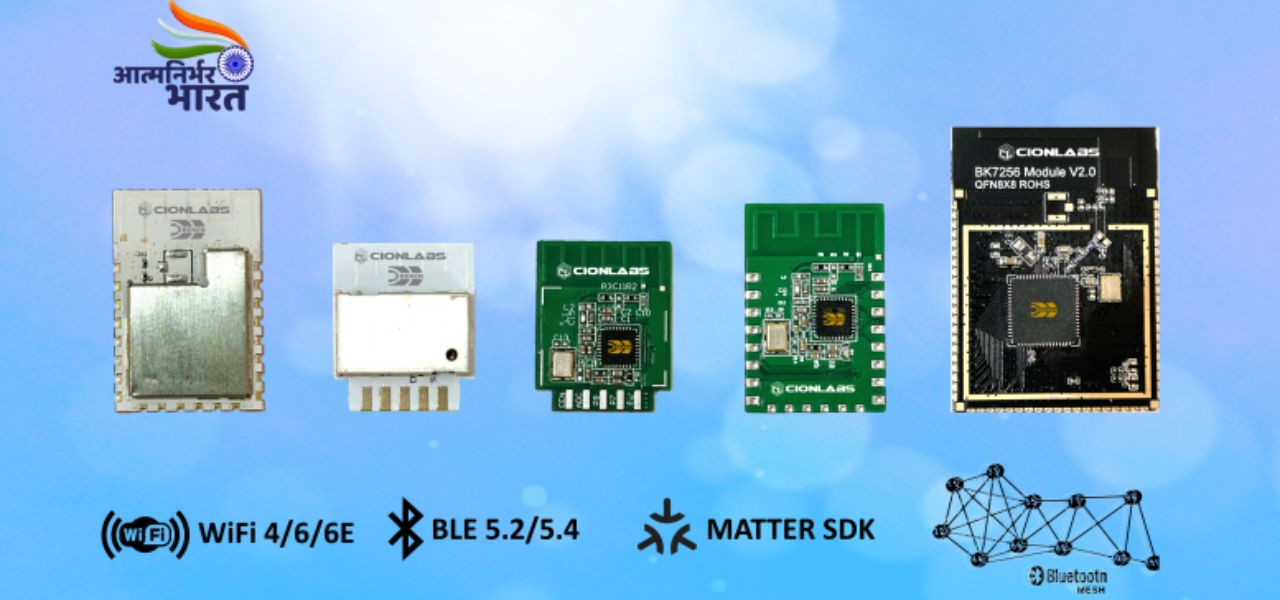
Cionlabs, a Bengaluru-based IoT design house founded five years ago, designs every component of its IoT modules locally, from PCB layouts and RF calibration to firmware and cloud integration. The company claims its modules are cheaper and more capable than Chinese alternatives, offering features such as improved mesh connectivity and offline AI capabilities.
How is this cost parity achieved? Through three specific strategies.
First, component sourcing optimization. Domestic manufacturers can import raw components at reduced duty rates for electronic components and PCBA inputs. The Union Budget 2026 extended zero duty or reduced duty to several component categories, narrowing the input cost gap between Indian and Chinese manufacturers.
Second, labor and overhead advantages. While component costs may be similar, domestic manufacturers eliminate international freight, customs clearance fees, and currency conversion costs. They also operate in the same time zone as their clients, reducing communication overhead.
Third, design efficiency. Domestic manufacturers understand Indian operating conditions. A module designed for Indian environments uses different thermal management, different power conditioning, and different antenna tuning than a generic module designed for global markets. These optimizations reduce bill of materials costs without compromising performance.
The critical insight from Cionlabs CEO Dr. Sanjay Ahuja is worth quoting directly: “People believe Indian products are expensive compared to China, but we, being a technology provider, know where to cut down the cost, and that’s how we bring it to a level where we can compete with the Chinese supply chain”.
Section 4: Beyond Price: The Strategic Advantages of Domestic Sourcing
A cost comparison that looks only at unit price misses the broader economic picture. Domestic sourcing offers several advantages that improve total cost of ownership.
Intellectual Property Ownership
Imported modules are black boxes. The buyer has no visibility into firmware architecture, no right to modify functionality, and no ownership of the underlying design. For companies building proprietary products, this creates a fundamental limitation.
Domestic manufacturers offer full IP ownership. According to Cionlabs, clients increasingly seek “products with local IP, complete control, and end-to-end support”. A white-label partnership transfers design ownership to the client, allowing customization and differentiation that is impossible with imported modules.
Regulatory Compliance Readiness
Indian regulations for IoT devices are becoming more stringent. The ITSAR requirements for Group VI devices mandate security features, including encryption and secure boot. The DPDP Act, with core provisions taking effect in May 2027, requires strict consent management and data localization for IoT devices.
Domestic manufacturers design for these requirements from the start. Imported modules may or may not comply, and retrofitting compliance onto a black box is rarely possible.
Supply Chain Resilience
The global chip shortage from 2021 to 2023 demonstrated the fragility of international supply chains. Companies dependent on imported modules faced extended lead times, allocation constraints, and price volatility.
Domestic manufacturers maintain relationships with Indian distributors and often hold buffer inventory for key components. For clients of Cionlabs, the company’s partnership with Beken, a Wi-Fi chip pioneer, provides access to stable chip supply chains that solo startups cannot access.
Technical Support Velocity
When an issue arises on a production line, waiting 12 hours for a response from a Chinese supplier is not acceptable. Domestic manufacturers offer same-day or next-day engineering support, on-site visits when necessary, and firmware updates delivered within days rather than weeks.
This speed has real economic value. A production delay of one week on a 100,000 unit order represents lost revenue of $250,000 to $500,000 at typical IoT device price points. The premium paid for domestic support is negligible compared to this risk.
Section 5: Market Growth Supporting Domestic Production
The domestic IoT hardware market is not theoretical. It is growing rapidly, creating scale that further reduces costs.
The Indian industrial IoT market was valued at $10.61 billion in 2025 and is projected to reach $30.35 billion by 2034, growing at 12.38 percent annually. Hardware dominates this market with a 40 percent share, driven by the deployment of sensors, actuators, and edge computing devices across industrial facilities.
The Production Linked Incentive scheme has facilitated INR 140.20 billion, approximately $1.69 billion, by 2025 to enhance Industry 4.0 compliance in discrete industries. This program associates cash disbursements with Industry 4.0 readiness, spurring modernization across brownfield sites and elevating productivity.
For domestic hardware manufacturers, this policy support creates a virtuous cycle. More production drives economies of scale, which reduces costs, which drives more adoption.
The Indian Industrial IoT hardware market alone is forecast to grow from $7 billion in 2024 to $17 billion by 2030, with local production maintaining a 56 percent share of this hardware market throughout the period.
Section 6: Real World Example The Noida Manufacturing Success Story
The viability of domestic electronics manufacturing at scale is demonstrated by real companies operating in India today.
Oakter, a technology brand under Riot Labz, moved away from the industry standard import model to build a manufacturing ecosystem in Noida. The company now operates three factories covering 200,000 square feet with 25 automated assembly lines and a Class 10,000 clean room. Monthly production exceeds 300,000 units.
The company’s client roster includes Paytm, Syska, ElectricPe, and Saregama Carvaan. By acting as a large-scale manufacturing partner for major brands, Oakter has turned Make in India into a profitable, bootstrapped reality.
The key insight from Oakter Senior Vice President Harsh Vardhan is instructive: “Scaling hardware is about building the right backbone early. We realized that depending on external manufacturing limited our speed, quality, and cost control”.
This lesson applies equally to IoT hardware. Domestic production requires upfront investment, but the long-term cost and control advantages are substantial.
Section 7: The White Label Model as a Risk Reduction Strategy
For companies that do not want to build their own manufacturing facilities, the white-label model offers a middle path.
Developing a single, premium-quality smart device from scratch can consume ₹5 to ₹15 crores, approximately $600,000 to $2 million USD. This investment covers industrial design, firmware development, compliance testing, and tooling. It requires hiring teams of RF engineers, embedded developers, and industrial designers, with no guarantee that the first iteration will pass certification.
White-label partnerships collapse this timeline and budget dramatically. Cionlabs reports that a white-label approach reduces time to market from 12 to 18 months for in-house development to 3 to 6 months. The cost reduction is equally dramatic, with clients accessing proven, certified architectures for a fraction of the in-house development budget.
The economic logic is straightforward. The white label partner has already amortized the R&D costs across multiple clients. They have already solved the pain points of Wi-Fi connectivity in dense Indian urban environments. They have already achieved the certifications required for compliance.
Section 8: A Framework for Your Cost-Benefit Analysis
For senior executives evaluating the domestic versus import decision, the following framework provides a structured approach.
Step 1: Calculate True Landed Cost of Imports
Do not rely on supplier quoted prices. Factor in Basic Customs Duty at the applicable rate, IGST at 18 percent, Social Welfare Surcharge at 10 percent of BCD, freight and insurance, customs clearance fees, and inventory carrying costs at 15 to 20 percent of inventory value annually.
Step 2: Quantify Technical Support Value
Estimate the cost of delayed issue resolution. For a production line building 10,000 units per week, a one-week delay caused by unresolved technical support tickets represents lost revenue. Compare this against the response time and escalation processes offered by domestic versus international suppliers.
Step 3: Assess Intellectual Property Requirements
Determine whether your product roadmap requires firmware modifications, feature additions, or performance optimizations that are impossible with a black box module. If customization is required, domestic sourcing may be the only viable option regardless of unit cost.
Step 4: Evaluate Regulatory Timelines
Map your product against current and upcoming regulations, including ITSAR, DPDP Act, and BIS certification requirements. Domestic manufacturers with existing certified designs can cut regulatory timelines by 5 months or more compared to importing and certifying a new module.
Step 5: Compare Total Cost of Ownership Over Product Lifetime
Unit price is only the beginning. Consider the full product lifecycle of 3 to 5 years. Imported modules may require larger safety stocks, longer lead times for reorders, and more expensive technical support for modifications. Domestic modules may offer lower unit costs at scale and faster design iterations for future product versions.
Conclusion: The Math Has Changed
The assumption that imported Chinese modules are always cheaper for Indian IoT products is no longer universally true. Policy changes, including reduced duties on components, increased scrutiny on finished imports, and the growth of domestic manufacturing capability, have shifted the equation.
For high-volume, low complexity applications where the module is a pure commodity and technical support requirements are minimal, imports may still pencil out. But for any application requiring customization, local support, regulatory compliance, or intellectual property ownership, domestic sourcing now offers compelling economics.
The evidence from domestic manufacturers is clear. Cionlabs has demonstrated cost-competitive modules with superior features. Oakter has scaled to 300,000 units monthly production serving major Indian brands. The PLI scheme has injected $1.69 billion into Industry 4.0 readiness.
The question is no longer whether Indian made IoT hardware can compete. The question is whether your organization will capture the strategic advantages of domestic sourcing before your competitors do.
The Cionlabs Advantage
Cionlabs is a Bengaluru-based electronics design house specializing in IoT, IIoT, and AIoT solutions. We design every component of our modules in India, from PCB layout to firmware to cloud integration. Our partnership with Beken, pioneers in Wi-Fi chips, ensures reliable performance in Indian operating conditions.
We offer two paths to market:
- Custom design: Full product development from concept to certified production
- White label solutions: Proven, certified platforms that launch in 3 to 6 months
Whether you need home automation modules, Zigbee smart home devices, AI cameras, industrial gateways, smart energy meters, or any other connected product, Cionlabs delivers solutions that work in real India.
Ready to evaluate domestic IoT hardware for your next product line? Contact Cionlabs for a confidential cost-benefit analysis tailored to your specific requirements and volume projections.
Cionlabs: Make in India. Designed for India. Competing globally.