

Blog
Battery or No Battery? Retrofitting Indian Ceiling Fans & Water Pumps with AIoT

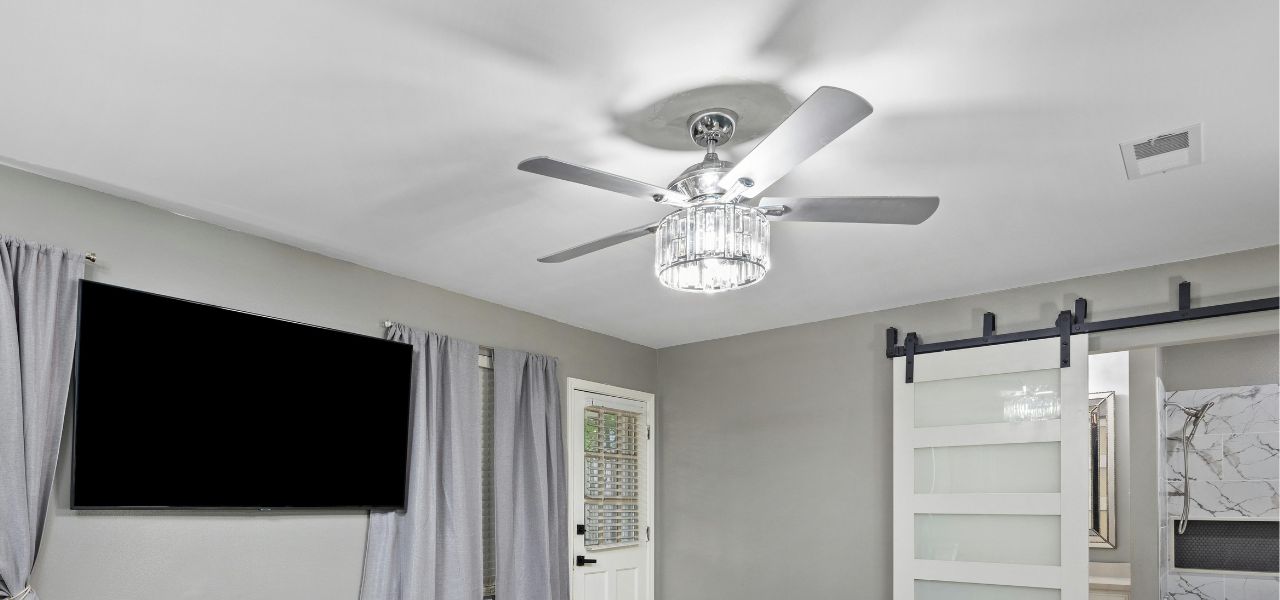
India has over 200 million ceiling fans. It also has more than 20 million agricultural water pumps. Most of them are dumb. Most of them run on AC power with no intelligence, no remote monitoring, and no energy optimization.
The retrofit opportunity is massive. But one question kills most AIoT retrofit projects before they start: Do we add a battery, or do we run purely off the host device power?
The answer determines your BOM cost, product lifespan, and customer adoption in price-sensitive India.
The Real World: Intermittent Power, Not No Power
Senior executives often assume rural or semi-urban India has no electricity. That is incorrect. What exists is intermittent power. Fans spin when the grid is available. Water pumps run when the voltage is sufficient. The moment power dips or cuts, the device stops.
Your AIoT sensor must answer one question: Do you need to capture data or send an alert during that zero-power window?
If the answer is yes, you need a battery. If the answer is no, you can go batteryless and save ₹150 to ₹300 per unit.
The Case for No Battery: Low Duty Cycle Telemetry
For ceiling fans in urban homes or industrial offices, power cuts are short. A batteryless design using Beken Wi Fi chips can wake up every 15 minutes, capture fan speed, temperature, and runtime, transmit data, and go back to sleep. The entire operation takes 200 milliseconds. The grid is almost always present during that window.
What do you lose? You lose the ability to send a “power failed” alert. In most smart home use cases, the user already knows the fan stopped. That alert has zero marginal value.
A no battery design using Beken ultra low power Wi Fi reduces system BOM by nearly 22%. It also eliminates battery replacement logistics, a hidden cost that destroys white-label product margins after 18 months.
We at Cionlabs have deployed batteryless retrofit modules for fan OEMs where the device outlasts the fan itself. No customer complaint about missing alerts. No returns.
The Case for Battery: Critical Alerts and Edge Logging
Water pumps are different. A pump running dry for 30 seconds can destroy the shaft seal. Repair costs exceed ₹5000. The pump owner needs an alert even when grid power is absent. More importantly, the sensor must log the last few seconds of vibration, current, and temperature before power loss to diagnose whether the failure was grid-related or mechanical.
This requires a small Li ion or supercapacitor-backed design. The battery does not run the Wi Fi continuously. It only powers a deep sleep real-time clock and a small memory buffer. When the grid returns, the Beken Wi Fi wakes up, pushes the logged fault data to the cloud, and resumes normal operation.
The ROI math works. A ₹250 battery and charging circuit add to the white-label module cost. But it prevents one ₹5000 pump repair every 18 months. For a pump OEM offering a subscription-based maintenance plan, that battery pays for itself in the first dry run event.
The Middle Path: Supercaps Over Lithium
Indian summers destroy lithium batteries. Under the roof fans, the ambient temperature reaches 55 degrees Celsius. Inside the pump control boxes, it touches 65 degrees. Lithium batteries can derate or catch fire.
The smarter answer for many retrofit applications is a supercapacitor. A 10 farad supercap can power a Beken Wi Fi chip for three to five transmit cycles. It survives 85 degrees Celsius. It lasts ten years. It adds roughly ₹90 to the BOM.
The trade-off is energy density. A supercap cannot run a sensor for hours. But for most fan and pump retrofits, you only need 30 seconds of backup to send a last gasp message. That is sufficient.
Cionlabs has built reference designs for both battery and supercap-based retrofits using Beken Wi Fi chipsets. Our white label clients choose based on their service model, not on engineering perfection.
A Strategic Recommendation for Indian Executives
Do not ask “battery or no battery” in isolation. Ask three business questions first:
- What is the cost of missing a single alert for your customer?
- How many months can your white-label product survive without field intervention?
- Does your customer own the fan or pump, or do you offer it as a service?
For owned devices in smart home categories, go batteryless. Lower upfront cost wins Indian consumer decisions.
For service-based models in pumps or industrial fans, add a supercap or small battery. The alert reliability becomes your brand promise.
For everything else, start with a batteryless prototype using Beken chips. Test in a real Indian home or farm with voltage fluctuations. Then decide. Most of our clients discover they never needed the battery. The few who did learned that within two weeks of field testing.
The Bottom Line
Retrofitting India’s existing fans and pumps with AIoT does not require complex engineering. It requires honest trade-offs between cost and uptime. Beken provides the low-power Wi-Fi foundation. Cionlabs provides the white-label or custom hardware that works in your specific power environment.
Do not let the battery question stall your product launch. Start with a batteryless design. Add backup only where the ROI proves itself. Your margins and your customers will thank you.
Interested in a reference BOM comparison for batteryless vs. battery-backed retrofits using Beken WiFi? Contact Cionlabs for a confidential consultation.