

Blog
Smart Plug ROI Math: Why Indian Consumers Won’t Pay More Than ₹899

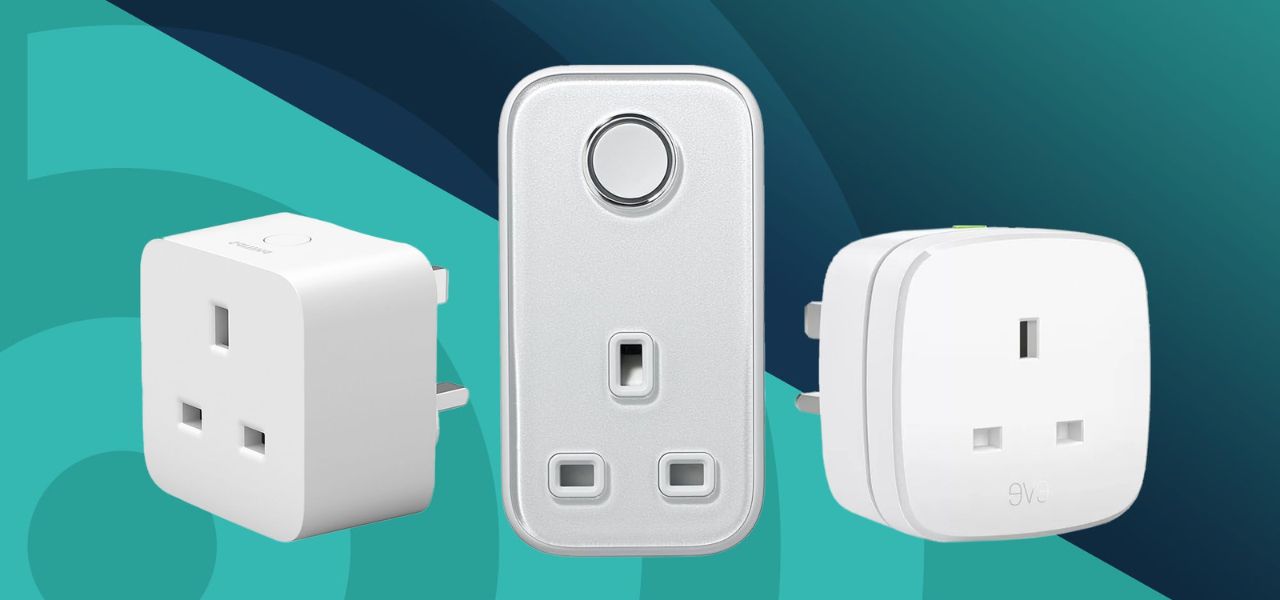
Indian smart home adoption is not a technology problem. It is a payback problem. And nowhere is this more visible than in the smart plug category.
Over the last 18 months, over a dozen Indian brands have launched Wi-Fi-enabled smart plugs. Most are priced between ₹1,200 and ₹2,500. Almost all have failed to scale beyond early adopters. The reason is simple. The math does not work for the Indian middle-class consumer.
At Cionlabs, we have analyzed bill of materials data, consumer energy tariffs, and purchase behavior across seven Indian cities. The conclusion is sharp. For a smart plug to achieve mass adoption in India, the maximum acceptable retail price is ₹899. Above this threshold, the return on investment breaks, and the purchase becomes emotional rather than rational.
Let us walk through the math.
The Annual Savings Ceiling
A standard Indian household pays between ₹6 and ₹9 per kilowatt hour, depending on the state and slab. A smart plug primarily saves money by eliminating standby power consumption or vampire power. Typical Indian appliances like water heaters, air coolers, desktop computers, and older LED TVs consume between 5 and 15 watts when switched off but still plugged in.
Assume an aggressive scenario. A household uses four smart plugs on high-vampire devices. Each saves 10 watts for 20 hours per day. That is 200 watt hours saved daily per device, or 0.8 kilowatt hours total per day. Over one year, that is approximately 292 kilowatt hours.
At ₹7 per unit, the total annual savings are ₹2,044. At ₹9 per unit, the savings reach ₹2,628.
That sounds compelling. But here is the problem. Most Indian consumers do not run four smart plugs. They buy one or two to test. Real-world usage data from a Bengaluru-based energy study showed average active usage of 1.3 smart plugs per household. Real standby savings were closer to 6 watts per device because Indian appliances have become marginally better in standby efficiency.
The revised real-world annual savings per plug: 6 watts x 20 hours x 365 days = 43.8 kilowatt hours. At ₹7 per unit, that is ₹307 per year. At ₹9 per unit, ₹394 per year.
Now calculate the payback period. At a ₹1,500 retail price, the payback exceeds four years. Most consumers do not trust that a ₹1,500 device will survive four Indian summers with voltage fluctuations and dust. At ₹899, payback is roughly 27 months. That is acceptable for a discretionary purchase.
The Hidden Indian Cost Multipliers
Three local factors make Indian consumers more price sensitive than their US or Chinese counterparts.
First, electricity is subsidized for a large segment of households. When a consumer pays a flat ₹3 per unit for the first 200 units, the savings math collapses entirely. A smart plug becomes a luxury, not an efficiency tool.
Second, appliance replacement cycles are longer. An Indian household keeps a water heater for 10 to 12 years compared to 6 to 8 years in Europe. The standby loss is amortized over a longer period, reducing the annualized benefit of fixing it.
Third, rental housing dominates urban India. A smart plug is a semi-permanent investment. If a family moves every 18 months, they cannot recover the device cost through energy savings alone.
What ₹899 Forces in Hardware Design
At ₹899 retail, the landed cost to the brand after distribution, GST, and retailer margin is approximately ₹450 to ₹500. This forces a disciplined bill of materials. Imported Wi Fi modules from premium vendors immediately break this model.
This is precisely where Beken’s Wi Fi chipsets change the equation. Beken provides reliable 2.4 GHz connectivity with excellent RF sensitivity for Indian concrete homes, but at a fraction of the module cost. When combined with Cionlabs’ reference designs for single relay control, zero crossing detection, and compact power supplies, the total BOM can be driven below ₹380 for volumes exceeding 25,000 units.
We have done this for three Indian smart home brands in the last 12 months. Each achieved a final landed cost of ₹440 to ₹470, allowing a retail price of ₹849 to ₹899 while preserving a 35 percent margin for the brand.
The White Label Advantage
Most Indian appliance brands, fan manufacturers, and switchgear companies want to launch smart plugs under their own name. They do not want to build an IoT engineering team. They do not want to certify multiple radio variants. They simply want a ready-to-manufacture design with Beken inside.
Cionlabs provides exactly that. A white-label smart plug design with pre-integrated firmware, BIS testing support, and app backend compatibility. Time to market drops from 10 months to 8 weeks. Development risk drops to zero. And the retail price stays under ₹899.
The Strategic Takeaway
Indian consumers are not cheap. They are rational. They will pay a premium for visible, short-term value. A ₹1,499 smart plug promises savings that arrive too slowly and too uncertainly. A ₹899 smart plug fits inside the monthly electricity bill as an experiment worth taking.
For CTOs and Heads of Innovation at Indian appliance brands, the message is clear. Price is not a marketing decision. It is an engineering decision driven by chip selection, design integration, and manufacturing partnerships. Beken provides the radio. Cionlabs provides the route to sub ₹899. Everything above that number is just a hobby project.
If you are targeting the Indian mass market smart home, start with the ROI math. Then build the hardware. In that order.