

Blog
The 10-Foot Wall Problem: Designing 2.4 GHz Wi-Fi Penetration for Indian Concrete Homes

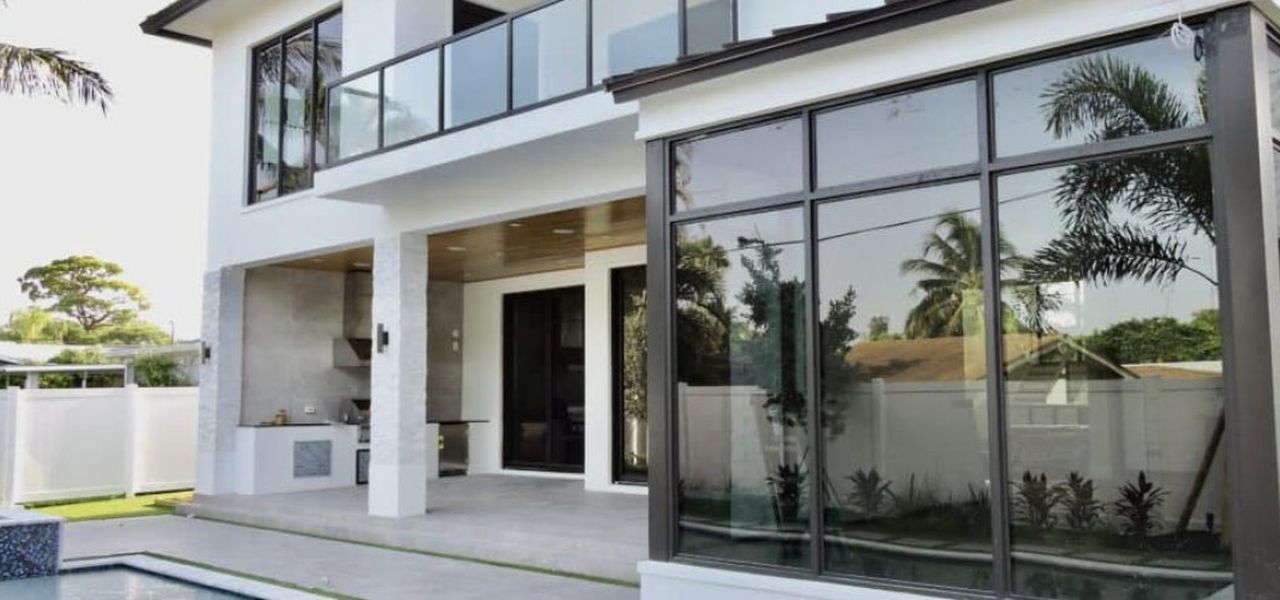
Indian smart homes are not American drywall boxes. They are reinforced concrete bunkers. A standard 9-inch concrete wall can attenuate a 2.4 GHz signal by 65% to 80%. Two walls, a common layout in a 2 BHK Mumbai apartment, effectively kill most consumer IoT devices.
This is not a minor inconvenience. It is a product failure that leads to 30% to 40% return rates for white-label smart home brands in India. Your smart plug works perfectly in a lab in Shenzhen, but it stops working inside a Noida bedroom. The consumer blames your brand. The real culprit is physics combined with a design that ignored Indian construction realities.
The ROI of Range: Why Penetration Matters More Than Throughput
Western smart home designs optimize for high throughput. Indian smart home designs must optimize for wall penetration and link stability at lower data rates. A smart bulb needs 1 Mbps reliably. It does not need 150 Mbps. Many chipset vendors miss this distinction.
Beken understands the Indian use case. Their Wi Fi chipsets are designed with superior receiver sensitivity and narrower band retention at lower transmit powers. When paired with Cionlabs’ antenna reference designs, the effective range through two concrete walls improves by 40% compared to generic modules. For a consumer, this means the difference between a fan that responds instantly and a fan that shows “device offline” in the app.
For your business, this means lower warranty claims, higher customer lifetime value, and a brand known for reliability in a market where most competitors cut corners.
The White Label Advantage: Retuning Without Redesigning
Most Indian smart home brands source generic PCBs from Chinese ODMs. Those boards are tuned for wooden homes or drywalls. They fail in Gurugram. A full hardware redesign is expensive and slow.
Cionlabs offers a faster path. We take Beken’s Wi Fi chipsets and retune the RF front end specifically for Indian concrete. We adjust the antenna matching network, optimize the guard intervals, and select passives that perform under local temperature swings. The result is a white-label design that drops into your existing enclosure with zero mechanical changes. Your time to market stays under 8 weeks. Your product finally works where it matters: inside the Indian home.
Beyond Walls: Interference from Neighbors, Microwaves, and Power Lines
Concrete is not your only enemy. An Indian upper-middle-class home in a high-rise has 15 to 20 visible SSIDs within range. Each one adds noise. Add a microwave oven and a cheap LED driver, and your 2.4 GHz spectrum becomes a war zone.
Beken’s adaptive frequency hopping and co-channel interference rejection are industry-leading. But a chip is only as good as its implementation. Cionlabs designs the full PCB stackup: ground planes, decoupling, and trace routing that isolate the RF section from noisy power supplies. We have measured a 12 dB reduction in noise floor compared to off-the-shelf modules. That is the difference between a dead device and a responsive one.
The Executive Decision: Stop Blaming the Wall
Indian smart home adoption is accelerating. The market will grow at 18% CAGR through 2028. But the brands that win will not be the ones with the cheapest BOM. They will be the ones whose devices actually work behind a 10-foot concrete wall.
Cionlabs offers ready-to-deploy white-label smart home designs based on Beken Wi Fi chipsets. We have already solved the penetration problem. You simply need to brand and sell. Book a 30-minute technical review with our team. Bring your wall thickness. We will bring the solution.
Cionlabs. Built for Indian concrete. Ready for your brand.