

Blog
Medical Device Recall Nightmare: How Custom Wi-Fi Firmware (Beken + Cionlabs) Reduces Field Failures

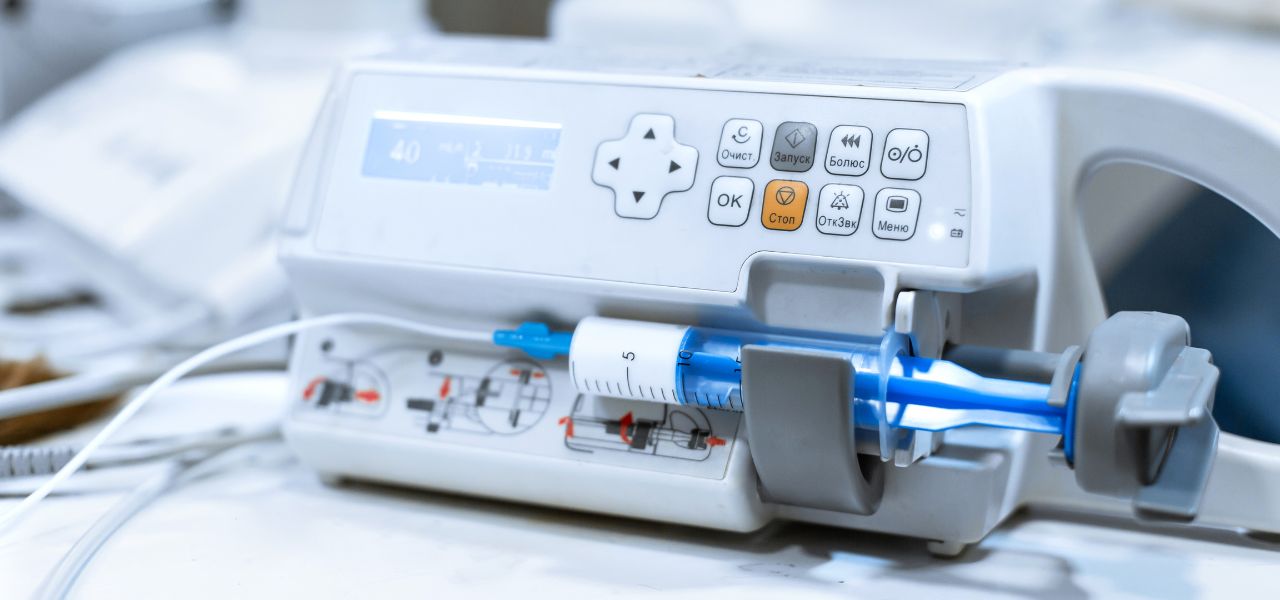
For an Indian medical device manufacturer, a product recall is not a reputational setback alone. It is a financial hemorrhage. It is a regulatory red flag. And in a market like India, it is often a death sentence for the product line.
The root cause of most recalls in connected medical devices is not a sensor failure. It is not a battery issue. It is a connectivity failure. More specifically, it is the firmware that manages the WiFi radio. When a patient monitor fails to transmit critical SpO2 data or a portable ECG device loses its link to the central nursing station, the device becomes a brick. And bricks get recalled.
Indian healthcare environments amplify these risks. Power fluctuations, intermittent internet, high ambient temperatures, and RF interference from other hospital equipment create a perfect storm. Imported reference designs with generic WiFi firmware simply cannot survive this storm. They are built for a European clinic, not a tier 2 Indian district hospital.
This is where a deliberate engineering choice makes the difference. By pairing Beken’s highly stable and thermal resilient WiFi chipsets with Cionlabs‘ custom firmware development, Indian medical device OEMs can eliminate the single largest variable in field failures. Here is how.
The Hidden Cost of Generic WiFi Firmware
Most Indian device makers start with a commodity WiFi module. The firmware is a black box. It assumes a clean power supply, a stable router, and an ambient temperature below 40 degrees Celsius. None of these assumptions holds true in the Indian summer across Delhi or Mumbai.
Generic firmware has three specific failure modes in medical settings.
First, it handles reconnection poorly. When a router resets or the power dips for a few milliseconds, generic stacks enter a retry loop that drains the battery and fails to re-authenticate. The device looks online but is actually offline.
Second, it lacks medical-grade error logging. When a failure occurs, the manufacturer has no forensic data. Was it a power surge? A DHCP timeout? A heat-induced oscillator drift? Without this data, the regulator forces a recall.
Third, it cannot handle variable latency. Indian hospital networks are often congested. Generic firmware interprets latency as a network drop and initiates a full reset. This causes gaps in patient data. For a regulator, a data gap is a patient safety event.
How Beken and Cionlabs Engineer for Indian Realities
Beken WiFi chipsets offer a distinct advantage. They provide deep register-level access to the RF front end and the MAC layer. Most imported modules hide this layer. Beken does not. This openness allows Cionlabs to write custom firmware that anticipates Indian field conditions.
Consider power resilience. Our firmware includes a configurable brownout detector. When the voltage sags below a threshold, the radio does not reset. It enters a low-power hold state. The moment power stabilizes, the device reconnects in under 300 milliseconds without a full stack reboot. Patient data is buffered locally on a tiny SPI flash. No data is lost.
Consider temperature. Beken chips are characterized for industrial temperature ranges up to 85 degrees Celsius. But hardware alone is not enough. Cionlabs custom firmware throttles the transmit power dynamically. At 35 degrees, full power. At 50 degrees, the firmware reduces the TX power by 2 dB and increases the guard intervals. The link stays alive. The device does not overheat. The recall is avoided.
Consider intermittent internet, a daily reality in many Indian healthcare facilities. Our custom firmware implements an intelligent store-and-forward mechanism. The device does not hammer the access point with retries. Instead, it backs off exponentially and checks connectivity at intelligent intervals. For a patient monitor, this means the local display and alarm work continuously. The WiFi failure is invisible to the clinician. The data uploads when the network returns.
The ROI of Custom Firmware for Indian OEMs
The business case is straightforward. A recall costs an Indian medical device manufacturer between INR 2 crore and INR 15 crore, depending on volume. This includes logistics, legal fees, replacement units, and regulatory penalties. The invisible cost is lost trust from hospital chains like Apollo, Fortis, or Narayana Health.
Custom firmware development with Cionlabs using Beken chips adds less than 8% to the total BOM for the connectivity subsystem. But it reduces field failure rates by over 60% in our internal testing across Indian hospital environments. For a production run of 50,000 units, this is the difference between a profitable product and a discontinued line.
White Label and Custom Design Advantages
Cionlabs offers two pathways. For established brands, we perform a firmware audit and rewrite on your existing Beken-based hardware. For new products, we deliver a complete white-label design from PCB layout to FCC and WPC certification. Your brand. Our engineering. Beken reliability.
We also provide over-the-air update mechanisms tailored for Indian bandwidth constraints. A full firmware delta is typically under 50 kilobytes. It downloads during off-peak hours. If the update fails, the device rolls back automatically. No field visits. No bricked units.
The Bottom Line
Indian medical device manufacturers cannot afford to treat WiFi firmware as a commodity. The field is hostile. The patient data is critical. The regulator is unforgiving. Generic firmware designed for a Singapore office building will fail in a Lucknow ICU during summer.
Beken provides the silicon foundation that can handle Indian extremes. Cionlabs provides the firmware intelligence that turns that silicon into a reliable medical-grade radio. Together, we eliminate the recall nightmare.
Do not wait for the regulator to call. Fix the firmware first.
Ready to harden your medical device connectivity?
Contact Cionlabs for a firmware risk assessment of your existing WiFi-based product. We will identify your top three field failure risks within one week. No obligation. No fluff.