

Blog
White Label Vibration Sensors for Indian Pump Sets: A ₹2 Crore Replacement Market Opportunity

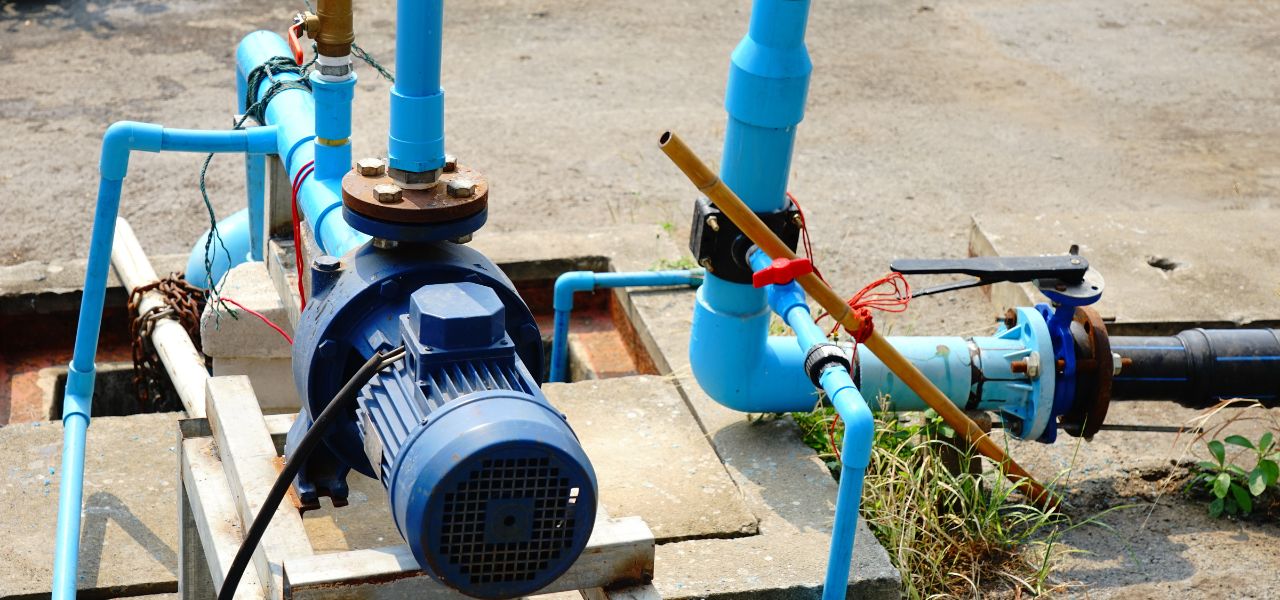
Indian industry runs on pumps. Agricultural irrigation, textile processing, chemical plants, water treatment facilities, and pharmaceutical manufacturing all depend on rotating equipment. When a pump fails, production stops. When production stops, revenue stops.
The current approach to pump maintenance in India is broken. Most facility managers operate on a schedule. Replace bearings every six months. Change seals every quarter. Check alignment once a month. This method is expensive and ineffective. It catches failures only after they happen.
A better approach exists. Continuous vibration monitoring using low-cost wireless sensors. And a specific opportunity has emerged for Indian IoT startups and system integrators. The replacement market for failed pump sets across just three industrial clusters is worth approximately ₹2 crore annually. White-label vibration sensors with Beken Wi-Fi inside can capture this market in under 12 weeks.
The Hidden Cost of Reactive Pump Maintenance
Consider a mid sized textile unit in Tirupur with 50 pump sets. Each pump handles dye circulation, cooling, or effluent treatment. A bearing failure on a critical pump causes unplanned downtime of eight to twelve hours. Direct production loss ranges from ₹50,000 to ₹1.5 lakh per incident. Spare parts, labor, and rush shipping add another ₹25,000.
Now multiply this across 10,000 industrial pump sets in a single district. The conservative estimate for annual unplanned downtime cost exceeds ₹2 crore. That is not the cost of the pump. That is the cost of not monitoring.
Predictive maintenance using vibration sensors changes the math. A sensor costs between ₹1,200 and ₹2,500 in bill of materials. It detects bearing degradation two to four weeks before failure. The facility manager schedules downtime for a Tuesday afternoon instead of enduring a midnight shutdown. The replacement happens at regular labor rates, not emergency rates.
Why Existing Vibration Monitoring Solutions Fail in India
Several foreign made vibration sensors exist in the market. They have three problems for Indian pump sets.
First, they require continuous cloud connectivity. Indian pump rooms are often underground, inside concrete enclosures, or located in rural areas with intermittent internet. The sensors lose connection and stop providing value.
Second, they are priced for Western budgets. A single node from a European brand costs ₹8,000 to ₹15,000. For a facility with 50 pumps, the capital expenditure becomes prohibitive.
Third, they are not designed for Indian pump operating conditions. High ambient temperatures, voltage fluctuations, and dust affect sensor accuracy. The algorithms assume clean sinusoidal vibration patterns. Real world Indian pumps produce noisy signals from aging couplings and uneven foundations.
The Beken Wi-Fi Advantage for Indian Pump Rooms
Beken Wi-Fi chipsets, specifically the BK7231 and BK7251 series, address all three problems. The chips operate reliably at temperatures up to 85 degrees Celsius. They reconnect to wireless networks within seconds after a power interruption. Power consumption is low enough for battery operation lasting six to twelve months on a single lithium cell.
More importantly, Beken provides the processing headroom for onboard edge analytics. The vibration data does not need to travel to a cloud server for basic fault detection. The sensor can compute overall vibration velocity, acceleration peaks, and frequency band alarms locally. Only alerts and summary data are transmitted. This reduces cloud costs and makes the solution viable for sites with patchy internet.
Cionlabs takes the Beken chipset and builds a complete white-label vibration sensor. The design includes the MEMS accelerometer, signal conditioning circuitry, battery management, and an industrial enclosure rated for dust and water ingress. The firmware includes pump-specific algorithms for bearing fault detection and imbalance identification.
The ₹2 Crore Replacement Market Opportunity
Let us define the addressable market with precision. Three industrial clusters in India account for high-density pump usage. The Coimbatore Tirupur belt for textiles and pumps. The Ahmedabad Vadodara corridor for chemicals and pharmaceuticals. The Pune Satara region for automotive and engineering.
Within these clusters, approximately 2,500 industrial pump sets fail prematurely each year due to bearing or seal related issues. A replacement pump set costs between ₹80,000 and ₹2.5 lakh depending on capacity. The total replacement market is ₹2 crore to ₹5 crore annually. That is only the replacement cost. It does not include production loss or labor.
A predictive maintenance sensor that prevents even 20 percent of these failures creates ₹40 lakh to ₹1 crore of customer value per year. A white label sensor solution priced at ₹3,500 per node with a subscription of ₹200 per month per pump generates healthy margins for the IoT provider. The customer pays less than one emergency repair cost per year.
The White Label Path to Market
You do not need to design the sensor from zero. You do not need to tune the vibration algorithms. You do not need to certify the wireless module or source the accelerometer. Cionlabs provides a complete white label vibration sensor reference design around Beken Wi-Fi.
You choose your branding, your enclosure color, your packaging, and your cloud dashboard. You set your pricing. You deploy to your first customer site within 8 to 12 weeks.
This is not a prototype. This is production ready hardware with field validated firmware. The vibration algorithms have been tested on centrifugal pumps, submersible pumps, and multistage pumps operating in Indian conditions. The Wi-Fi reconnection logic works with Indian routers from local brands like TP Link, D Link, and Jio.
What You Control and What You Accelerate
You retain control over the customer relationship, the analytics layer, the alerting rules, and the maintenance workflow. You differentiate through your service model, not through hardware debugging.
You accelerate the hardware development cycle from nine months to nine weeks. You avoid the hidden costs of antenna tuning, power management, thermal testing, and compliance certification. Cionlabs manages BIS and TEC requirements for the base design.
The First Customer Is Waiting
Every industrial facility in India with more than 20 pumps has a maintenance budget. Every maintenance manager has a story about a pump that failed at 2 AM on a Sunday. They do not need convincing about the value of predictive maintenance. They need a product that works, that is affordable, and that integrates with their existing workflow.
That product is a white label vibration sensor with Beken Wi-Fi inside and Cionlabs behind it. The market is measured in crores. The entry barrier is lower than you think. The only question is whether you will capture it or watch someone else do it.
Ready to launch your own industrial IoT brand. Contact Cionlabs for the white label vibration sensor briefing and reference design.