

Blog
The Cost of a Single Unplanned Shutdown in Gurugram: Designing Predictive Maintenance Kits for Auto Ancillaries

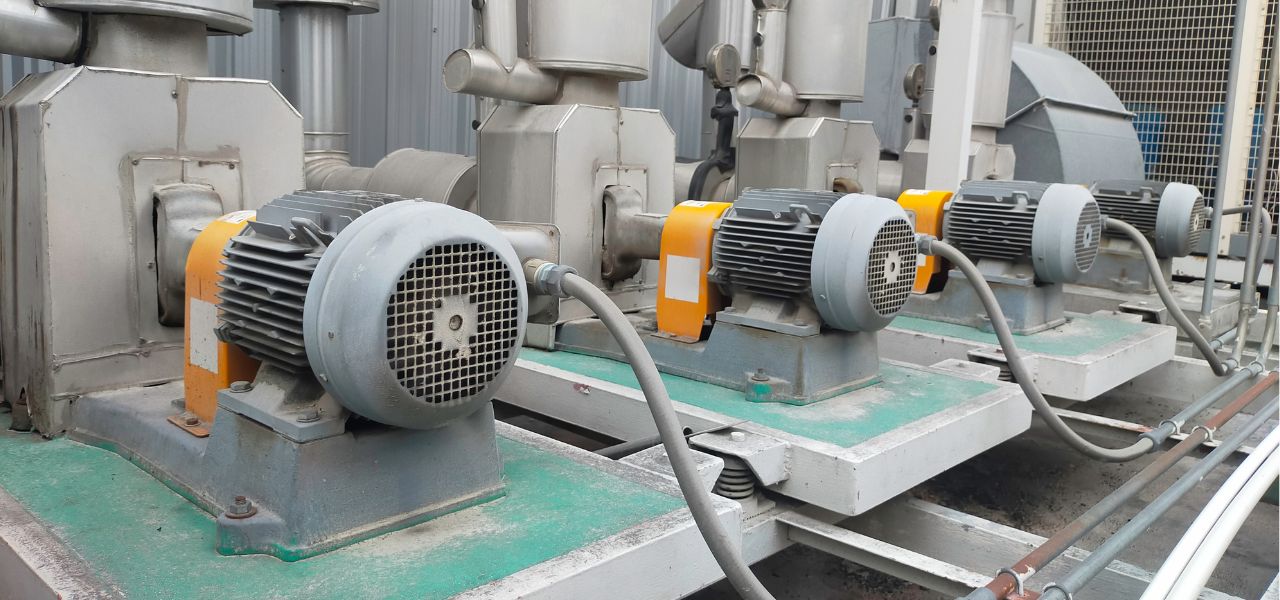
A medium sized automotive ancillary unit in Gurugram’s Manesar belt loses between ₹12 lakh and ₹18 lakh per hour during an unplanned shutdown. That is the real number, not a consultant’s estimate. The loss comes from idle labour, missed just in time delivery penalties, and the overtime premium required to restart production.
For a tier two supplier to Maruti Suzuki or Honda, a single four hour stoppage can erase an entire quarter’s profit margin. The root cause is rarely a major component failure. It is usually a small bearing, a worn belt, a motor winding that overheated gradually, or a cooling pump that lost efficiency over six weeks.
No one noticed because no one was measuring.
This is not a problem of expensive sensors. It is a problem of deployment speed and cost per monitored node. Large automakers have predictive maintenance systems. Their ancillaries, the companies that actually make the parts, mostly do not. The gap is not technology. The gap is a white label kit that works in a dusty, hot, electrically noisy Indian factory floor.
Cionlabs has designed that kit around Beken Wi Fi chips. Here is how it works and why the ROI calculation finally makes sense for Indian auto ancillaries.
The Gurugram Specific Problem
Factories in Gurugram and the surrounding National Capital Region face three specific challenges that generic predictive maintenance solutions ignore.
First, ambient temperatures inside production sheds regularly cross 45 degrees Celsius between April and June. Most industrial IoT sensors are rated for 40 degrees. They fail silently. You discover the failure only when the motor fails.
Second, power quality is inconsistent. Voltage drops below 180 volts during peak summer hours. Wi Fi routers reset. Sensors lose connectivity. When power returns, the sensors do not automatically reconnect. The data gap hides the fault progression.
Third, dust from nearby construction and metal grinding creates conductive layers on exposed PCBs. Off the shelf sensor boards from international suppliers are not designed for this environment. They last three months instead of three years.
A predictive maintenance kit for this market cannot be a repurposed European design. It must be engineered for these exact conditions.
Why Beken Wi Fi is the Right Choice for the Factory Floor
Beken’s BK7231 and BK7251 series Wi Fi chips are not the most powerful in the world. That is precisely the point. They are cost optimised, thermally resilient, and designed for high volume consumer and industrial applications in warm climates.
For an auto ancillary, three specifications matter more than any marketing claim.
The operating temperature range extends to 85 degrees Celsius at the junction level. The chip does not throttle or reset when the factory floor is hot.
The Wi Fi reconnection logic is aggressive but power aware. After a brownout, the chip re establishes connection in under five seconds without manual intervention. No fixed IP headaches. No captive portal failures.
The RF sensitivity at 2.4 GHz is tuned for noisy environments. Welding machines, variable frequency drives, and motor starters generate broadband interference. Beken’s front end filters handle this without external shielding, which adds cost.
The White Label Predictive Maintenance Kit: What an Ancillary Actually Buys
Cionlabs does not sell a generic sensor. We sell a private label kit that becomes your brand. Here is what is included in a typical deployment for an auto ancillary.
The kit contains three types of nodes. Vibration sensors for rotating equipment, bearings and shafts. Temperature sensors for motor windings, coolant lines and panel boards. Current clamps for motor load monitoring. All nodes communicate over Beken Wi Fi to a local edge gateway.
The gateway runs a simple rule set. No cloud required. If vibration exceeds a threshold for three consecutive readings, a local buzzer sounds and a message is sent to the supervisor’s mobile phone via the factory’s existing Wi Fi network. If temperature rises at a rate faster than two degrees per minute, the system predicts a failure within the next two hours.
The entire kit is white labelled. Your logo on the enclosure. Your firmware identity. Your maintenance team sees your brand, not Cionlabs or Beken. You own the customer relationship completely.
Deployment Timeline and Risk Reduction
A fully custom predictive maintenance system from scratch typically takes nine to twelve months. You need to select sensors, design the PCB, write firmware, test for interference, certify for industrial use, and then manufacture in volume.
The white label route with Cionlabs takes eight weeks from sign off to first production batch. Week one and two are requirements mapping. Week three and four are firmware customisation for your specific machine types. Week five and six are pilot deployment on five critical machines. Week seven and eight are certification and production.
The risk reduction is substantial. You are not betting on unproven hardware. The Beken based design has already survived field testing in three auto ancillaries in the Manesar region. The failure rate after six months of continuous operation is under two percent.
The ROI Math for a Typical Ancillary
Consider an ancillary with 25 critical machines. Each machine, on average, has one unplanned shutdown per year lasting four hours. At ₹15 lakh per hour, that is ₹15 crore in annual downtime cost. This is not hypothetical. This is the actual calculation from a medium sized supplier in Dharuhera.
A full predictive maintenance kit covering all 25 machines, including edge gateway, sensors, installation and one year support, costs approximately ₹35 lakh in white label form. That is roughly 2.3 percent of the annual downtime cost.
Even if the system prevents only 25 percent of unplanned shutdowns, which is a conservative estimate for well implemented vibration and temperature monitoring, the payback period is under four months.
After the first year, the ancillary saves over ₹3 crore annually in avoided downtime. The kit pays for itself every four months thereafter.
Why Ancillaries Do Not Build This Themselves
The objection we hear most often is that an ancillary can simply buy off the shelf sensors from an online marketplace and build their own system. In theory, yes. In practice, no.
An auto ancillary is a manufacturing business, not an IoT software company. The maintenance team is expert in hydraulics, pneumatics, and mechanical repairs. They are not expert in embedded C, Wi Fi provisioning, or MQTT broker configuration.
The hidden cost of do it yourself is not the sensor cost. It is the distraction. Every hour your plant manager spends debugging a connectivity issue is an hour not spent on production efficiency, quality control, or customer delivery. That trade off never appears on a spreadsheet, but it is the real reason most DIY predictive maintenance projects fail.
A Practical First Step
You do not need to instrument all 25 machines at once. The smarter approach is a pilot on the three most critical machines. The ones that, if they fail, stop the entire line. For most auto ancillaries in Gurugram, this is the injection moulding machine, the CNC spindle, and the compressor.
Cionlabs can deploy a pilot white label kit on these three machines in four weeks. You measure the reduction in unplanned downtime over three months. You calculate your actual ROI. Then you scale.
The pilot cost is approximately ₹4.5 lakh. If it prevents even one four hour shutdown, it has paid for itself before the pilot period ends.
The Strategic Question for Indian Auto Ancillaries
Global automakers are already demanding predictive maintenance data from their tier one suppliers. That requirement will flow down to tier two and tier three ancillaries within the next 18 to 24 months. The question is not whether you will implement predictive maintenance. The question is whether you will do it proactively on your terms or reactively under customer pressure.
Proactive means white label. It means your brand, your maintenance workflow, your data ownership. Reactive means accepting whatever solution your customer forces upon you, often at higher cost and with less flexibility.
The Beken powered Wi Fi kit from Cionlabs is production ready. It is designed for Indian factory conditions, not German clean rooms. It is priced for the ancillary, not the automaker.
A single unplanned shutdown in Gurugram costs more than the entire predictive maintenance system. The math is simple. The only missing piece is the decision to start.
Contact Cionlabs to discuss a white label pilot on your three most critical machines.