

Blog
Why India’s Smart Home Market Needs Localized Zigbee & WiFi Hybrid Gateways

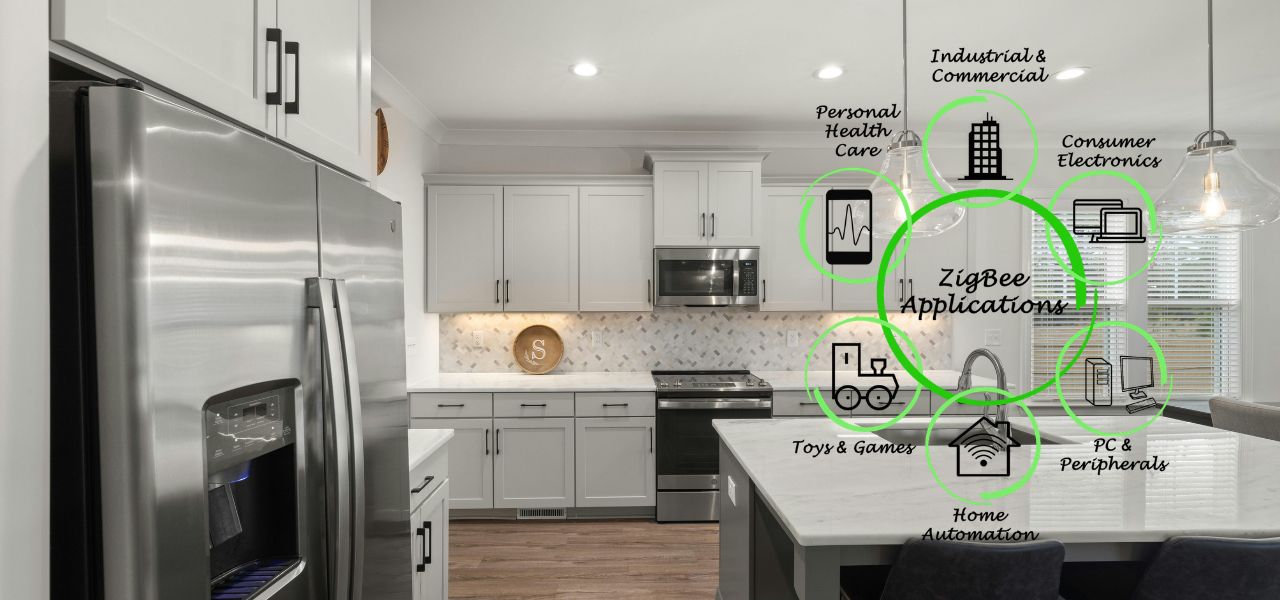
The Indian smart home market is at an inflection point. According to market analysis, the sector was valued at USD 3.99 billion in 2025 and is projected to reach USD 35.04 billion by 2033, growing at a compound annual growth rate of 27.32 percent. Another industry forecast places the market at USD 6.71 billion in 2026, scaling to USD 24.1 billion by 2031 at a CAGR of 29.12 percent.
Yet beneath these impressive numbers lies a critical problem that most global smart home vendors have failed to solve. The gateway devices that connect Zigbee sensors, lights, and locks to the internet are designed for homes in North America and Europe, not for Indian residential construction.
For senior executives evaluating white-label partnerships, this gap represents both a risk and an opportunity. The brands that address India`s unique architectural and network conditions will capture market share. Those that do not will face installation failures, customer returns, and reputational damage.
The Gateway Bottleneck in Indian Homes
A smart home gateway serves as the bridge between Zigbee devices and the cloud via WiFi or Ethernet. It translates commands from your smartphone app into instructions that lights, fans, locks, and sensors can understand. When the gateway works reliably, the smart home feels magical. When it fails, every connected device becomes a source of frustration.
Global gateways are typically tested in single-family homes with drywall construction, wooden frames, and relatively open floor plans. Indian homes are fundamentally different. A typical Mumbai or Gurugram apartment building has 20 to 40 floors. Each unit contains concrete block walls, often 9 inches thick. Between a gateway placed near the main router and a Zigbee device in the master bedroom, the signal must pass through multiple shear walls, electrical conduits, and metal mesh used in plastering.
Standard Zigbee mesh networks assume that devices can relay signals through each other. But when every wall attenuates the signal by 10 to 15 decibels, the mesh collapses. The result is inconsistent connectivity, delayed responses, and devices that appear offline for no apparent reason.
Why Zigbee Remains Essential Despite the Challenges
Despite these hurdles, Zigbee remains the most practical protocol for Indian smart homes. The reasons are straightforward.
Zigbee chips are widely manufactured and relatively inexpensive, making them the preferred choice for sensors, smart plugs, and lighting products. Major ecosystems, including Philips Hue, IKEA Tradfri, and countless niche brands, have built their product lines on Zigbee because the protocol offers quick, responsive control and supports dense device environments. For smart lighting, which represents one of the largest entry points for home automation, Zigbee is nearly impossible to ignore.
Zigbee also creates a self-healing mesh network. Each powered device acts as a repeater, extending range and improving reliability. This is theoretically ideal for Indian apartments. The problem is that the mesh only works if the initial signal from the gateway can reach enough devices to establish the network.
The Cost of Ignoring Local Conditions
Smart home brands entering the Indian market face a predictable pattern of failure when using unmodified global gateways.
Installation teams waste hours repositioning gateways and adding secondary hubs to reach distant rooms. Customers in larger apartments or those with concrete-heavy construction experience daily connectivity drops. Return rates increase. Brand reputation suffers. Some vendors attempt to solve the problem by adding mesh repeaters or secondary gateways, which add between 800 and 1,200 rupees per apartment in hardware and installation costs.
The hidden cost is even larger. A customer who experiences poor reliability with their first smart home product is unlikely to purchase additional devices from the same brand. The lifetime value of that customer, which could have been substantial, is lost.
What a Localized Gateway Looks Like
A gateway designed specifically for Indian homes requires three key modifications.
First, the RF front end must include higher-gain amplifiers that maintain sensitivity even after signal loss through concrete walls. Second, the transmit power should be tunable to 20 dBm, the maximum allowed under Indian regulatory limits, without violating spectrum rules. Third, the gateway must handle asymmetric links where the device can hear the gateway, but the gateway cannot hear the device. This uplink problem is the most common cause of failure in concrete-heavy environments.
For hybrid Zigbee and WiFi gateways, additional considerations apply. The WiFi radio must maintain stable connectivity to the home router even when multiple concrete walls separate the gateway from the access point. Beken WiFi chipsets, such as the BK7236/BK7239 series, are designed for this exact use case, offering receive sensitivity that maintains connection at signal levels as low as -78 dBm.
Beyond radio performance, localized gateways need engineering deployment features. In the Indian market, installers frequently set up systems before internet connectivity is available at a property. Gateways should support local device addition and scene configuration without cloud access, then synchronize automatically when connectivity is restored. Fault replacement features that transfer all device pairings and scenes to a new gateway without reconfiguration can save hours of technician time per installation.
The White Label Opportunity
For Indian smart home brands, appliance manufacturers, and real estate developers, the gateway problem presents a clear opportunity. Instead of reselling generic imported gateways that underperform, you can launch a white-label gateway designed specifically for Indian homes.
Cionlabs maintains production-ready reference designs for hybrid Zigbee and WiFi gateways based on Beken chipsets. The designs include antenna matching for Indian concrete environments, power management for continuous operation, and support for the Zigbee 3.0 standard protocol, which ensures compatibility with devices from multiple manufacturers.
The white label approach reduces time to market to 12 to 14 weeks. Your brand appears on the product. Your cloud platform receives the device data. Your customer support team manages the relationship. Cionlabs provides the hardware design, certification support, and manufacturing.
The cost difference between a generic gateway and a localized design is marginal. Volume pricing for a Beken-based gateway with Zigbee 3.0 support and optimized RF performance is comparable to imported alternatives. The difference in field reliability, however, is substantial.
Real Estate Developers as Gateway Customers
An overlooked channel for gateway deployment is the real estate development sector. Homebuyers in new projects increasingly expect automation-ready wiring, integrated security, and smart home compatibility as standard features rather than luxury upgrades.
For a developer specifying smart home infrastructure for a 500-unit tower, gateway reliability is not a feature. It is a liability risk. If the system fails to perform, every resident complaint flows to the developer. The additional cost of a localized gateway design is trivial compared to the cost of retrofitting a failed system or managing resident dissatisfaction.
Developers should demand validation testing before committing to any gateway solution. A simple test, placing a gateway at the lift lobby and a device at the farthest apartment, then measuring connection stability over 48 hours, will reveal which products perform and which fail.
The Competitive Window Is Closing
The Indian smart home market is entering its rapid growth phase. Hardware still represents the largest segment of the market, but software and cloud services are growing faster as ecosystems become more sophisticated. The brands that establish reliable, localized gateway solutions now will control the platform upon which future services are built.
International players are beginning to recognize the need for localization. Some are developing hybrid networking architectures that combine WiFi with Bluetooth mesh or other protocols to improve coverage across larger installations. Others are introducing gateways with enhanced RF performance for challenging environments.
Indian brands that partner with Cionlabs today can beat these international players to market with products designed specifically for local conditions. The window for establishing market leadership is open, but it will not remain open forever.
Takeaway for Decision Makers
The smart home gateway is the most underestimated component in the IoT stack. A poor gateway ruins the experience of every connected device in the home. A well-designed gateway becomes the foundation for customer loyalty and ecosystem expansion.
Indian homes require gateways designed for Indian construction. Global reference designs will not work reliably in apartments with concrete walls and long corridors. The RF performance, power management, and deployment features must be tailored to local conditions.
White-label partnerships with design houses like Cionlabs that understand both the technology and the market context offer the fastest path to a reliable, competitive product. The investment required is modest. The cost of failure, measured in returns, support calls, and lost customer lifetime value, is substantial.
The Indian smart home market will reach tens of billions of rupees in the coming years. The brands that capture this value will be those that solve the fundamental connectivity problems before their competitors do. The gateway is the place to start.
Ready to launch a white-label Zigbee and WiFi gateway designed for Indian homes? Cionlabs offers production-ready reference designs based on Beken chipsets, with antenna tuning for concrete environments, Zigbee 3.0 certification, and deployment features tailored to the Indian market. Contact us to discuss your product roadmap.