

Blog
₹2,000 Smart Lock BOM: Is Secure Wi-Fi/BLE Possible at Indian Price Points?

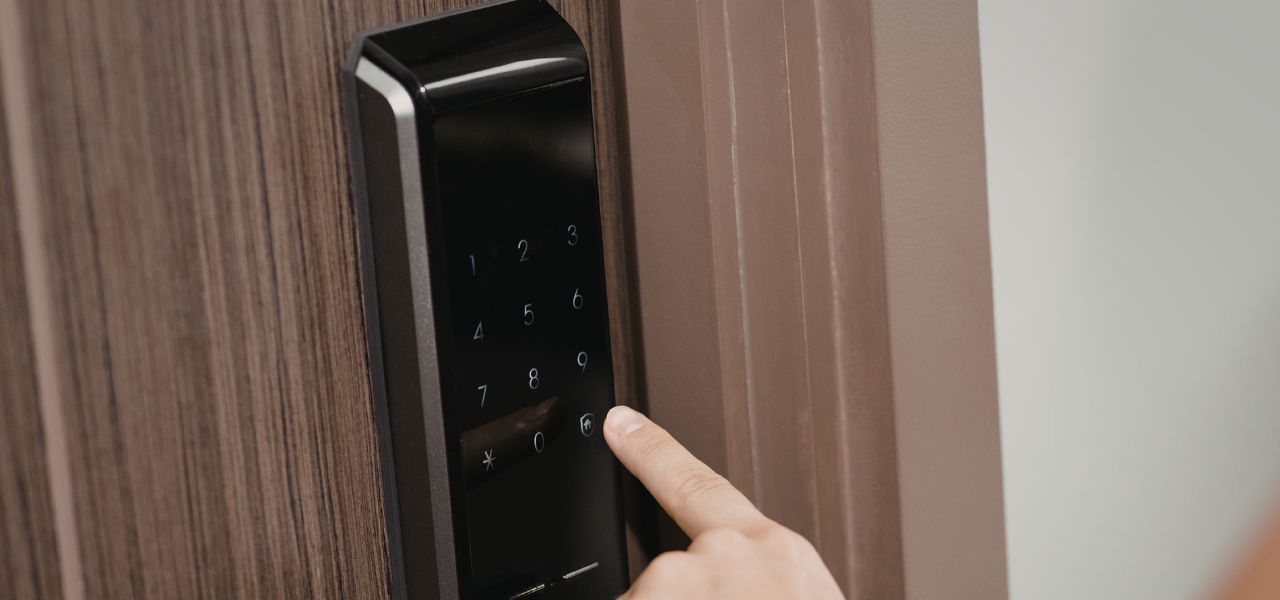
For India’s smart home market, the smart lock is a paradox. Consumers demand biometric security, remote access, and audit trails. Yet the price sensitivity is brutal. Above ₹3,500, adoption drops by nearly 60% for the mass premium segment. The magic number, the one that unlocks Tier 2 and Tier 3 cities, is ₹2,000 retail.
The immediate question every product leader asks is this. Is a secure, dual-mode Wi-Fi and BLE smart lock even possible at that bill of materials? Or will you end up shipping an insecure toy that fails the first time the Indian summer peaks?
Here is the reality. It is possible, but only if you discard three assumptions inherited from Chinese or Western reference designs.
The Three Cost Killers in Imported Smart Lock Designs
First, the dual chip fallacy. Most off-the-shelf modules use separate dies for Wi-Fi and BLE. That doubles your RF cost, increases PCB area, and complicates certification. You do not need two chips. Beken’s single-chip Wi-Fi and BLE combo solutions integrate both radios on one die. You save roughly ₹350 to ₹500 per unit in BOM alone, a saving that decides your retail viability.
Second, the flash overhang. Generic modules pack 4 MB or 8 MB of flash because Western designs assume OTA images for feature-rich apps. For a ₹2,000 lock, you need 2 MB of tightly optimized firmware. No Android app bloat. No cloud dependency for basic unlock. Beken’s architecture allows bare metal or RTOS-based stacks that fit in half the usual flash. That is another ₹150 saved.
Third, the security theater. Many low-cost locks use plaintext BLE or fixed Wi-Fi passwords. That is not security. That is a lawsuit waiting to happen. But you cannot add a dedicated secure element at this price point either. The solution is firmware-based FIDO2 and secure key storage on the Wi-Fi die itself. Beken’s chips include hardware crypto acceleration for AES and SHA. Combined with Cionlabs’ custom secure bootloader, you get bank-grade pairing without a separate ₹200 secure IC.
The Real World Indian Trade-Offs
At a ₹2,000 BOM, you must make honest compromises. You will not get a motorized deadbolt with a color touchscreen. That is fine. The Indian customer wants a retrofit smart lock that fits their existing latch, offers fingerprint or PIN, and sends an alert to their phone. Wi-Fi handles remote access. BLE handles low-power proximity unlock. Both share the same antenna and the same radio.
Your real cost drivers are the fingerprint sensor, the battery management system, and the power amplifier for Wi-Fi range through concrete walls. Do not cut corners on the last one. Beken’s reference design for the Indian market, tuned by Cionlabs, includes an optimized front-end module that delivers 15+ meter range through two walls without a costly external LNA.
The White Label Path to ₹2,000
This is where most brands get stuck. They assume achieving this BOM requires selling a million units upfront. That is false. You need a design partner who has already pre-invested in the certification, the antenna tuning, and the firmware stack for the Indian grid and climate.
Cionlabs has done the heavy lifting. Using Beken’s Wi-Fi and BLE combo chipset, we have built a reference platform for a sub ₹2,000 smart lock BOM at volumes as low as 10,000 units. The white label variant includes:
- Beken single chip dual radio with crypto acceleration.
- Optimized 2 MB flash with OTA capability for critical security patches.
- Low power design achieving six months on four AA batteries under typical Indian usage.
- FIDO2 compliant pairing without cloud round-trip.
Your brand handles the industrial design, the app experience, and the distribution. Cionlabs delivers a certified, production-ready PCB subassembly that hits your price point.
The Risk Question
The real risk is not whether a ₹2,000 BOM is possible. The real risk is launching a lock that connects poorly, drains batteries in three weeks, or gets hacked on a YouTube video. That destroys brand trust faster than any pricing error.
Partnering with a local electronics design house like Cionlabs, one that understands Indian voltage fluctuations, concrete construction, and the need for offline fallback, eliminates that risk. Beken provides the silicon efficiency. Cionlabs provides the system integration and the warranty of Indian manufacturing.
Conclusion
Yes, a secure Wi-Fi and BLE smart lock is possible at a ₹2,000 BOM. But not by copying a foreign module. It requires a single-chip combo radio, ruthless firmware optimization, and hardware-accelerated security. And it requires a design partner who has already absorbed the NRE cost for you.
If your brand wants to own the Indian smart lock market from Mumbai to Madurai, stop looking at generic modules. Start a conversation with Cionlabs. We have already solved the equation. You simply need to white-label it.